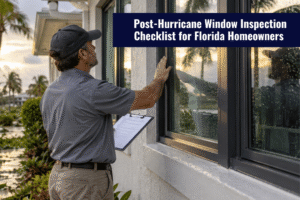
After a hurricane, inspect your windows before assuming they are undamaged simply because the glass is still in place. Impact windows are designed to help maintain the building envelope during severe weather, but impact-resistant does not mean damage-proof.
Glass can crack. Frames can shift. Sealants can fail. Hardware can be damaged. Water can enter around an opening even when the window remains intact. Use this checklist once conditions are safe.
1. Wait Until Conditions Are Safe
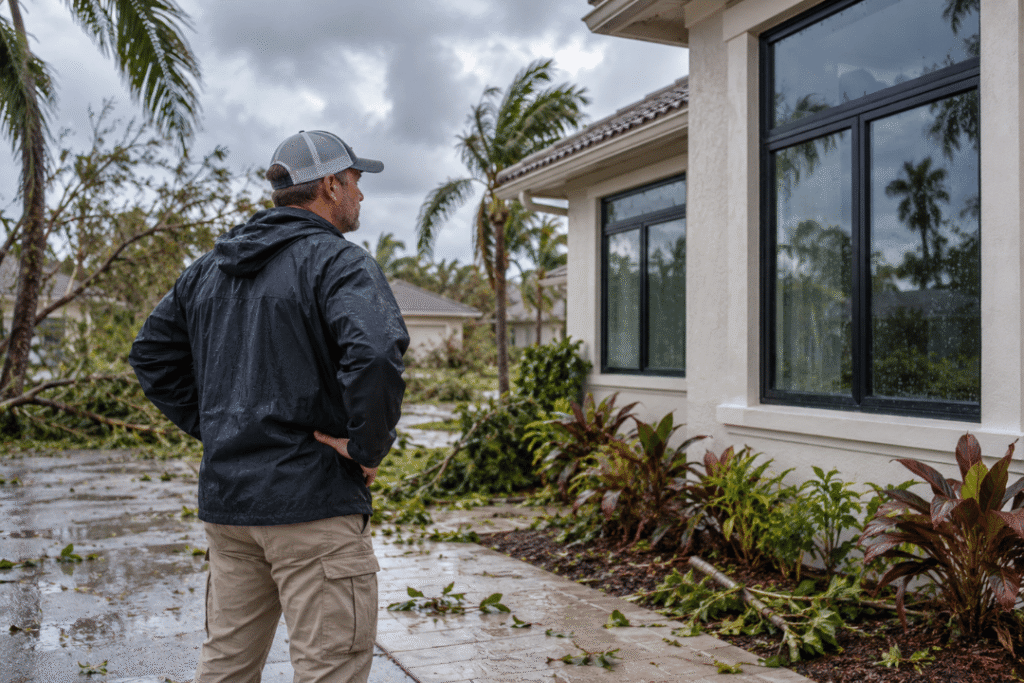
Do not inspect exterior windows while strong winds, lightning, flooding or falling debris hazards are still present. Your first priority is personal safety.
If power lines, structural damage, broken trees or unstable building materials are nearby, stay away from the affected area. Do not climb ladders during storm conditions. A detailed inspection can wait until the immediate hazard has passed.
2. Check Every Window From Inside First
Begin indoors. You can identify many problems without immediately walking around the exterior.
Look for:
- cracked glass
- shattered exterior panes
- frame separation
- water stains
- wet drywall
- damaged trim
- broken locks
- distorted frames
- loose hardware
Inspect every opening individually. Do not assume that windows on the sheltered side of the house escaped damage. Wind direction changes as hurricanes move through an area.
3. Look for Cracked Impact Glass
Impact glass may crack after being struck by debris and still remain in its frame. That is part of the purpose of laminated impact glazing. However, cracked glass is damaged glass.
Look for:
- spiderweb cracks
- star-shaped impact marks
- chips
- shattered exterior layers
- deep scratches
- visible penetration
Do not press on damaged glass. The laminated interlayer may be holding fractured material together. A damaged unit should be evaluated by a qualified window professional.
4. Check for Frame Movement
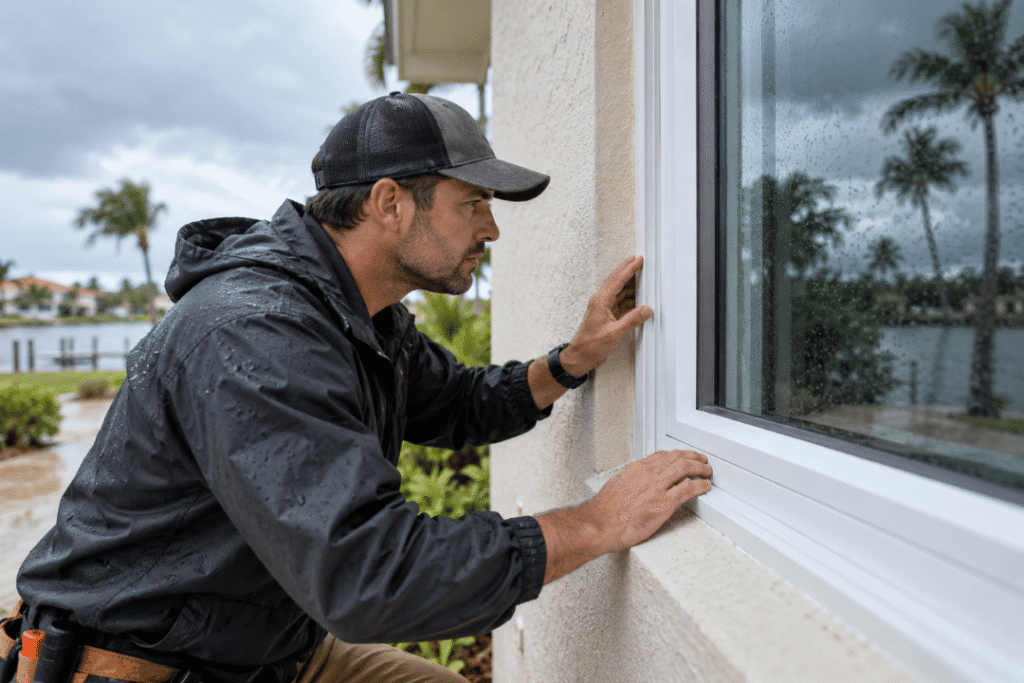
The frame is part of the window’s structural system. Inspect where the window meets the wall.
Watch for:
- visible gaps
- bowed frame sections
- separation from the opening
- displaced trim
- loose fasteners
- cracked surrounding stucco
Frame movement may indicate the assembly experienced significant loading. If the window appears displaced, avoid operating it until it has been assessed.
5. Inspect Window Locks and Hardware
Openings need functional hardware after a storm. Check locks carefully. A lock that no longer aligns may indicate the sash or frame has moved.
Look for:
- broken locks
- bent handles
- damaged hinges
- loose screws
- misaligned keepers
- jammed operators
For casement windows, inspect the crank and hinge system. For sliding windows, check rollers and tracks. For single- or double-hung windows, check balances and sash movement.
6. Test Window Operation Carefully
If there is no visible structural or glass damage, gently test operable windows.
They should normally:
- unlock correctly
- open smoothly
- remain aligned
- close fully
- lock securely
Do not force a window that suddenly binds after a hurricane. Resistance can indicate frame movement, debris in the track or hardware damage. Forcing the unit can make the problem worse.
7. Check for Water Intrusion
Wind-driven rain can expose weaknesses that are not noticeable during normal weather.
Look around each opening for:
- wet drywall
- bubbling paint
- damp trim
- water stains
- swollen wood
- staining below the sill
- moisture around flooring
A window can appear visually intact while water enters around the perimeter. Document the affected area before cleaning or repairing it.
8. Inspect Exterior Sealants
Once it is safe to go outside, examine the perimeter of the windows.
Look for:
- cracked sealant
- missing sealant
- separated joints
- displaced trim
- visible gaps
Do not assume every sealant crack means the impact window failed structurally. Sealant is one component of the installation. However, damaged perimeter seals should be repaired correctly to reduce future water intrusion.
9. Look for Debris Impact Marks
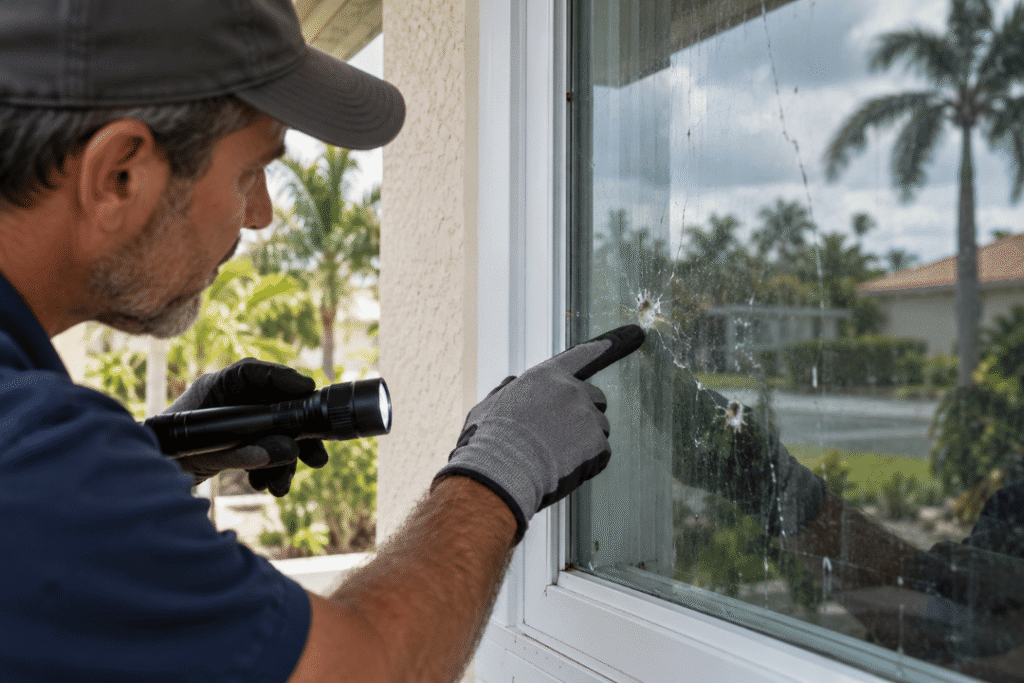
Check windows facing open yards, roads, neighbouring structures and exposed waterfront areas. Debris impact may leave visible marks even without breaking the glass.
Look for:
- scratches
- dents
- chips
- gouges
- cracked glass
- damaged screens
- dented framing
Photograph the impact location. This can help a contractor understand what the assembly experienced.
10. Check Screens Separately
A damaged screen does not necessarily mean the impact window itself is damaged. Screens are not normally the hurricane-resistant component.
Inspect for:
- torn mesh
- bent frames
- missing screens
- damaged clips
Replace screens after the main window assembly has been checked.
11. Inspect Sliding Glass Doors Too
Do not limit the inspection to standard windows. Sliding impact doors have large glazing areas and multiple hardware components.
Check:
- glass
- rollers
- tracks
- locking hardware
- interlocks
- frame alignment
- drainage areas
Salt, sand, leaves and debris can collect in the tracks after a storm. Clean only after documenting any obvious storm damage.
12. Do Not Assume Intact Glass Means No Damage
A storm can affect components other than the glass.
A window may still look clear but have:
- damaged anchors
- displaced framing
- seal failure
- damaged hardware
- water intrusion
This is why a complete post-hurricane check matters.
13. Photograph Everything Before Repairs
Take clear photos of:
- each damaged window
- close-ups of cracked glass
- damaged frames
- water staining
- surrounding walls
- debris impact marks
Also photograph wider views showing where the damaged opening is located.
Keep copies of:
- installation contracts
- product approvals
- permits
- warranties
- previous inspection records
Documentation can be useful when dealing with contractors, insurers and manufacturers.
14. Do Not Remove Broken Impact Glass Yourself
Impact glazing can be heavy and dangerous. Laminated glass may remain suspended even after significant cracking. Removing it incorrectly can release large pieces or damage the frame.
If a window has been severely damaged, restrict access around the opening and contact a qualified professional. Temporary protection may be necessary until replacement glass or a new assembly is available.
15. Check the Florida Product Approval
If replacement becomes necessary, use the exact product information where possible.
Florida’s Product Approval database allows products to be searched by manufacturer, model and FL approval number. It also identifies characteristics such as impact resistance and HVHZ approval. Florida Building Code
Do not replace an impact window with an unverified product simply because it fits the opening. The replacement must be appropriate for the location and applicable design requirements.
16. Does Cracked Impact Glass Need Replacement?
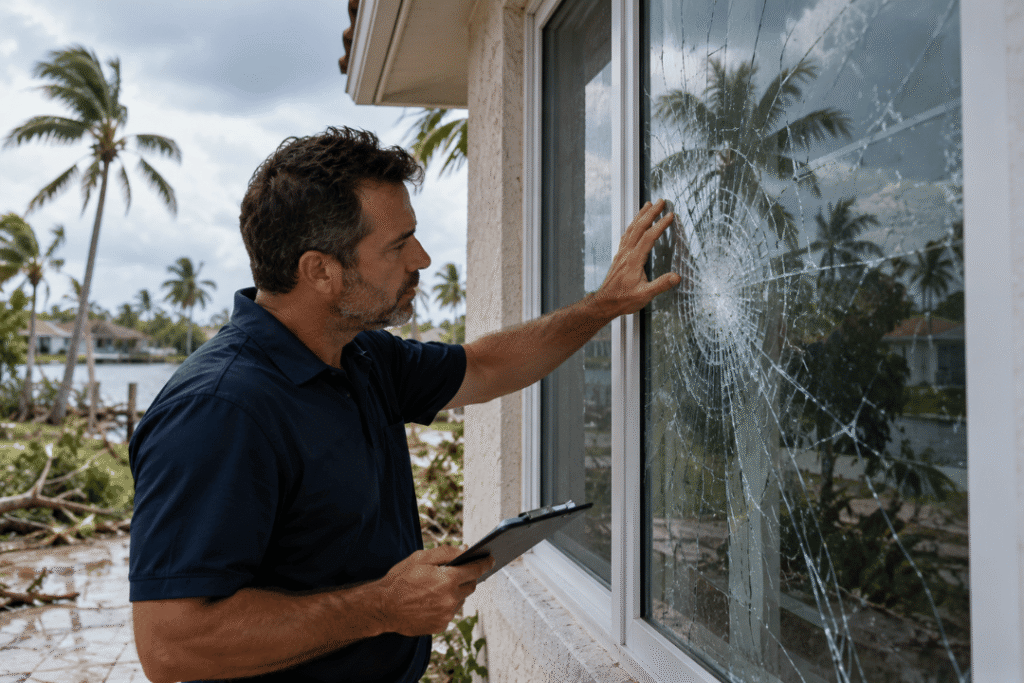
Generally, damaged laminated glazing should be professionally evaluated and usually replaced. Impact glass is engineered as a complete glazing assembly.
Once the glass has cracked severely, homeowners should not assume it will provide the same performance during another storm. The frame may still be reusable depending on the product and damage, but that determination should come from the installer or manufacturer.
17. When Should You Call an Installer?
Contact a window professional if you find:
- cracked impact glass
- frame movement
- failed locks
- water intrusion
- difficult operation
- damaged sliding-door tracks
- major seal failures
For substantial building damage, additional contractors or structural professionals may also be required.
Post-Hurricane Window Checklist
Use this quick list after conditions are safe:
- check glass for cracks
- inspect frames
- test locks
- check operation
- look for water
- inspect exterior sealants
- check sliding doors
- photograph damage
- retain documentation
- schedule professional evaluation where needed
Protect Your Florida Home After the Storm
Guardian Shield Windows & Doors can help Florida homeowners inspect and address damaged impact windows and doors after severe weather.
If your windows experienced debris impact, cracked glass, water intrusion or operational problems, arrange an evaluation before the next major weather event.
Contact us today for help with impact window and door damage after a hurricane.