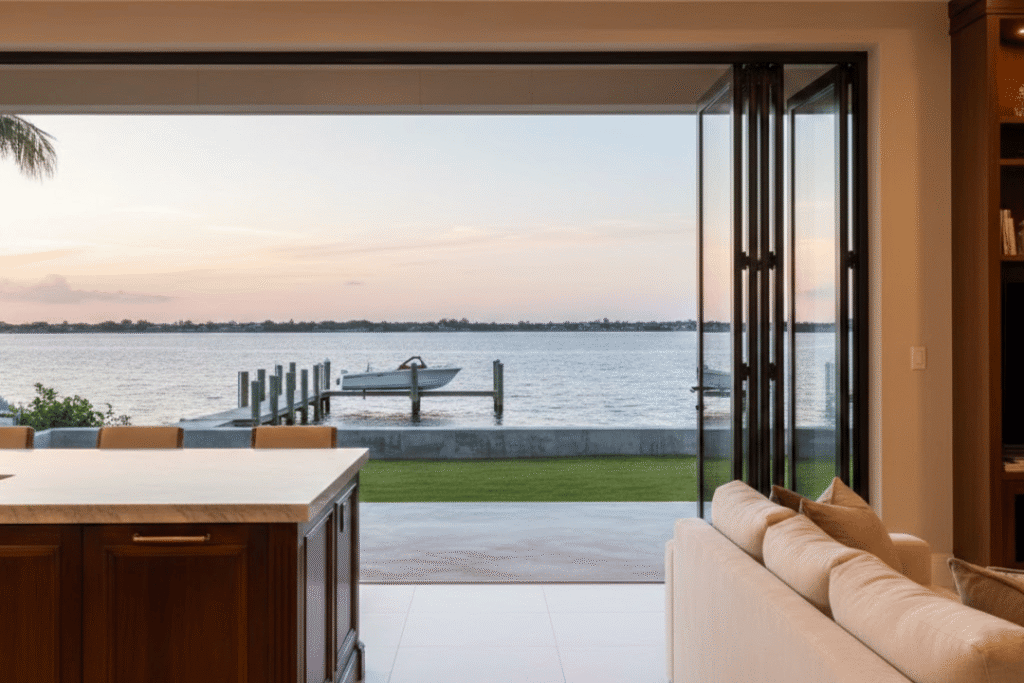
Florida homeowners love expansive glass openings that blur the line between indoor and outdoor living. Whether overlooking a pool, patio, or waterfront view, large glass door systems enhance light, space, and airflow.
Two of the most popular options are folding glass doors (bifold doors) and sliding glass doors. Both offer modern aesthetics and can be engineered to meet Florida’s hurricane standards. But they differ significantly in structure, operation, cost, and long-term maintenance.
If you’re choosing between folding glass doors and sliding doors for your Florida home, this guide from Guardian Shield Windows & Doors will help you understand the key differences.
1. Design and Opening Style
Folding Glass Doors
Folding doors consist of multiple hinged panels that fold and stack to one or both sides when opened. When fully retracted, they create a nearly unobstructed opening.
Benefits:
- Maximum opening width
- Seamless indoor-outdoor transition
- Dramatic architectural appeal
They are ideal for homeowners who want the entire wall to open for entertaining.
Sliding Glass Doors
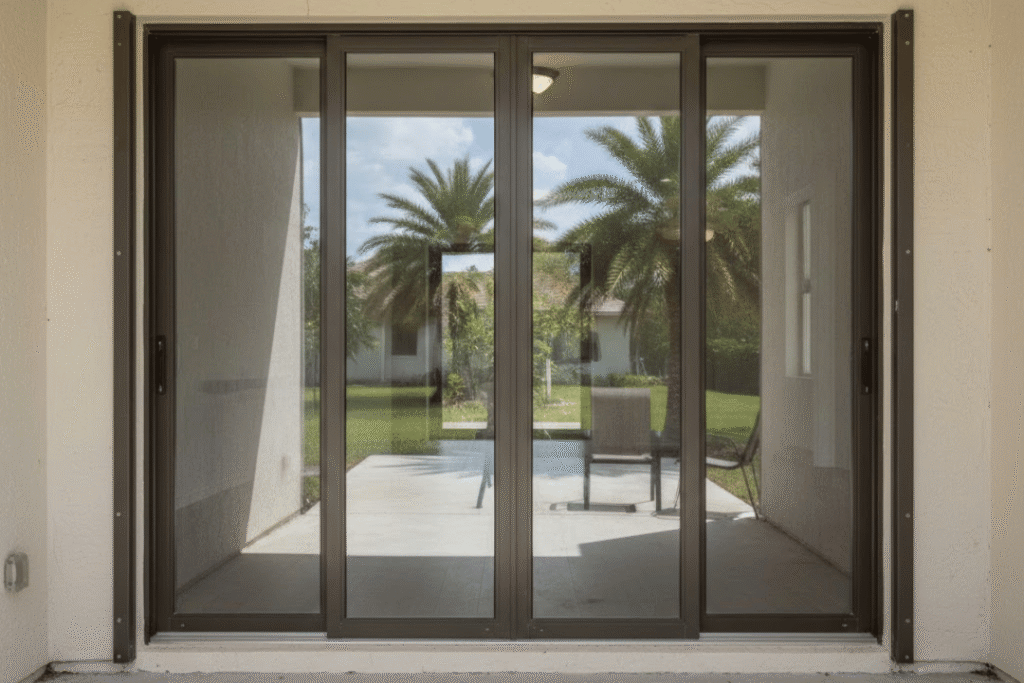
Sliding doors typically consist of two or more panels that glide horizontally along a track. One or more panels remain fixed while others slide.
Benefits:
- Simple operation
- Minimal mechanical complexity
- Space-efficient design
Sliding doors maintain a consistent glass wall look, even when partially open.
2. Hurricane Resistance and Structural Strength
In Florida, hurricane protection is non-negotiable.
Both folding and sliding systems can be impact-rated, but they differ structurally.
Folding Glass Doors
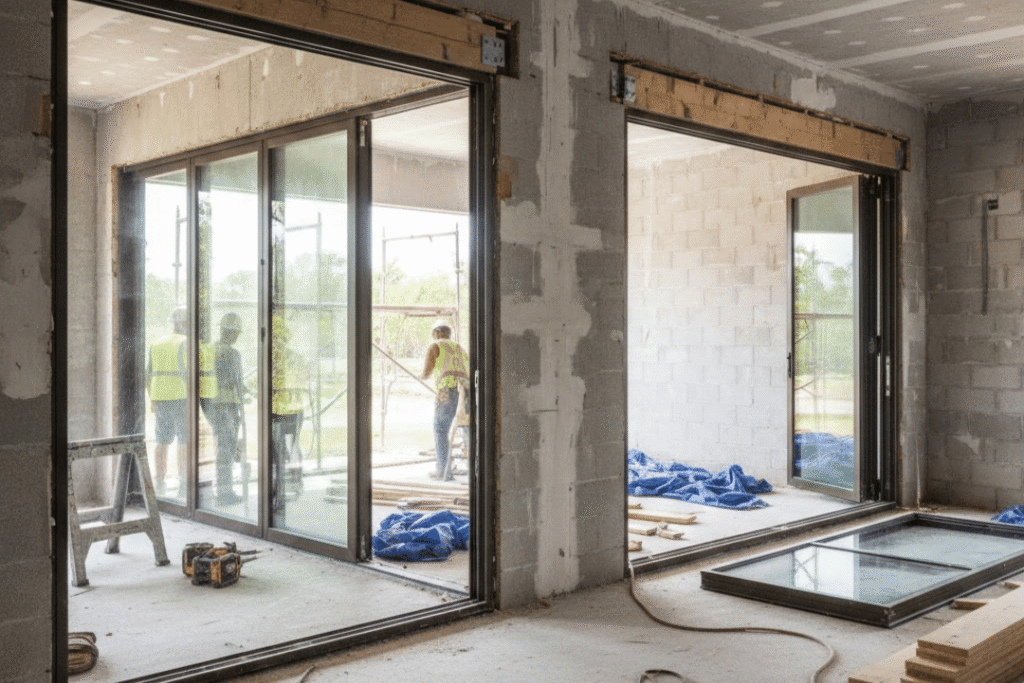
Because folding systems have multiple hinges and connection points, they require:
- Reinforced headers
- Stronger side jamb anchoring
- Engineered hinge systems
- Heavy-duty top and bottom tracks
When properly engineered and installed, hurricane-rated folding doors perform well under wind pressure and debris impact.
However, structural precision is critical.
Sliding Impact Doors
Sliding doors typically have fewer panel connection points and may distribute wind load more uniformly.
Advantages:
- Fewer moving parts
- Heavy continuous tracks
- Simpler structural design
Many homeowners consider sliding doors slightly more straightforward in terms of long-term storm durability.
Both systems must meet Florida Building Code (FBC) requirements to be hurricane compliant.
3. Cost Differences
Cost is one of the biggest deciding factors.
Folding Glass Doors
Folding systems are generally:
- More expensive
- More complex to install
- More labor-intensive
The cost increases due to:
- Additional hardware
- Reinforced framing requirements
- Structural upgrades
They are often chosen for luxury homes or large renovation projects.
Sliding Glass Doors
Sliding impact doors are typically:
- More affordable
- Easier to install
- Less structurally demanding
They still provide hurricane protection when impact-rated, but often at a lower overall project cost.
4. Space Requirements
Folding Doors
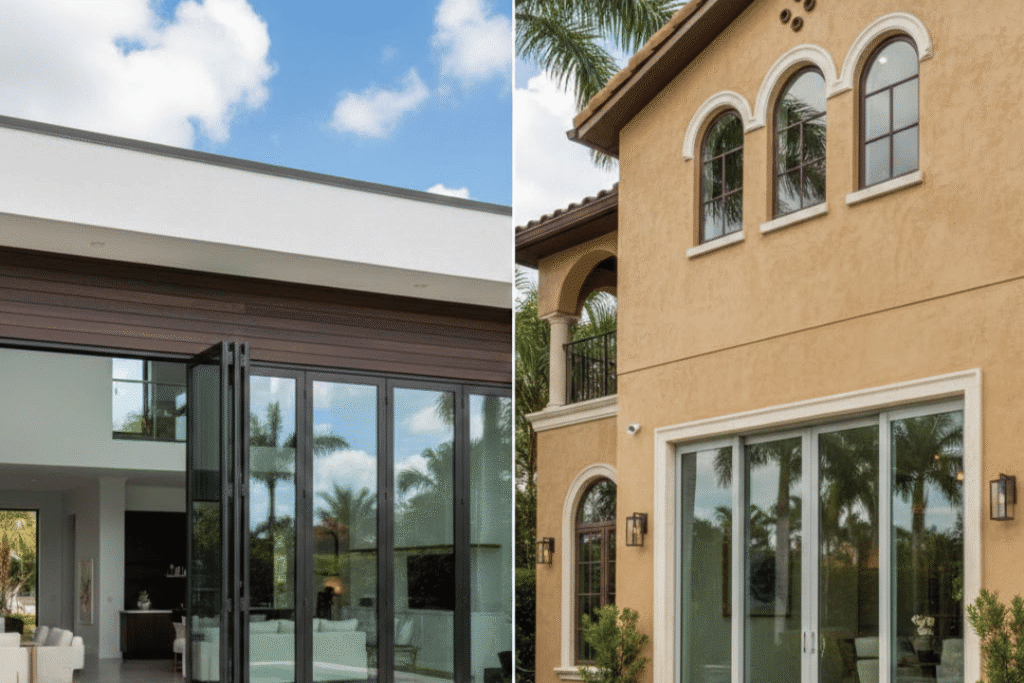
Folding doors require clearance for panel stacking. When open, panels gather to one or both sides.
Considerations:
- Wall space for panel storage
- Floor track space
- Proper alignment
If your layout allows stacking space, folding doors can provide a dramatic open feel.
Sliding Doors
Sliding doors operate within their frame and do not require stacking space beyond the track.
Advantages:
- Better for tight layouts
- Ideal for smaller patios
- Less interior clearance is required
This makes sliding doors highly versatile.
5. Maintenance Needs
Folding Glass Doors
With multiple hinges and moving panels, folding doors may require:
- Periodic hinge inspection
- Roller lubrication
- Alignment adjustments
More components mean more potential maintenance over time.
Sliding Glass Doors
Sliding doors have:
- Fewer moving parts
- Simpler track systems
- Easier cleaning access
Routine maintenance mainly involves track cleaning and roller lubrication.
For coastal homes, both systems require regular rinsing to prevent corrosion.
6. Aesthetic Differences
Folding Doors
Folding doors provide:
- Clean, minimal frame interruption
- Large fully open spaces
- Luxury modern appeal
When open, they create a wall-free transition.
Sliding Doors
Sliding doors offer:
- Large glass panels
- Continuous sightlines
- A sleek, contemporary look
However, part of the opening remains fixed even when fully open.
7. Energy Efficiency
Both systems can include:
- Laminated impact glass
- Low-E coatings
- Insulated frames
- Weather-sealed construction
Energy performance depends more on glass quality and installation than on door type.
When properly sealed, both options perform well in Florida’s heat and humidity.
8. Installation Complexity
Folding doors often require:
- Structural header reinforcement
- Engineering review
- Precise leveling
- Larger crews
Sliding doors typically require less structural modification, especially in retrofit projects.
If your home already has a sliding door opening, replacement is usually simpler and more cost-effective.
9. Long-Term Durability in Coastal Florida
Salt air and humidity affect both systems.
Folding doors:
- More hinges mean more corrosion-prone hardware
- Require corrosion-resistant components
Sliding doors:
- Fewer exposed hinge points
- Simpler hardware design
Marine-grade aluminum and stainless steel hardware are recommended for both systems in coastal zones.
10. Which Is Better for Your Florida Home?
Choose folding glass doors if:
- You want maximum opening space
- You’re building a new construction
- You want a luxury architectural feature
- Budget allows for structural upgrades
Choose sliding impact doors if:
- You want strong hurricane protection at a lower cost
- You prefer simpler operation
- You want lower long-term maintenance
- Your layout limits stacking space
There is no universal “better” option it depends on your priorities.
The Bottom Line
Both folding glass doors and sliding impact doors can perform exceptionally well in Florida homes when properly engineered and installed.
The key considerations are:
- Hurricane rating
- Structural reinforcement
- Budget
- Space requirements
- Maintenance expectations
Folding doors provide dramatic openness and luxury appeal. Sliding doors offer simplicity, durability, and cost efficiency.
Understanding these differences helps you choose the system that aligns with your lifestyle and home design goals.
Explore Your Options with Guardian Shield Windows & Doors
At Guardian Shield Windows & Doors, we help Florida homeowners evaluate folding and sliding glass door systems based on structural requirements, hurricane ratings, and long-term durability.If you’re deciding between folding glass doors and sliding impact doors for your Florida home, contact us today for expert guidance and professional installation.