Florida’s OIR-B1-1802 wind mitigation form does not give your home one simple score out of 10 or 100.
Instead, a qualified inspector documents specific construction and hurricane-resistance features of the property. Your insurance company then uses qualifying features and its approved wind mitigation rating methodology to determine whether you are eligible for credits on the wind portion of your insurance premium.
That distinction is important.
Homeowners frequently ask what their “wind mitigation score” is when what actually matters is which categories their home qualifies for.
As of April 1, 2026, inspections performed in Florida must use the revised OIR-B1-1802 (Rev. 04/26) form. Citizens Property Insurance confirms that inspections performed from that date forward must use the updated version.
For Florida homeowners considering impact windows and doors, one category deserves particular attention: opening protection.
What Is the OIR-B1-1802?
The OIR-B1-1802 is Florida’s Uniform Mitigation Verification Inspection Form.
It provides insurers with documentation showing whether a property contains recognised features intended to reduce damage caused by high winds and hurricanes.
A qualified inspector physically examines the property and verifies the applicable construction characteristics.
Citizens lists qualified inspectors as including properly licensed home inspectors who meet statutory training requirements, building code inspectors, licensed general/building/residential contractors, professional engineers, architects and other individuals recognised by an insurer as qualified.
The completed form can then be submitted to an insurance carrier to determine whether the home qualifies for available wind mitigation credits.
Does the Form Produce an Insurance Discount Automatically?
No.
The inspection documents the home’s characteristics.
The insurance carrier determines the actual premium credit.
That means two homeowners with similar mitigation features may not necessarily receive the exact same dollar savings because premiums can differ by:
- insurer
- property location
- coverage
- insured value
- construction
- rating territory
- applicable wind premium
- insurer rating tables
Wind mitigation credits generally apply to the wind component of an insurance premium rather than simply creating a fixed percentage reduction in the entire homeowners insurance bill. Citizens specifically states that its mitigation discounts apply to the wind portion of the premium.
What Does a Wind Mitigation Inspection Look At?
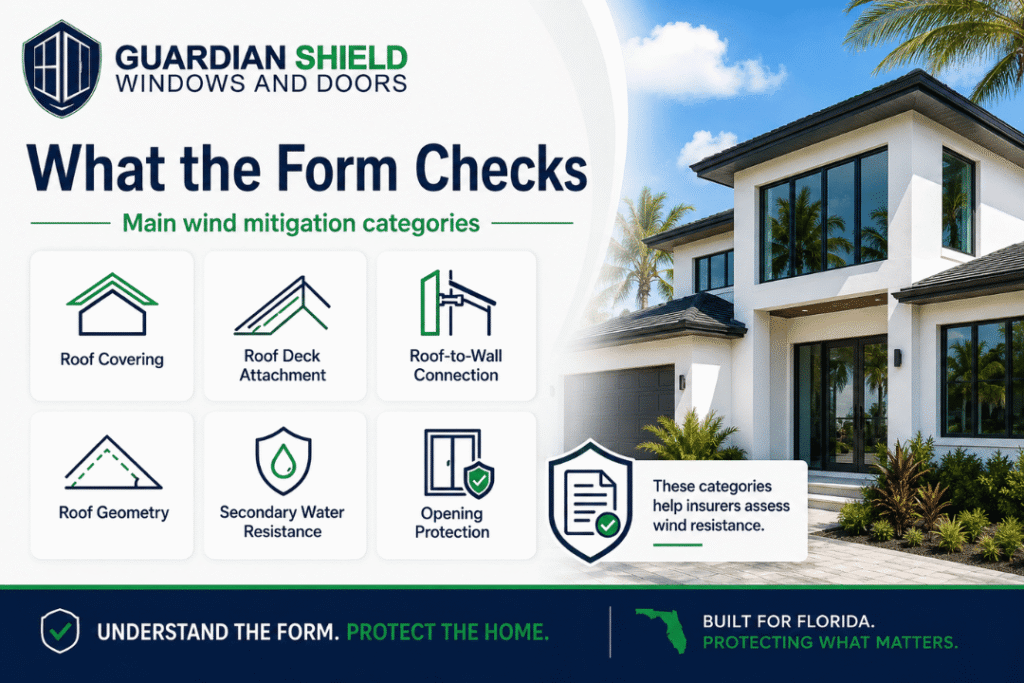
The current form evaluates several major characteristics of the home.
1. Building Code
The inspector establishes information about the building and applicable construction requirements.
Homes constructed under newer hurricane-resistant building standards may have structural features that perform differently in extreme winds than older homes.
Documentation and permit history can therefore matter.
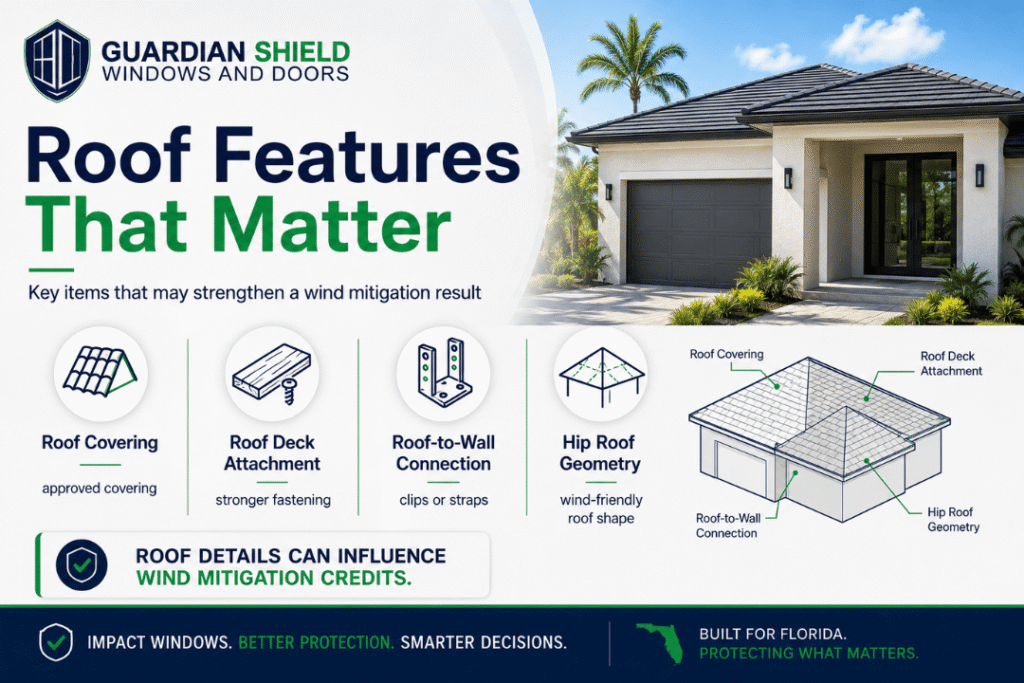
2. Roof Covering
The inspection examines the roof covering and associated compliance information.
The important question is not merely whether you have tile, shingles or metal.
The inspector is looking for evidence that the roofing system satisfies applicable requirements identified on the form.
A roof that looks new does not automatically receive the best classification.
Documentation matters.
3. Roof Deck Attachment
Your roof covering sits on a structural roof deck.
The inspection considers how securely that deck is attached to the underlying roof structure.
Fastener type, size and spacing can influence the classification.
A stronger roof deck attachment helps resist uplift forces trying to pull roof sheathing away during extreme wind.
4. Roof-to-Wall Connection
Next comes the connection between the roof structure and the walls.
Depending on the home, inspectors may identify connections such as:
- toenails
- clips
- straps
- engineered or structural connections
The principle is simple: during a hurricane, the roof and walls should work as a connected structural system.
A strong roof is less useful if the connection holding it to the rest of the building is weak.
5. Roof Geometry
Roof shape also affects wind behaviour.
A hip roof, where roof surfaces generally slope down toward the walls on multiple sides, can qualify differently from other roof geometries.
The inspector measures and classifies the roof according to the definitions on the current form rather than simply making a visual assumption.
6. Secondary Water Resistance
Secondary Water Resistance, often shortened to SWR, provides another layer of protection if the primary roof covering is damaged.
A qualifying sealed roof deck or approved secondary water-resistant system can help reduce water intrusion if shingles, tiles or another roof covering are lost during a storm.
This feature is usually hidden beneath the finished roof, making proper documentation particularly important.
7. Opening Protection
For homeowners replacing windows and doors, this is the big one.
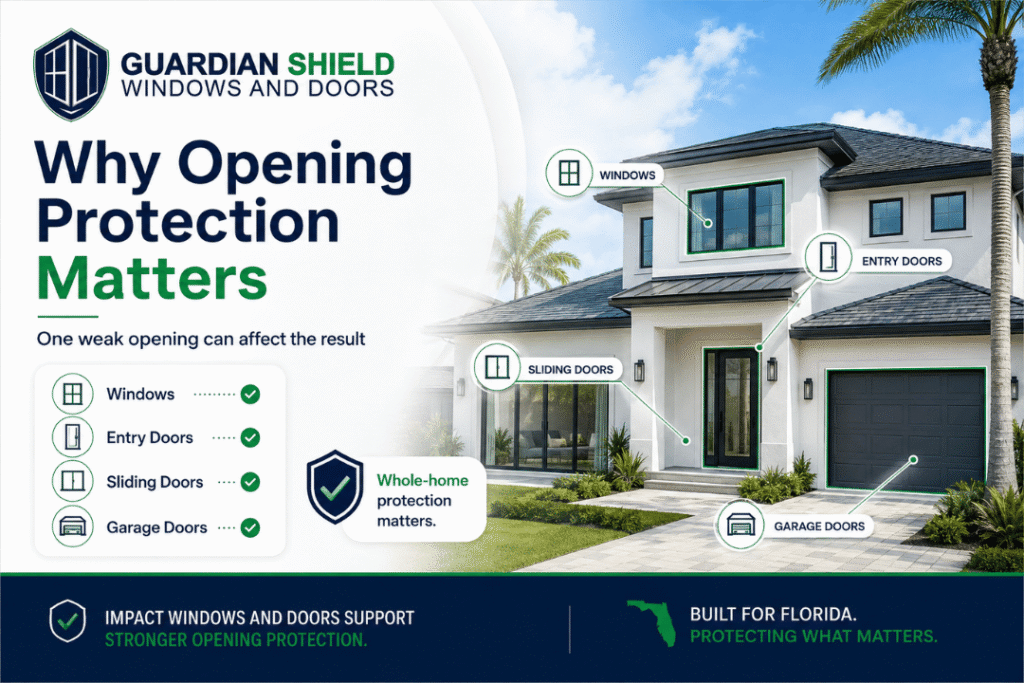
The inspector evaluates protection for exterior openings such as:
- windows
- exterior doors
- sliding glass doors
- garage doors
- skylights
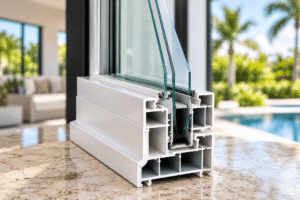
Impact-resistant windows and doors may help the property qualify for a stronger opening-protection classification when the products meet the applicable approval requirements.
But there is an important catch:
The weakest opening can affect the home’s overall opening-protection classification.
Installing impact windows throughout most of the house while leaving one unprotected exterior opening does not necessarily produce the same result as protecting every required opening.
Why Does One Unprotected Opening Matter?
Imagine replacing 15 windows with approved impact-resistant windows but leaving a non-impact patio door without an approved shutter.
From the homeowner’s perspective, 15 out of 16 openings sounds excellent.
From a wind mitigation standpoint, however, the remaining weak opening may prevent the property from qualifying for the same full-opening-protection classification it could otherwise receive.
That is why a complete hurricane protection strategy considers the entire building envelope.
This can include windows, sliding doors, entry doors, garage doors and skylights—not only the easiest windows to replace.
Do Impact Windows Guarantee an Insurance Discount?
No.
Installing impact windows does not automatically guarantee a specific insurance discount.
The products need to meet applicable requirements, the installation must be properly documented, and the overall home must satisfy the insurer’s classification requirements.
Actual premium credits are determined by the insurance carrier.
Homeowners should therefore avoid purchasing impact windows based solely on a salesperson promising a specific percentage reduction in insurance.
Think of potential insurance savings as one possible financial benefit rather than the sole reason to install hurricane-resistant windows.
The 2026 Form Makes Documentation Even More Important
The April 2026 revision changed documentation rules.
Citizens’ current Wind Loss Mitigation Guide explains that photographs or valid supporting documentation may now be used to validate qualifying construction or mitigation attributes, and relevant proof must accompany the form. FORTIFIED Home certifications can also support certain categories identified in the revised form.
For homeowners, the lesson is simple:
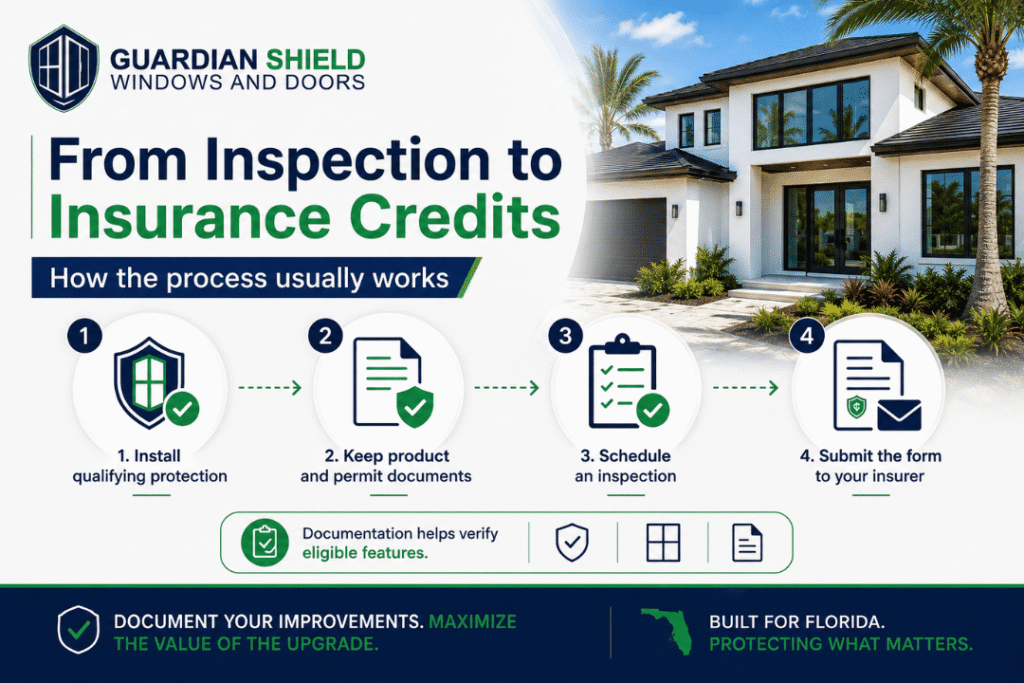
Keep your paperwork.
After installing impact windows and doors, retain:
- contracts
- permits
- product approval information
- manufacturer documentation
- final inspection records
- installation documentation
Those documents can be valuable when a future inspector needs to verify exactly what was installed.
How Long Is a Wind Mitigation Form Valid?
Wind mitigation inspections have traditionally been accepted for up to five years when there have been no material changes to the structure or inaccuracies in the form.
With the 2026 transition, Citizens has stated that older OIR-B1-1802 Rev. 01/12 forms completed within five years before April 1, 2026 may continue to be accepted if no structural changes have occurred. However, inspections conducted on or after April 1, 2026 must use the new Rev. 04/26 version.
If you have recently made hurricane-hardening improvements, getting an updated inspection can allow the new features to be documented.
Impact Windows Improve More Than a Form
Insurance credits are valuable, but they are only one reason Florida homeowners install impact-resistant glazing.
Properly selected impact windows and doors can also provide:
- 24/7 hurricane protection
- protection against windborne debris
- improved home security
- reduced exterior noise
- UV protection
- potential improvements in energy efficiency
- elimination of repeated shutter installation for protected openings
Unlike temporary storm preparation, impact-rated windows are already in place when a storm approaches.
So What Does the OIR-B1-1802 Actually Score?
It does not produce one universal numerical score.
Instead, it documents a series of wind-resistance characteristics that an insurer uses to calculate applicable mitigation credits.
The major areas include the building and roof construction, roof attachment, roof-to-wall connection, roof geometry, secondary water resistance and protection of exterior openings.
For homeowners upgrading older properties, opening protection is one of the categories you can actively improve by installing properly approved impact windows and doors.
If you are planning to replace vulnerable windows or doors in your Florida home, Guardian Shield Windows & Doors can help you select impact-resistant products appropriate for your property and hurricane-protection goals.
Contact Guardian Shield Windows & Doors to discuss a whole-home impact window and door upgrade and make sure you understand the documentation you should retain for future wind mitigation inspections.