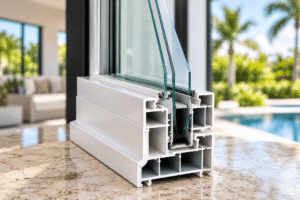
Florida homeowners often assume that once hurricane impact windows are installed, water should never appear around the opening again. That is understandable, but impact resistance and water resistance are not exactly the same thing.
If you notice impact windows leaking during heavy rain, it does not automatically mean the glass or window itself has failed. Water can enter through deteriorated sealant, surrounding stucco, drainage pathways, installation gaps, damaged weatherstripping or other parts of the building envelope.
Can Hurricane Impact Windows Leak?
Yes. An impact-resistant window can experience water intrusion even though its glass and frame are designed to withstand hurricane-related impacts.
Impact resistance primarily addresses the window system’s ability to withstand debris impact and subsequent pressure cycling. Water performance is evaluated separately as part of window-system testing and approval.
That distinction matters.
A window can be impact rated while water is entering from:
- the perimeter of the opening;
- deteriorated exterior sealant;
- cracks in surrounding stucco;
- drainage channels;
- the wall above the window;
- a poorly prepared window buck;
- damaged weatherstripping;
- installation defects; or
- another part of the exterior building envelope.
Before assuming the impact window itself has failed, the source needs to be diagnosed correctly.
Why Do Impact Windows Leak During Heavy Rain?
1. Failed or Deteriorated Exterior Sealant
Sealant creates an important weather barrier between the window frame and the surrounding opening.
Florida conditions can be demanding on exterior materials. Sun exposure, heat, humidity, movement and age may eventually cause some sealants to crack, separate or lose adhesion.
Common warning signs include:
- cracked caulking;
- gaps around the exterior frame;
- peeling or separated sealant;
- staining around interior corners; and
- leaks that occur only during strong directional rain.
Simply applying more caulk over deteriorated material is not always the correct repair. The underlying failure needs to be identified first.
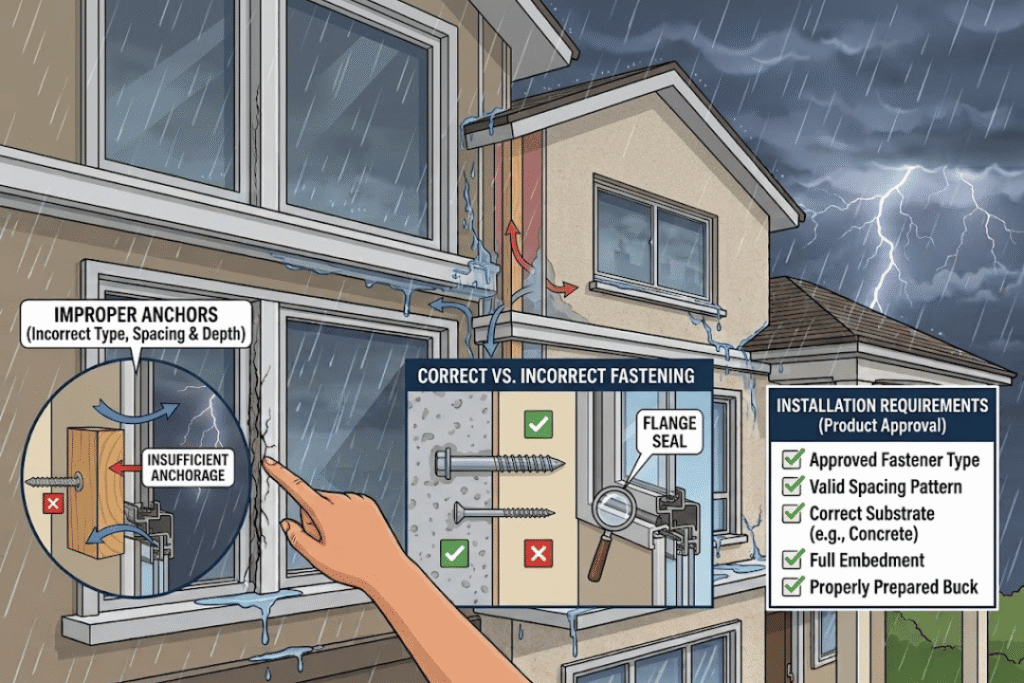
2. Improper Impact Window Installation
A high-quality impact window still depends on correct installation.
Product approval documents can contain detailed anchorage, substrate and pressure requirements.
Installation mistakes may include:
- improper anchor spacing;
- incorrect fasteners;
- inadequate embedment;
- gaps between the frame and opening;
- improperly prepared bucks;
- poor sealing;
- unsuitable substrates; or
- failing to follow the approved installation configuration.
Water intrusion may not appear immediately after installation.
The problem can become obvious months or years later during a particularly intense storm.
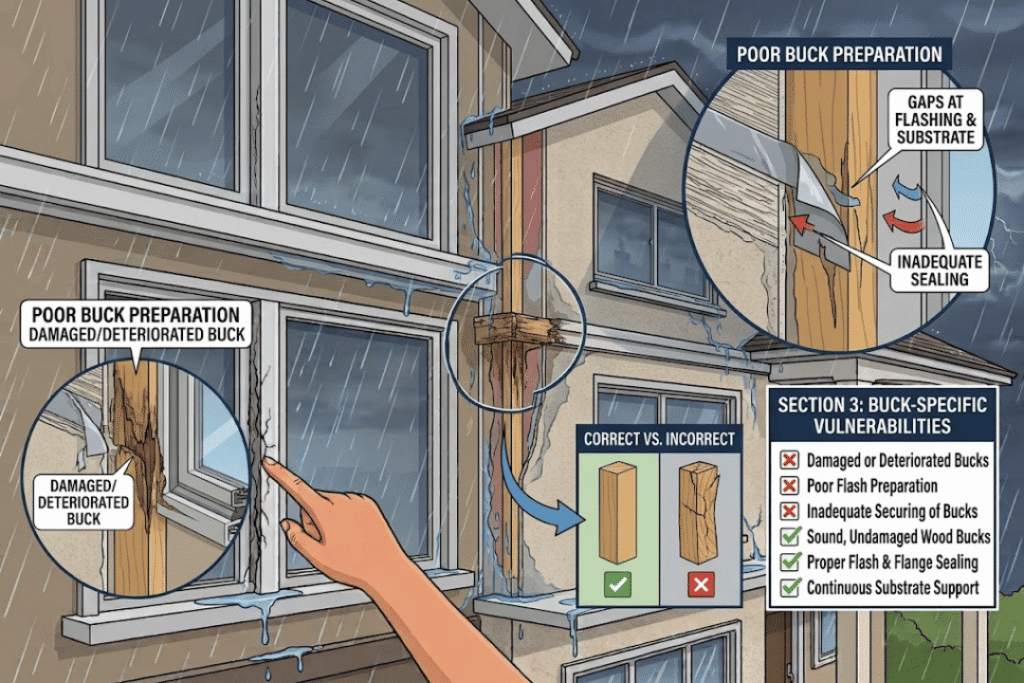
3. Problems With the Window Buck
The window buck provides an interface between the structural opening and the window system.
If the buck is damaged, deteriorated, incorrectly sized or inadequately secured, the complete opening can become vulnerable.
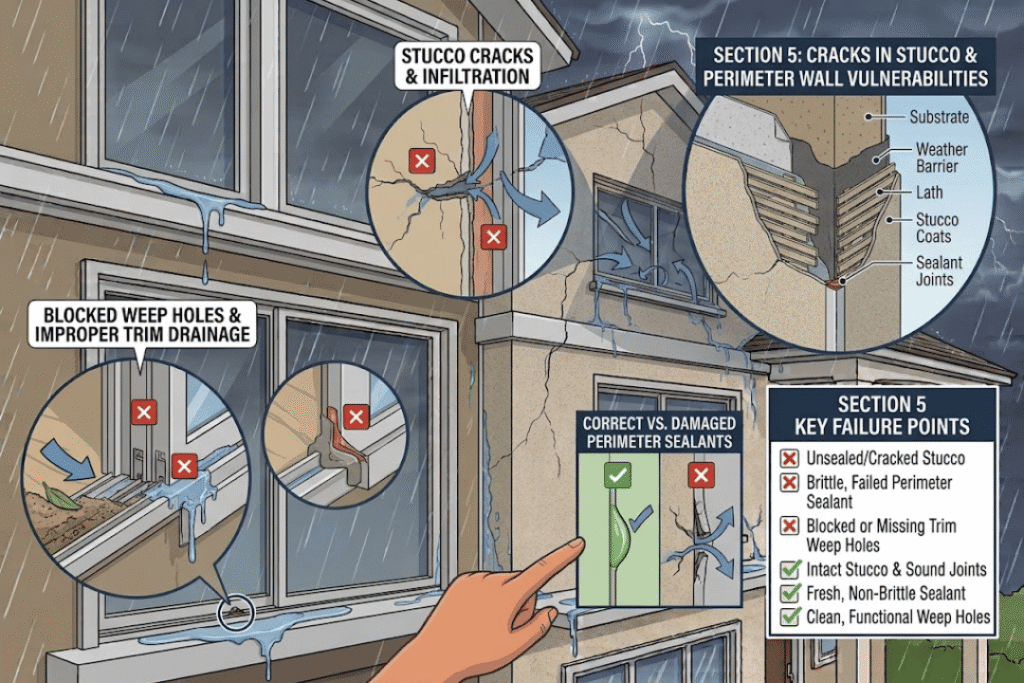
4. Cracks in Stucco or the Surrounding Wall
Sometimes water appearing next to a window did not actually enter through the window.
A crack above or beside the opening may allow water behind the exterior finish. Gravity can then carry that moisture downward until it becomes visible near the frame.
Possible clues include:
- water stains above the frame;
- bubbling paint;
- damp drywall;
- recurring staining in the same location; and
- leakage that continues after the rain intensity decreases.
This is why leak diagnosis should evaluate the entire window opening, not just the glass and frame.
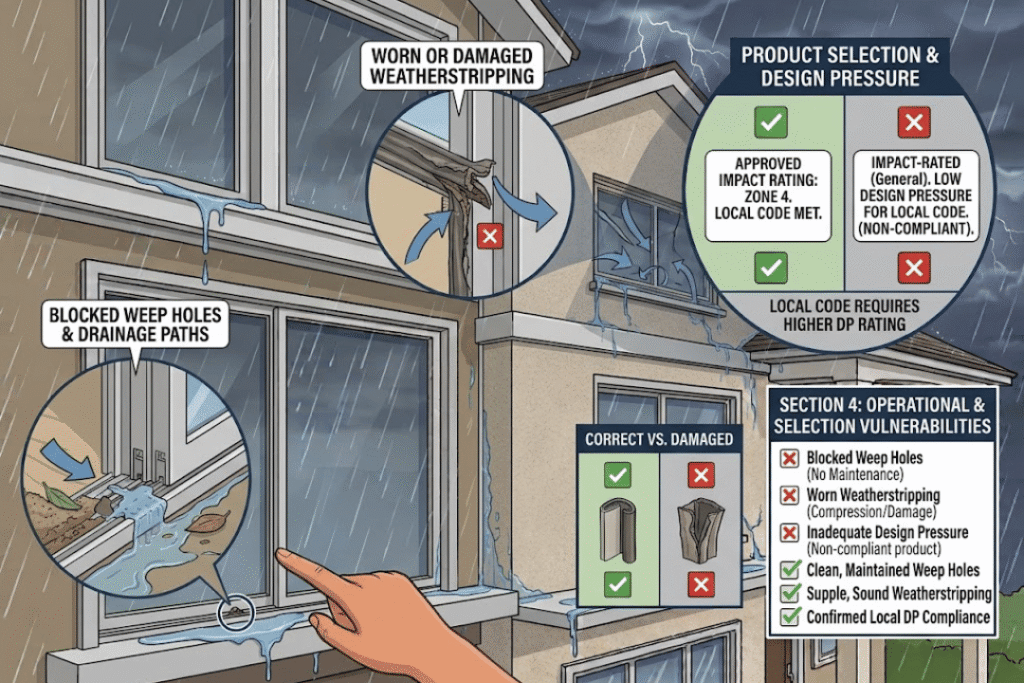
5. Blocked Weep Holes or Drainage Paths
Many windows are designed to manage small amounts of water through controlled drainage paths.
Dirt, insects, paint, construction debris or other material can block these openings.
Avoid randomly drilling or enlarging drainage holes. The drainage design is part of the window system and should not be modified without understanding the manufacturer’s requirements.
6. Worn or Damaged Weatherstripping
Operable impact windows depend on seals and weatherstripping to help control air and water movement.
Over time, weatherstripping can become:
- compressed;
- torn;
- displaced;
- brittle; or
- contaminated with dirt.
A window that leaks around a sash or moving panel may require closer inspection of these components.
This is particularly important for windows that are opened and closed frequently.
7. Wind-Driven Rain
During severe Florida storms, wind pressure can push water against window joints, tracks, seals and surrounding wall systems.
This is one reason window performance cannot be reduced to a statement such as:
“It’s hurricane-rated, so no water can ever get through.”
Impact resistance, structural pressure and water penetration are separate performance considerations.
8. The Wrong Window or Configuration for the Opening
Not every approved impact window has the same design-pressure capacity.
A window system therefore needs to be appropriate for the specific opening and project conditions.
The required pressure can depend on factors such as:
- building height;
- opening location;
- window size;
- building geometry;
- wind exposure;
- proximity to open terrain or water; and
- local design requirements.
Choosing an impact-rated product without confirming that its exact configuration meets the required pressures is not enough.
Where Is the Water Coming From?
The location of visible water can help narrow the possibilities.
Water at the Bottom of the Window
Possible causes include:
- blocked drainage paths;
- weep-hole problems;
- track drainage issues;
- worn weatherstripping; or
- wind-driven water accumulation.
Water Around the Frame Perimeter
Look for:
- failed sealant;
- perimeter gaps;
- installation issues;
- deterioration around the opening; or
- problems at the frame-to-wall connection.
Water Above the Window
This can indicate an issue somewhere higher in the wall assembly.
Possible sources include:
- stucco cracks;
- wall penetrations;
- exterior joints;
- roof or flashing problems; or
- moisture travelling behind the exterior finish.
Fog or Moisture Between Glass Panes
This is different from rainwater entering the home.
Moisture trapped between the panes of an insulated glass unit can indicate failure of the insulated-glass seal.
The window may not be leaking rainwater into the house at all.
Are Impact Windows Completely Waterproof?
Impact windows should not be described as universally waterproof under every conceivable storm condition.
Windows and doors are tested to define performance criteria. Real buildings, however, experience different combinations of pressure, rainfall, exposure and surrounding-wall conditions.
A correctly selected and installed impact window should provide strong weather protection, but its performance remains connected to:
- the approved product configuration;
- correct installation;
- proper anchorage;
- drainage;
- sealants;
- surrounding construction; and
- ongoing condition of the opening.
Impact-Rated Does Not Automatically Mean Properly Installed
This is one of the most important things Florida homeowners should understand.
A window can carry the appropriate product approval and still be installed incorrectly.
Those requirements exist because performance depends on the complete installed assembly.
Problems can occur when installers use:
- incorrect anchors;
- wrong anchor spacing;
- inadequate embedment;
- improper substrates;
- incorrect shimming;
- unsuitable sealants; or
- installation methods that do not match the product approval.
That is why choosing the right installer matters alongside choosing the right window.
Can You Fix a Leaking Impact Window?
Often, yes but the repair depends on the source.
Potential solutions may include:
- replacing failed perimeter sealant;
- cleaning approved drainage paths;
- replacing damaged weatherstripping;
- repairing surrounding stucco;
- correcting installation defects;
- addressing buck or substrate problems; or
- replacing failed components.
The key is diagnosis.
Repeatedly applying caulk to the visible location can mask the symptom without addressing the actual entry point.
When Should Florida Homeowners Have a Leak Inspected?
Consider having the window and surrounding opening inspected when:
- water enters during multiple storms;
- staining is getting larger;
- drywall feels damp;
- paint begins bubbling;
- mould or musty odours appear;
- exterior sealant has visibly separated;
- water appears above the window;
- the window was recently installed; or
- you’re unsure whether the problem is the window or wall.
Leaving water intrusion unresolved can allow moisture to reach materials that were never intended to stay wet.
Preventing Water Intrusion Around Impact Windows
Homeowners can reduce the risk of future problems by periodically checking:
- exterior sealant;
- frame joints;
- drainage openings;
- weatherstripping;
- surrounding stucco;
- visible cracks; and
- signs of interior moisture.
After major storms, inspect openings that received direct wind-driven rain.
Early detection can prevent a small maintenance problem from turning into a larger building-envelope issue.
Need Help With Leaking or Ageing Impact Windows?
If you’re seeing water around your windows during Florida’s heavy rains, don’t assume the glass itself is the problem. The leak may be coming from the frame, sealant, surrounding wall, drainage system or installation.
Guardian Shield Windows and Doors provides professional impact window and door solutions for Florida homeowners and businesses.
Contact us today to schedule a consultation and protect your property with impact windows and doors designed for Florida conditions.