
Glass staircases have become a defining feature in modern Florida commercial buildings. From corporate offices and retail centers to hotels and mixed-use developments, these stair systems create open sightlines, enhance natural light, and reinforce contemporary architectural design. However, unlike decorative glass elements, commercial glass staircases must meet strict structural safety requirements to protect occupants and ensure long-term performance.
In Florida, where humidity, heavy foot traffic, and strict building codes intersect, glass staircases are regulated as load-bearing safety systems, not aesthetic upgrades. Every component — from the glass panels and mounting hardware to the stair geometry and handrails — must work together to meet structural, impact, and durability standards.
In this guide, Guardian Shield Windows & Doors explains the structural safety requirements governing commercial glass staircases in Florida and what building owners, architects, and contractors need to know before installation.
Understanding Commercial Glass Systems in Florida Buildings
Before focusing on staircases specifically, it’s important to understand how commercial glass systems are regulated in Florida. Commercial interior glass elements are subject to different standards than residential applications due to higher occupancy and usage demands.
Commercial glass systems are designed to:
- support occupant safety under daily use
- withstand concentrated and distributed loads
- resist impact and accidental contact
- integrate with structural framing systems
Florida commercial construction must comply with the Florida Building Code (FBC), which incorporates national safety glazing standards and local performance requirements. Glass staircases fall under these regulations because failure could result in serious injury.
What Qualifies as a Commercial Glass Staircase?
A commercial glass staircase is a stair system used in a public or commercial building that incorporates glass as a primary visible safety or enclosure element.
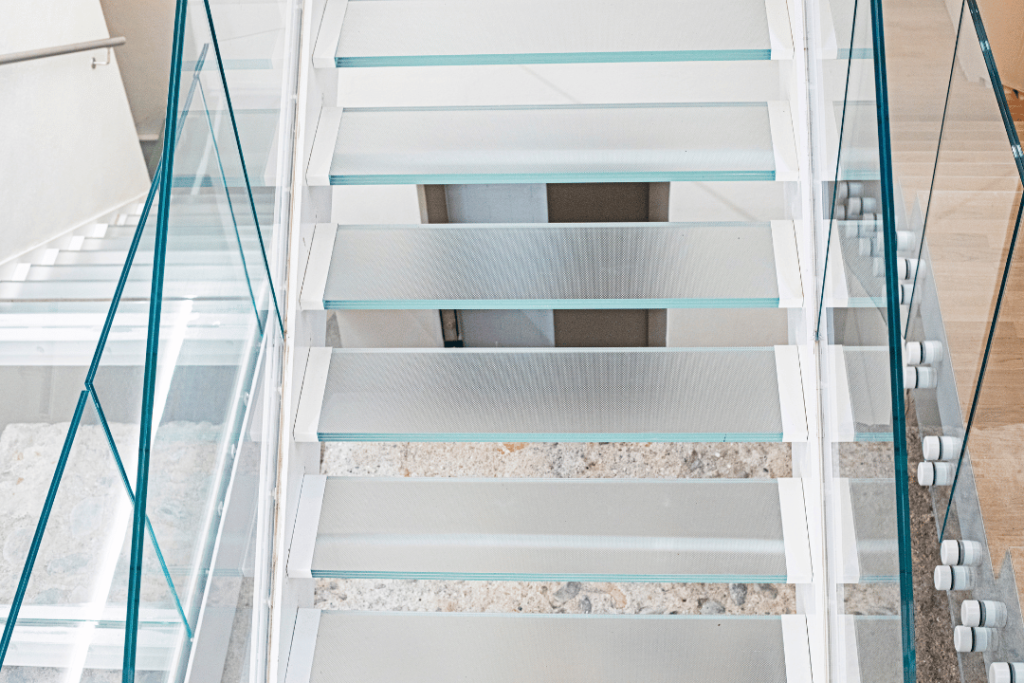
Common Glass Staircase Components
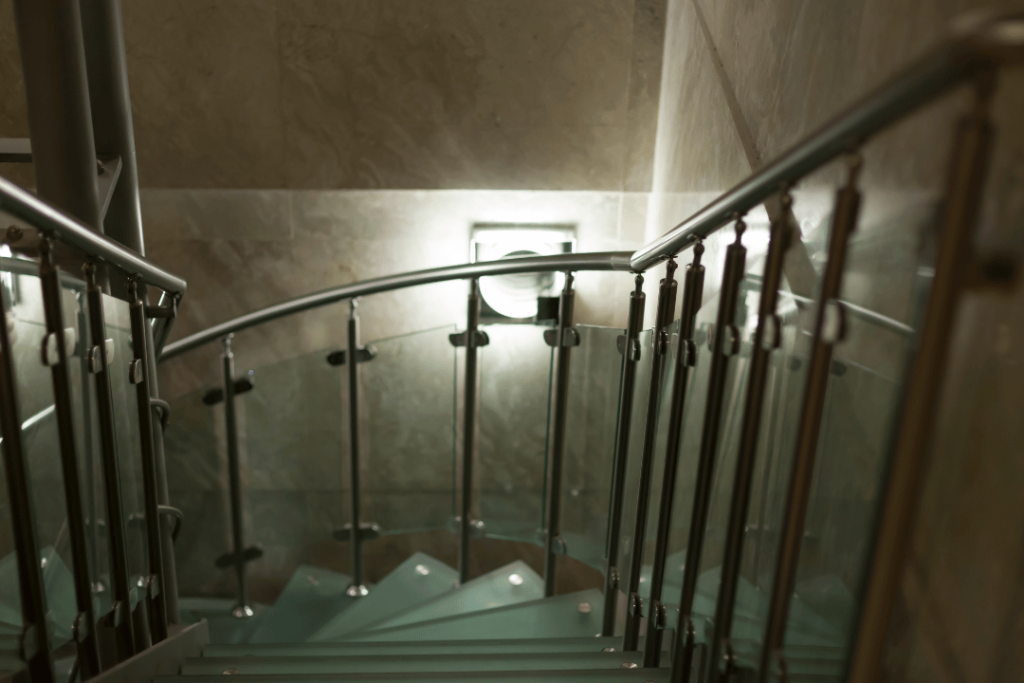
- glass balustrades or guardrails
- glass side panels
- glass risers or infill panels
- structural or semi-structural glass walls adjacent to stairs
While the walking surface is typically concrete, steel, or engineered treads, glass components must meet the same safety expectations as other structural elements.
Florida Building Code Requirements for Glass Staircases
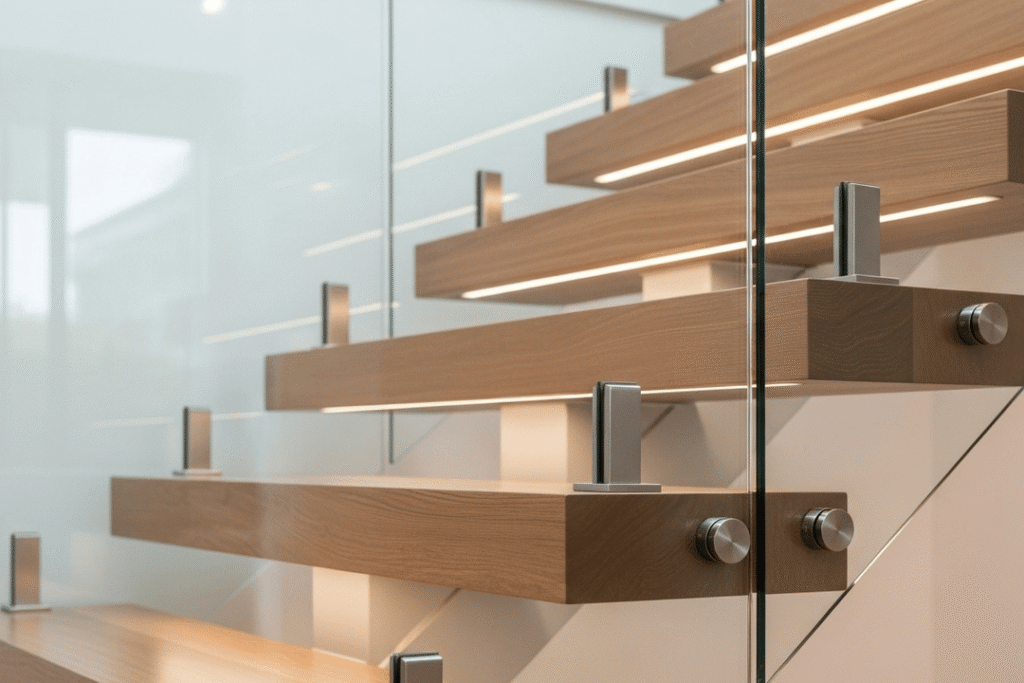
The Florida Building Code establishes baseline safety requirements for all commercial stair systems.
Key FBC considerations include:
- minimum guardrail height
- load resistance for handrails and guards
- stair geometry and spacing
- approved safety glazing materials
Glass used in stair systems must be classified as safety glass, ensuring it does not create dangerous shards if damaged.
Safety Glass Standards for Commercial Stair Applications
Glass used in commercial staircases must meet recognized safety glazing standards.
Approved safety glass types include:
- Tempered glass, which breaks into small, less harmful pieces
- Laminated glass, which remains intact when cracked
Laminated glass is often preferred for guardrails and side panels because the interlayer holds glass fragments in place, maintaining a protective barrier even after breakage.
Load and Impact Resistance Requirements
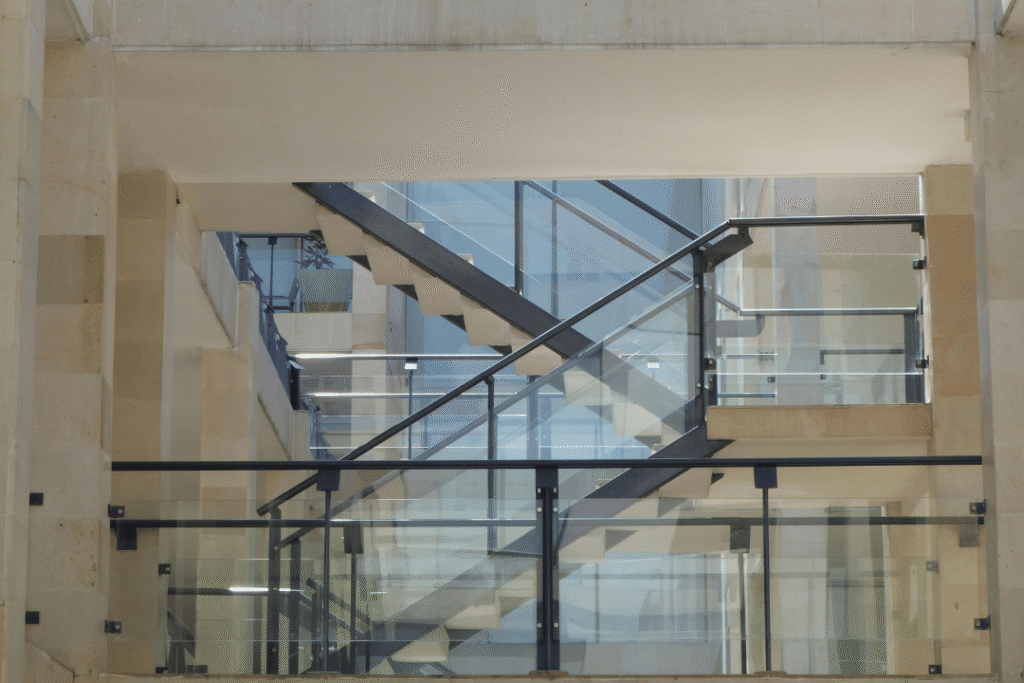
Commercial stair glass must withstand both static and dynamic forces.
Structural safety requirements typically address:
- uniform load resistance from leaning or crowd pressure
- concentrated load resistance from impact
- resistance to accidental kicks or falls
- performance under vibration and movement
Glass thickness, panel size, and mounting methods are calculated to meet these load criteria without excessive deflection.
Guardrail and Balustrade Safety Requirements
Glass staircases often serve as guardrails, making compliance critical.
Florida code requirements include:
- minimum guard height above walking surfaces
- resistance to lateral loads
- prevention of climbable elements
- secure anchoring to the stair structure
Properly engineered glass balustrades provide fall protection while maintaining transparency.
Handrail Integration and Structural Support
Handrails are mandatory for commercial staircases and must be securely integrated with glass systems.
Handrail safety considerations include:
- continuous gripping surfaces
- height and clearance requirements
- secure attachment to glass or supporting structures
- resistance to pulling forces
Handrails must be installed in a way that does not compromise the integrity of the glass panels.
Anchoring and Mounting Systems
The structural performance of a glass staircase depends heavily on how the glass is mounted.
Common mounting methods include:
- base-mounted channel systems
- point-supported hardware
- side-mounted clamps
Each method must be engineered to transfer loads safely into the stair structure without overstressing the glass.
Slip Resistance and Stairway Safety
While glass is typically not used as the walking surface in commercial stairs, overall stair safety must still be addressed.
Key considerations include:
- slip-resistant treads
- proper stair dimensions
- visual contrast for edge detection
- adequate lighting
These features work alongside glass components to reduce fall risks.
Durability in Florida’s Commercial Environment
Florida’s climate places additional demands on commercial stair systems.
Glass staircases must resist:
- humidity and moisture exposure
- corrosion of mounting hardware
- UV exposure in naturally lit interiors
- frequent cleaning and maintenance
High-quality materials and finishes ensure long-term performance and appearance.
Inspection, Testing, and Code Approval
Commercial glass staircases are subject to inspection during construction.
Approval requirements may include:
- product certification documentation
- engineering calculations
- shop drawings
- compliance with FBC safety glazing standards
Proper documentation ensures smooth permitting and inspection processes.
Why Professional Design and Installation Matter
Because glass staircases are safety-critical systems, professional design and installation are essential.
Benefits include:
- accurate load calculations
- proper material selection
- code-compliant installation
- long-term reliability
Improper installation can compromise both safety and code compliance.
Guardian Shield Windows & Doors — Commercial Glass Safety Specialists
At Guardian Shield Windows & Doors, we design and install commercial glass systems that meet Florida’s structural safety requirements. Our team works with architects, contractors, and property owners to ensure every glass staircase is engineered, installed, and inspected to perform safely under real-world conditions.
We focus on safety, compliance, and architectural integration — delivering glass solutions built for Florida commercial environments.
Ensure Your Glass Staircase Meets Florida Safety Standards
Commercial glass staircases demand more than visual appeal; they require proven structural safety. Guardian Shield Windows & Doors delivers expertly engineered glass stair systems that meet Florida Building Code requirements while supporting modern commercial design.
Schedule a consultation today to ensure your glass staircase meets safety standards, performs reliably, and enhances your Florida commercial property.