
In Florida’s coastal regions, safety standards for commercial construction are among the most demanding in the country. High winds, hurricanes, salt exposure, and heavy public foot traffic place exceptional stress on building systems, especially elevated safety features. As modern architecture increasingly favors openness and transparency, commercial glass railings have become a preferred solution for balconies, staircases, terraces, and elevated walkways. However, in coastal Florida, these systems must meet far more than aesthetic expectations.
Commercial glass railings used in coastal environments must be engineered to protect occupants, withstand extreme weather, and comply with Florida’s strict building and life-safety codes. When improperly designed or installed, railing systems can become serious safety liabilities during storms or high-traffic conditions. Understanding the standards that govern these systems is essential for property owners, developers, architects, and facility managers.
In this guide, Guardian Shield Windows & Doors explains the safety standards that apply to commercial glass railings in Florida’s coastal environments and what it takes to ensure these systems are compliant, storm-ready, and built for long-term performance.
Why Coastal Florida Requires Higher Safety Standards
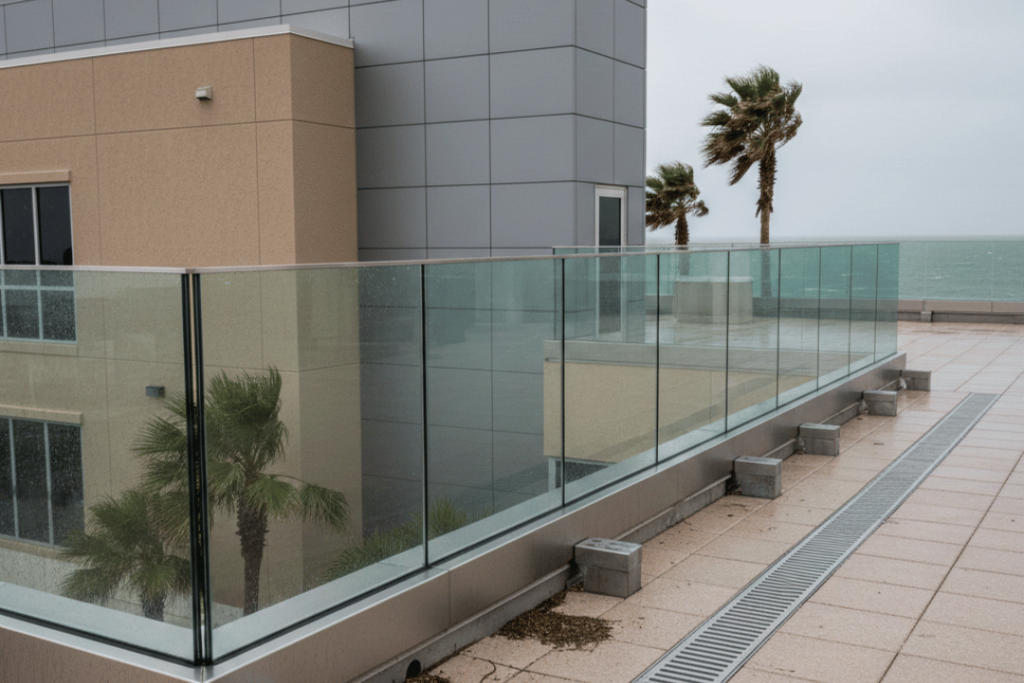
Florida’s coastal zones experience environmental forces that go far beyond normal commercial building conditions. Structures in these areas must withstand a combination of extreme factors, including:
- Hurricane-force wind loads
- Wind-driven debris during storm events
- Salt-laden air that accelerates corrosion
- Heavy public use in hospitality, retail, and mixed-use developments
Glass railing systems are exposed to all of these stresses simultaneously. Unlike interior finishes, railings are structural safety components. A failure can result in serious injury, regulatory penalties, legal liability, and costly reconstruction, making proper compliance essential.
Florida Building Code Requirements for Commercial Glass Railings
All commercial glass railings in Florida must comply with the Florida Building Code (FBC), which incorporates wind resistance, impact safety, and fall-protection requirements. Coastal and high-velocity hurricane zones impose additional performance thresholds.
Key code requirements typically include:
- Minimum railing height for commercial applications
- Structural load resistance for public occupancy
- Approved glass types and thicknesses
- Engineered anchoring and attachment methods
Because Florida’s codes evolve in response to storm data and safety research, working with professionals familiar with current FBC requirements is critical.
Impact-Rated and Laminated Glass Safety Standards
In coastal Florida, standard tempered glass alone is often insufficient for commercial railing systems. Instead, approved systems typically use laminated safety glass designed to remain intact when broken.
Laminated glass provides:
- Impact resistance against debris
- Structural integrity even when cracked
- Protection against glass fallout from elevated areas
This is especially important during hurricanes, where broken glass panels could become dangerous projectiles or leave occupants exposed to fall hazards.
Wind Load Engineering and Structural Performance
One of the most critical safety standards for coastal commercial glass railings is wind-load resistance. Railings must withstand both sustained wind pressure and sudden gusts associated with tropical storms and hurricanes.
Engineered railing systems are tested for:
- Positive and negative wind pressures
- Lateral loads from occupants leaning or pushing
- Combined wind and crowd forces
Inadequate engineering can result in excessive deflection, anchor failure, or complete system collapse under extreme conditions.
Fall Protection and Public Crowd Safety
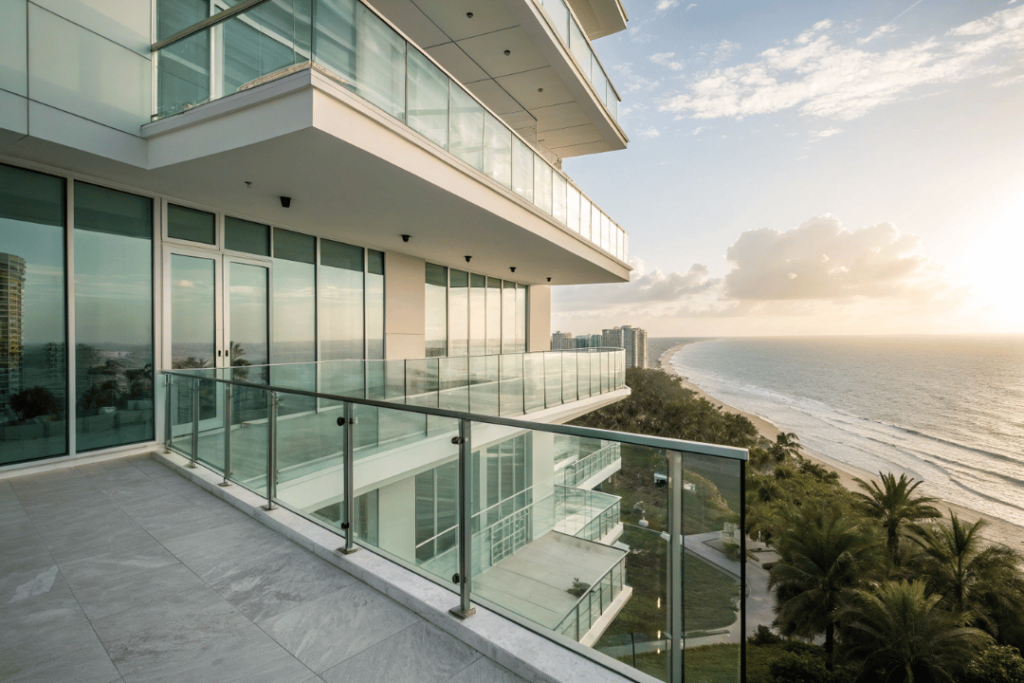
Commercial glass railings are frequently installed in areas with continuous public use, such as:
- Hotel balconies and corridors
- Office staircases and mezzanines
- Retail terraces and elevated walkways
Safety standards account for:
- Crowd pressure loads
- Minimum barrier heights
- Continuous containment without climbable gaps
These requirements ensure that railings function as true protective barriers while still allowing open sightlines and modern design.
Corrosion Resistance in Coastal Environments
Salt air is one of the most damaging elements for coastal structures. Even structurally sound systems can fail prematurely if materials are not designed for marine exposure.
Coastal-ready commercial glass railing systems should include:
- Marine-grade aluminum or stainless steel
- Corrosion-resistant fasteners and anchors
- Protective finishes designed for salt exposure
Failure to account for corrosion can lead to hidden structural weakening and long-term safety risks.
Installation Standards Are Just as Important as Materials
Even code-approved railing systems can fail if installation does not follow engineering specifications. In coastal Florida, installation quality is a critical part of safety compliance.
Professional installation ensures:
- Anchors are properly embedded into structural substrates
- Load paths align with engineering calculations
- Spacing and alignment meet safety tolerances
Improper installation is one of the most common causes of railing failure during storm events.
Permitting, Inspections, and Compliance
Commercial glass railing installations in Florida typically require:
- Building permits
- Engineered shop drawings
- On-site inspections
Skipping steps or using non-compliant systems can result in inspection failures, delayed occupancy approvals, or required retrofits after installation.
Common Commercial Applications in Coastal Florida
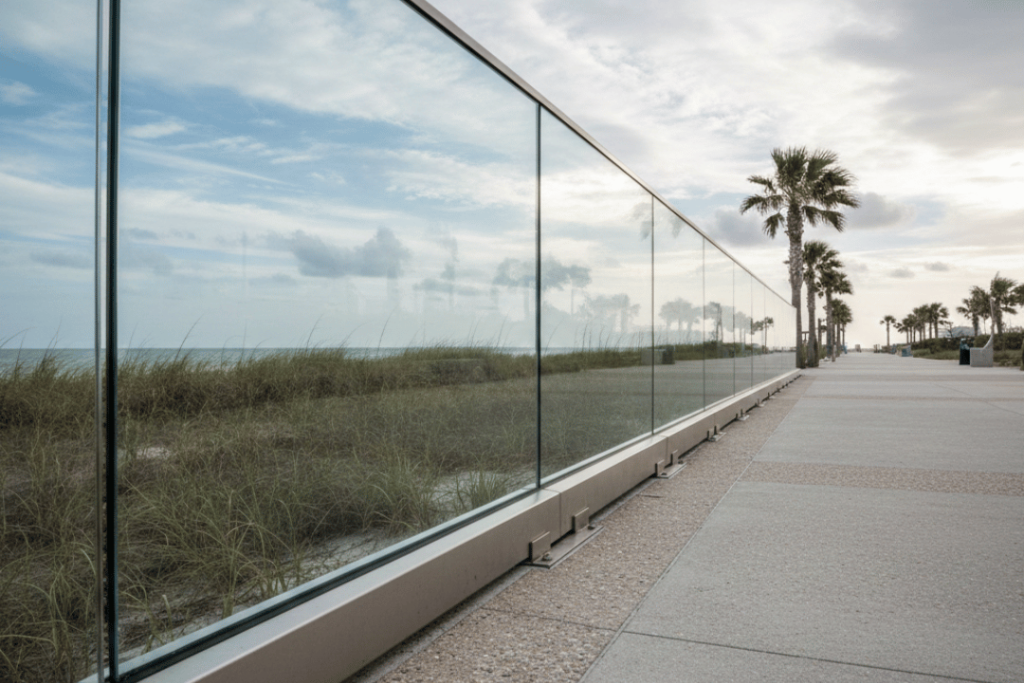
Safety-compliant glass railing systems are widely used across coastal Florida in:
- Hotels and resorts
- Office buildings and mixed-use developments
- Retail centers and restaurants
- Staircases, balconies, rooftops, and terraces
Each application presents unique load, exposure, and safety considerations that must be addressed during design.
Balancing Safety with Modern Design Expectations
One reason commercial glass railings continue to grow in popularity is their ability to meet safety standards without compromising design.
Properly engineered systems provide:
- Clear sightlines and openness
- Improved natural light
- A clean, modern architectural aesthetic
This balance is especially valuable in coastal commercial properties where views and openness are part of the appeal.
Long-Term Maintenance and Ongoing Safety Performance
Safety compliance does not end after installation. Coastal environments require ongoing inspection and maintenance to ensure continued performance.
Routine safety maintenance includes:
- Inspecting glass panels and framing
- Checking anchors and fasteners for corrosion
- Monitoring system movement or deflection
Proactive maintenance helps preserve compliance, safety, and appearance over time.
Is Your Commercial Glass Railing System Coastal-Ready?
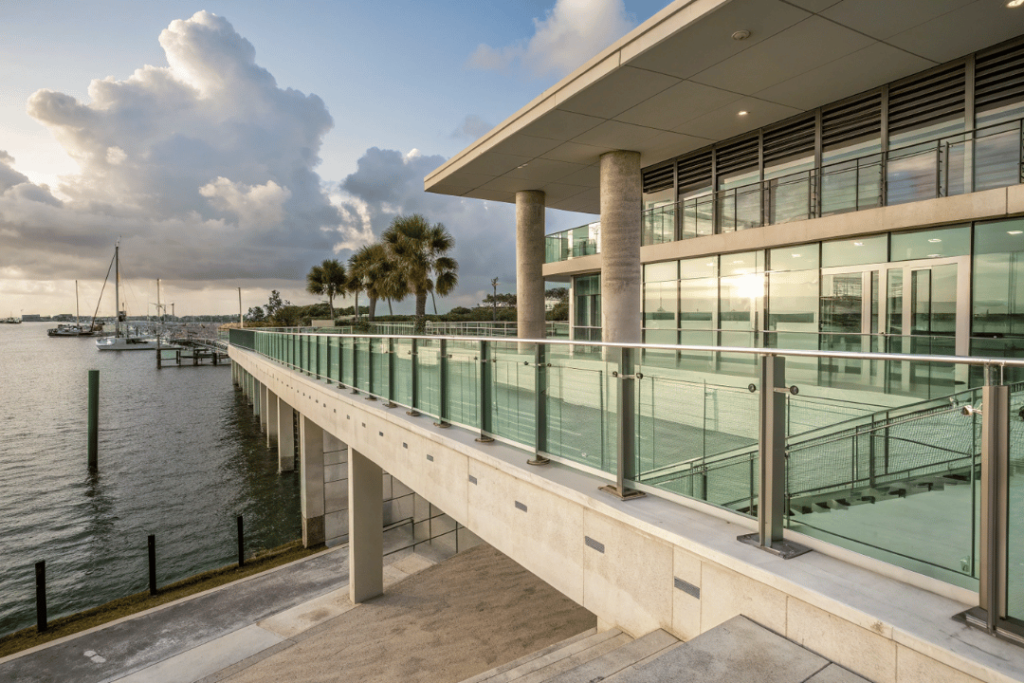
A commercial glass railing system is suitable for Florida’s coastal environments if it:
- Meets Florida Building Code requirements
- Uses laminated, impact-rated glass
- It is engineered for high wind loads
- Uses corrosion-resistant materials
- It is professionally installed and inspected
Anything less exposes property owners to unnecessary risk.
Work with Florida Coastal Glass Safety Experts
At Guardian Shield Windows & Doors, we specialize in commercial glass railing systems designed for Florida’s coastal conditions. Our team understands hurricane exposure, local building codes, and the long-term safety demands of commercial environments.If you’re planning a new installation or evaluating an existing system, contact us today to ensure your commercial glass railings meet Florida’s coastal safety standards.