
Florida homeowners are becoming more informed and more selective about how their homes are protected from hurricanes. What was once a simple decision between materials and finishes has evolved into a deeper conversation about engineering, structural performance, and long-term resilience. Nowhere is this shift more visible than in the growing comparison between traditional hinged doors and modern pivot doors.
While hinged doors have long been the standard entry solution, pivot doors are emerging as a hurricane-rated alternative that blends architectural impact with serious storm protection. As Florida’s building standards tighten and design preferences evolve, homeowners are increasingly weighing performance just as heavily as aesthetics.
In this guide, Guardian Shield Windows & Doors explores the differences between pivot and hinged doors, how each performs under hurricane conditions, and why pivot systems are becoming part of Florida’s next generation of hurricane-safe homes.
Understanding Hurricane-Rated Door Systems in Florida
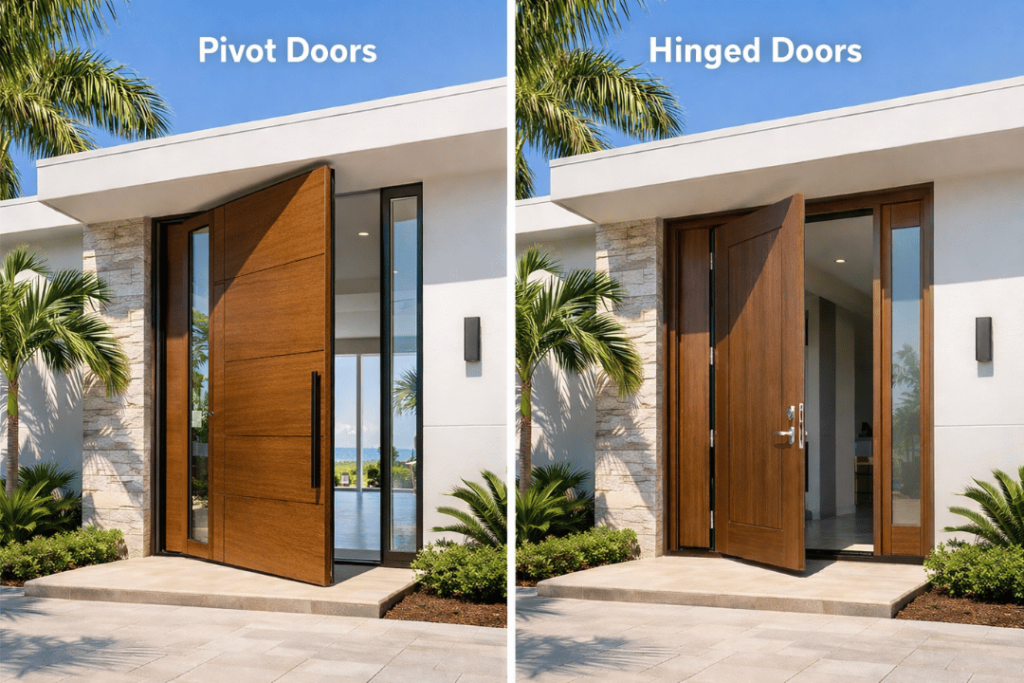
To understand why pivot doors are gaining traction, it’s important to start with what “hurricane-rated” truly means in Florida. Hurricane safety isn’t achieved by door thickness alone it’s the result of system-level engineering designed to preserve the home’s structural envelope.
Hurricane-rated doors must resist:
- windborne debris impacts
- extreme positive and negative pressure
- pressure cycling caused by hurricane gusts
- wind-driven rain and water intrusion
Florida requires compliance with the Florida Building Code (FBC) and, in many areas, High-Velocity Hurricane Zone (HVHZ) standards. Doors must pass impact testing, pressure testing, and water infiltration testing as complete assemblies — including frame, hardware, glass, and anchoring.
H2: What Are Traditional Hinged Hurricane Doors?
Hinged doors are the most familiar entry system. They operate on side-mounted hinges and swing inward or outward when opened.
How Hinged Hurricane Doors Work
- door slab supported by side hinges
- weight carried laterally through hinge hardware
- single or multi-point locking systems
- Reinforced frames anchor the door to the structure
When hurricane-rated, hinged doors use laminated impact glass or reinforced solid cores and upgraded hardware designed to withstand storm forces.
Strengths and Limitations of Hinged Doors in Hurricanes
Hinged doors remain widely used because of their simplicity and proven reliability.
Strengths of Hinged Doors
- familiar operation
- wide availability of hurricane-rated models
- easier retrofits for existing homes
- fewer structural changes required
Limitations in Modern Florida Homes
- size limitations due to hinge load capacity
- increased stress on hinges during high winds
- less suitable for oversized openings
- design constraints for modern architecture
As Florida homes trend toward larger entrances and heavier materials, traditional hinge systems begin to reach their practical limits.
What Are Hurricane-Rated Pivot Doors?
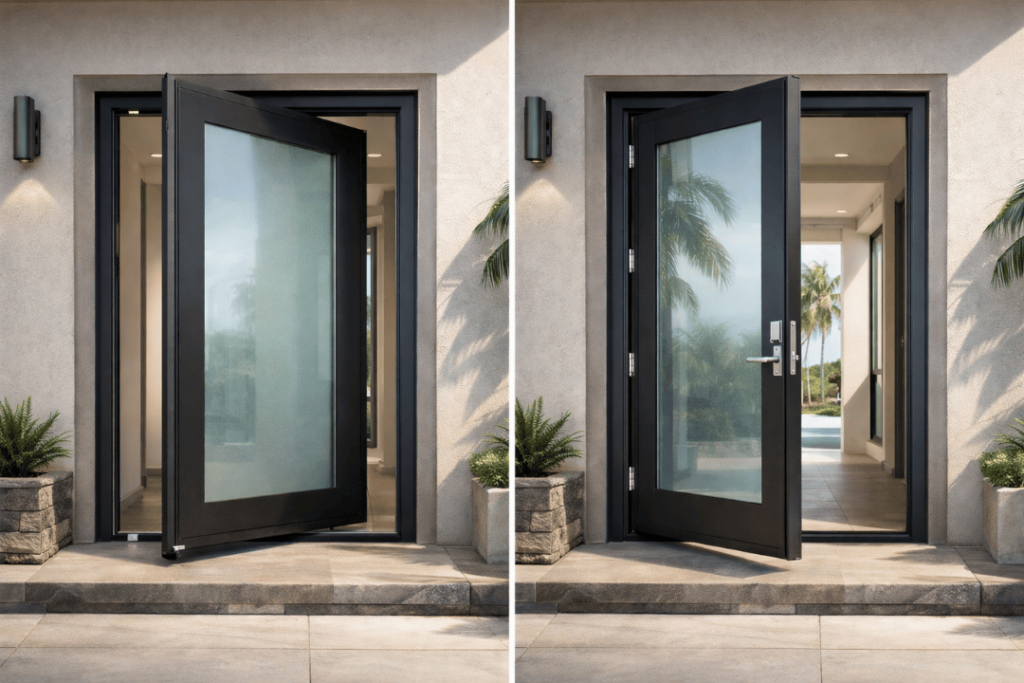
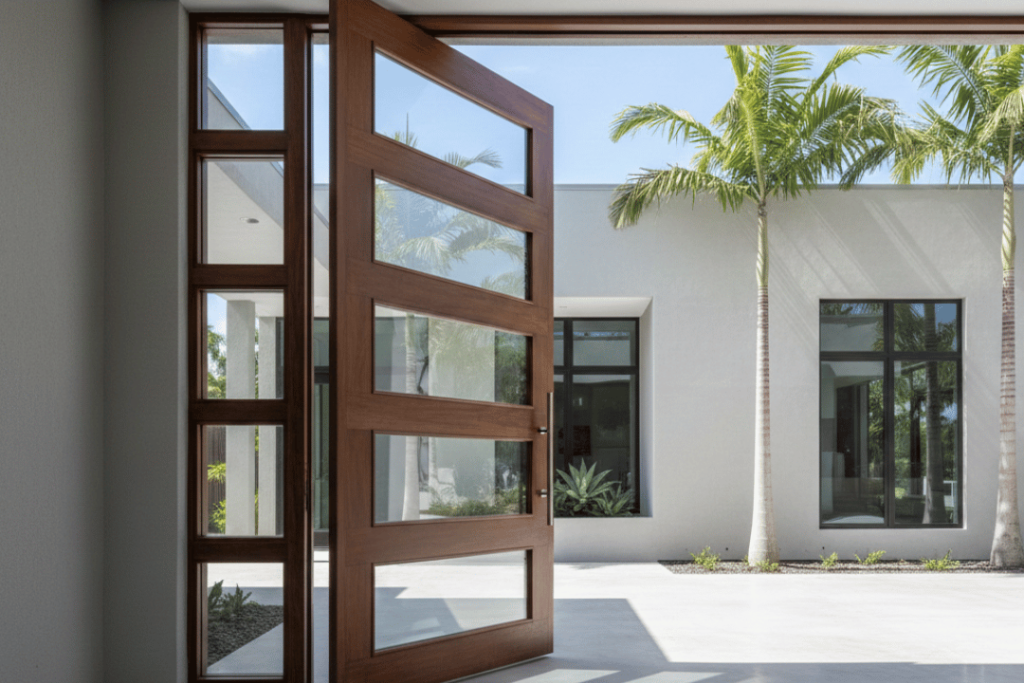
Pivot doors operate on a vertical pivot mechanism installed at the top and bottom of the door rather than side hinges. This design redistributes weight and allows for significantly larger, heavier door panels.
How Pivot Door Systems Work
- door rotates on top and bottom pivots
- weight transferred vertically into floor and header
- oversized slabs supported evenly
- multi-point locking engages when closed
- reinforced frames seal under pressure
When engineered for hurricane resistance, pivot doors combine this movement with laminated impact glass, reinforced cores, and pressure-rated hardware.
Why Pivot Doors Are Emerging in Florida’s Hurricane-Safety Trends
Florida’s architectural direction and hurricane requirements are converging and pivot doors sit at that intersection.
Key reasons for their rise include:
- ability to support oversized, impact-rated slabs
- improved load distribution during wind pressure
- compatibility with modern, minimalist designs
- increased demand for statement entrances
Pivot doors allow homeowners to achieve bold design without compromising storm readiness — a major shift from past limitations.
Storm Performance – Pivot vs Hinged Doors
From a hurricane-safety perspective, both systems can be certified, but their performance characteristics differ.
Hinged Doors in Storm Conditions
- wind pressure concentrated on hinge side
- greater stress on hardware
- potential hinge fatigue over time
- limited panel size reduces pressure surface
Pivot Doors in Storm Conditions
- pressure distributed vertically
- reduced hinge-side stress
- increased stability for large panels
- consistent alignment under pressure
For large or heavy doors, pivot systems often offer superior stability during extreme wind events.
Structural and Installation Considerations
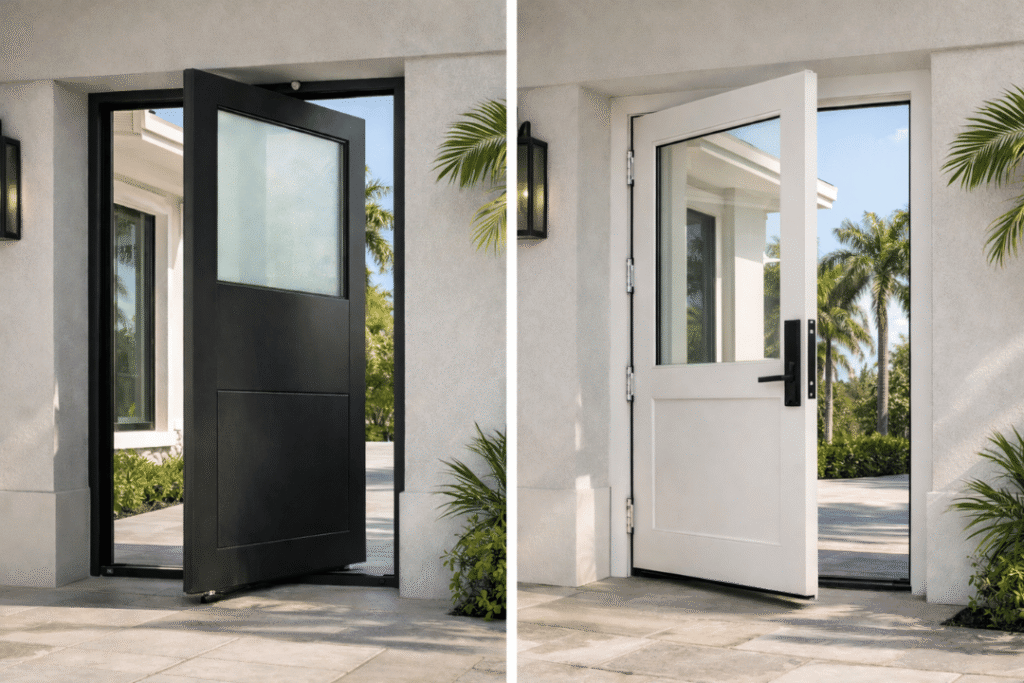
Proper installation is critical for both door types, but pivot doors require greater upfront planning.
Hinged Doors
- easier to install in existing openings
- minimal structural modification
- simpler hardware alignment
Pivot Doors
- require reinforced headers and floor anchoring
- precise alignment of pivot hardware
- structural load calculations
- professional hurricane-rated installation
In Florida, pivot doors should only be installed by specialists familiar with hurricane engineering and local code requirements.
Energy Efficiency and Sealing Performance
Both pivot and hinged doors can achieve strong energy performance when properly engineered.
However, pivot doors often feature:
- continuous perimeter seals
- compression gaskets
- multi-point locking pressure
These features help maintain tighter seals across large openings, reducing air leakage and improving indoor comfort in Florida’s hot, humid climate.
Security and Everyday Use
Hurricane-rated doors also function as security barriers.
Hinged Doors
- familiar locking systems
- proven forced-entry resistance
- limited slab thickness
Pivot Doors
- heavier door slabs
- concealed hardware
- multi-point locks
- strong resistance to prying
For homeowners seeking both storm protection and elevated security, pivot doors offer a compelling advantage.
Design Trends Shaping Florida’s Door Choices
Florida’s modern homes emphasize:
- clean lines
- oversized openings
- seamless material transitions
- minimalist detailing
Pivot doors align naturally with these trends, while hinged doors remain popular for traditional and transitional styles. As hurricane-rated pivot systems become more accessible, design-driven homeowners are increasingly embracing them.
Choosing Between Pivot and Hinged Doors for Your Florida Home
The right choice depends on priorities:
- Choose hinged doors if your home has standard openings, traditional styling, and minimal structural changes planned.
- Choose pivot doors if you want oversized design, modern aesthetics, and advanced load distribution for hurricane performance.
Both can be hurricane-rated but pivot doors represent the next evolution in Florida’s storm-safe architecture.
Guardian Shield Windows & Doors, Florida’s Impact Door Specialists
At Guardian Shield Windows & Doors, we install both hurricane-rated hinged and pivot door systems designed for Florida’s demanding conditions. Our team evaluates structural exposure, architectural goals, and lifestyle needs before recommending the right solution.
Every installation meets Florida Building Code and HVHZ requirements, ensuring performance when storms arrive.
Discover Florida’s Next Generation of Hurricane-Safe Doors
Florida’s hurricane-safety standards are evolving and so are door designs.
Connect with Guardian Shield Windows & Doors to explore hurricane-rated pivot and hinged door options built for modern Florida homes and extreme weather conditions.
Schedule your free consultation and discover how the right pivot door can transform your home’s comfort and safety.