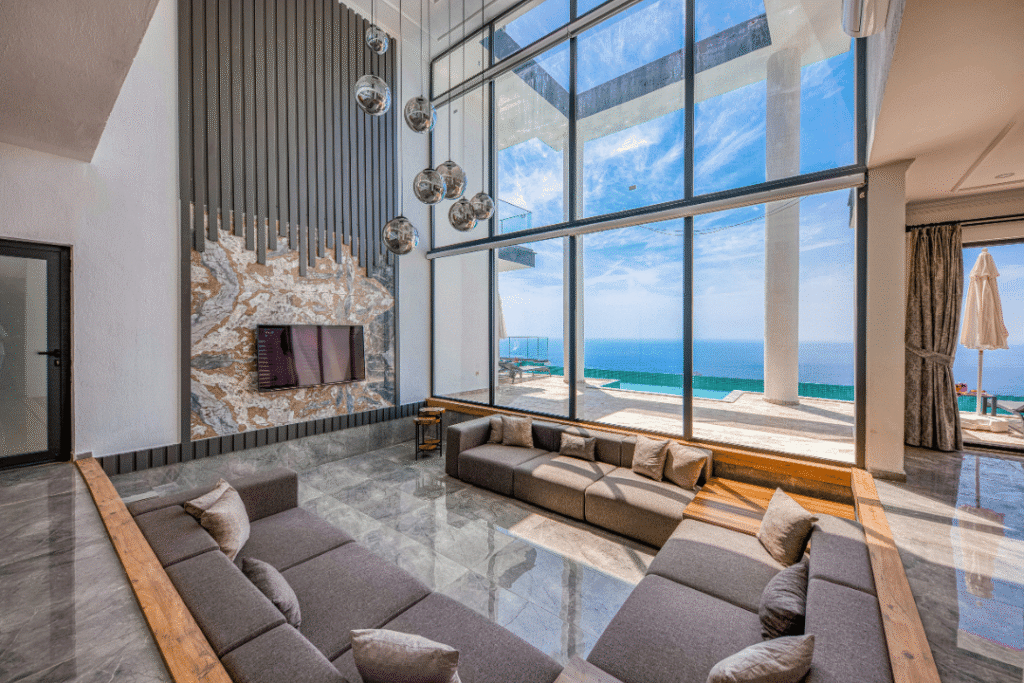
Florida homes are built around sunlight. Expansive windows, sliding glass doors, and open layouts are part of the state’s architectural identity. But while natural light enhances design and livability, Florida’s intense sun can also create unwanted heat, glare, and long-term interior wear.
Impact windows are commonly associated with hurricane protection. Yet many homeowners don’t realize that modern impact systems often include Low-E (low emissivity) coatings, an advanced glass technology that significantly improves indoor comfort year-round.
In Florida’s hot and humid climate, Low-E coatings do more than increase efficiency. They help regulate indoor temperatures, reduce solar heat gain, protect interior finishes, and support consistent comfort throughout the home.
In this guide, Guardian Shield Windows & Doors explains how Low-E coatings work within impact window systems and why they are especially valuable for Florida homeowners.
What Is a Low-E Coating?
Low-E stands for “low emissivity,” which refers to a glass surface engineered to reflect infrared energy while allowing visible light to pass through.
A Low-E coating is:
- Microscopically thin
- Made of transparent metallic layers
- Applied to the interior surface of the glass
- Nearly invisible to the eye
Its purpose is not to block sunlight entirely, but to control how heat energy moves through the window.
Sunlight consists of three primary components:
- Visible light (what we see)
- Infrared radiation (heat)
- Ultraviolet (UV) radiation
Low-E coatings are designed to reflect infrared heat and reduce UV transmission while still maintaining clarity and brightness.
Why Solar Heat Gain Is a Major Issue in Florida
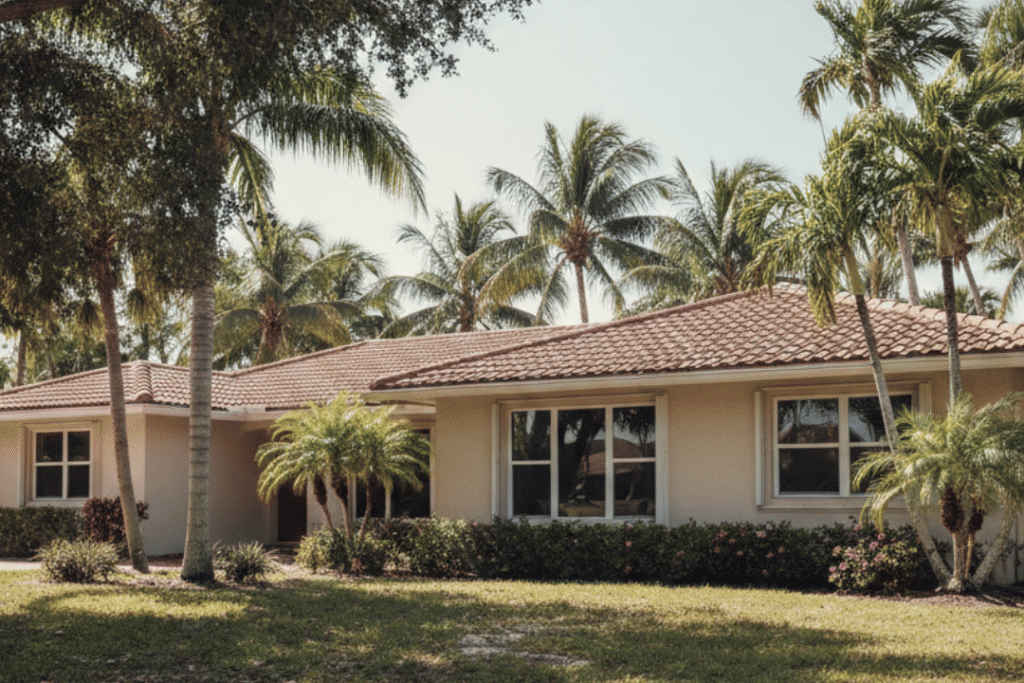
Florida’s climate presents a unique challenge for window performance. Unlike colder regions where heat retention is the main concern, Florida homes must manage year-round cooling demands.
Solar heat gain can:
- Increase indoor temperatures
- Create uneven room comfort
- Strain HVAC systems
- Raise energy costs
- Produce uncomfortable hot spots near windows
Large glass openings amplify this effect. Homes with waterfront views, wide patio doors, or floor-to-ceiling windows often experience significant sun exposure during peak hours.
Without proper heat management, even impact-rated glass alone cannot prevent thermal discomfort.
How Low-E Coatings Reduce Heat Transfer
When sunlight strikes untreated glass, infrared heat passes through and warms interior surfaces. Standard glass offers little resistance to radiant heat energy.
Low-E coatings work by:
- Reflecting infrared heat outward
- Limiting heat absorption into the glass pane
- Reducing thermal transfer into the home
This reflection process does not significantly darken the glass. Instead, it selectively manages energy wavelengths.
As a result:
- Interiors remain brighter without excessive heat
- Surface temperatures near windows stay more consistent
- Cooling systems operate more efficiently
In Florida, where air conditioning is essential for much of the year, this performance difference becomes especially important.
How Low-E Works Within Impact Window Systems
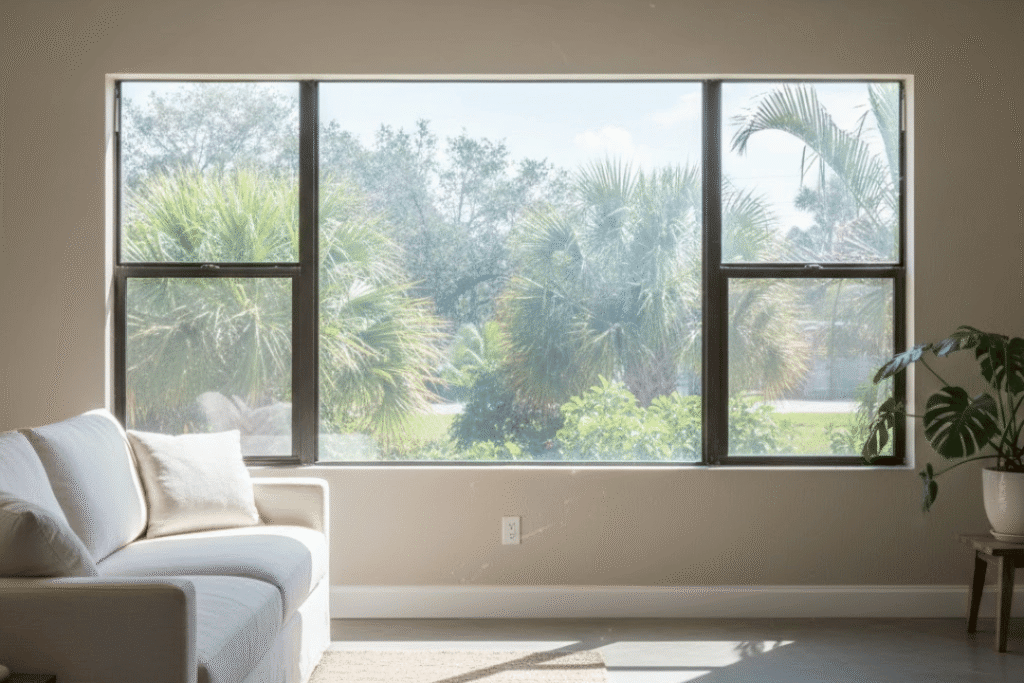
Impact windows are engineered primarily for hurricane resistance. They typically include laminated glass composed of multiple bonded layers with a strong interlayer.
When Low-E coatings are integrated into impact windows, the system provides both:
- Structural protection
- Thermal performance
A typical Low-E impact window system may include:
- Laminated safety glass
- A bonded interlayer
- Low-E coating applied to the inner glass surface
- Reinforced framing
- Compression seals for airtight performance
This combination allows homeowners to address storm safety and indoor comfort simultaneously.
Reducing UV Exposure Inside the Home
Beyond heat control, Florida homeowners must also consider ultraviolet (UV) radiation. Constant sun exposure can gradually damage interior materials.
UV rays contribute to:
- Fading hardwood flooring
- Discoloration of fabrics
- Damage to artwork
- Cabinet and furniture deterioration
Low-E coatings significantly reduce UV transmission through the glass. While natural light continues to enter the home, harmful radiation levels are lowered.
This helps preserve interior finishes and extend the life of furnishings, an important benefit in sun-exposed Florida homes.
Improving Comfort in Sun-Exposed Rooms
Certain areas of the home experience more intense sun exposure than others. South- and west-facing elevations often receive prolonged afternoon sunlight.
Without Low-E technology, these rooms may:
- Feel warmer than other parts of the home
- Experience glare during peak hours
- Require additional cooling
Low-E impact windows help balance indoor conditions by reducing temperature swings caused by direct sunlight.
This results in:
- More consistent room temperatures
- Reduced glare
- Greater comfort near window openings
For open-concept homes with large glass expanses, this stability is particularly noticeable.
Supporting Energy Efficiency and HVAC Performance
Energy efficiency is not solely about insulation. Radiant heat control plays a significant role in cooling demand.
By reflecting solar heat, Low-E coatings:
- Reduce the load on air conditioning systems
- Help maintain thermostat consistency
- Improve overall cooling efficiency
- Support indoor humidity control
When HVAC systems cycle less aggressively, homeowners may experience more stable indoor comfort levels.
While individual energy savings vary based on home design and exposure, heat-reflective technology is a meaningful contributor to long-term performance.
Glare Control Without Sacrificing Natural Light
One common misconception is that energy-efficient glass must appear dark or tinted. Low-E coatings are designed to maintain visual clarity.
Unlike heavily tinted windows, Low-E technology:
- Preserves brightness
- Maintains clear outdoor views
- Reduces harsh glare
- Avoids a “mirror-like” appearance
For Florida homeowners who value waterfront views or landscaped surroundings, maintaining visibility while improving comfort is essential.
Indoor vs Outdoor Heat Reflection
Low-E coatings also work in reverse. While Florida is primarily concerned with cooling, there are seasonal variations.
In cooler months, Low-E coatings help:
- Reflect interior heat back into the home
- Reduce heat loss through the glass
- Maintain stable indoor temperatures
Although Florida winters are mild, temperature consistency remains beneficial for comfort.
This dual-direction energy control supports year-round performance.
Florida Climate Considerations
Florida’s environment places additional demands on window systems, including:
- High humidity
- Coastal air exposure
- Strong UV intensity
- Hurricane conditions
Impact windows must meet strict structural requirements under the Florida Building Code. While Low-E coatings are not mandated for storm compliance, they are often included in modern impact systems to enhance performance.
In Florida homes, combining:
- Laminated impact glass
- Reinforced frames
- Tight compression seals
- Low-E heat-reflective coatings
creates a well-rounded window solution designed for both protection and comfort.
Who Benefits Most from Low-E Impact Windows?
Low-E coatings are particularly beneficial for:
- Homes with expansive glass walls
- Waterfront properties
- High sun-exposure neighborhoods
- Open floor plans with large living areas
- Residences with significant west-facing windows
These homes are more susceptible to solar heat gain and glare.
Homeowners seeking better temperature consistency without sacrificing natural light often see the most noticeable improvement.
Guardian Shield Windows & Doors — Impact Systems Designed for Florida Living
At Guardian Shield Windows & Doors, we help Florida homeowners understand how impact window systems perform beyond hurricane protection. Comfort, efficiency, and long-term durability all matter in a climate like Florida’s.
We focus on systems that combine:
- Laminated hurricane-rated glass
- Advanced Low-E coatings
- Reinforced structural framing
- Compliance with Florida building standards
Our goal is to provide clarity on how technology works so homeowners can make informed decisions about both storm safety and everyday comfort.
Upgrade to Impact Windows That Deliver Comfort and Protection
Impact windows are engineered to defend against extreme weather. Low-E coatings enhance how those windows perform every day.
Together, they help:
- Control solar heat gain
- Reduce UV exposure
- Improve indoor temperature stability
- Maintain bright, open living spaces
- Support energy-efficient cooling
In Florida’s climate, comfort and protection are not separate concerns. They are interconnected parts of a well-designed home.
If you’re exploring impact window options and want to understand how Low-E technology contributes to indoor comfort, Guardian Shield Windows & Doors can help you evaluate systems designed specifically for Florida living.Schedule your free consultation today and learn how advanced impact window technology can improve comfort, efficiency, and long-term performance in your home.