
Across Florida, commercial buildings are undergoing a clear design shift. Property owners, developers, and facility managers are moving away from bulky metal railings and visually obstructive barriers in favor of clean, modern systems that enhance visibility while maintaining safety. At the same time, Florida’s climate demands building materials that can withstand hurricanes, high winds, humidity, and long-term environmental exposure.
This combination of modern architectural expectations and extreme weather requirements has positioned hurricane-resistant glass railings as a leading upgrade for Florida commercial spaces. These systems offer a rare balance of aesthetics, safety, and storm performance, making them ideal for offices, hotels, retail centers, and mixed-use developments across the state.
In this guide, Guardian Shield Windows & Doors explains why hurricane-resistant glass railings are transforming Florida commercial properties and how they deliver long-term value beyond appearance alone.
Why Florida Commercial Buildings Are Rethinking Traditional Railings
Railings serve an essential role in commercial spaces. They provide fall protection, define boundaries, and guide pedestrian movement, but they also significantly impact how a space looks and feels.
Traditional railing systems often present challenges in Florida environments:
- Metal railings block sightlines and natural light
- Painted or coated steel corrodes in humid or coastal conditions
- Bulky designs clash with modern architectural trends
- Ongoing maintenance increases long-term costs
In commercial settings where first impressions matter, outdated railings can make otherwise modern spaces feel closed off or dated. Hurricane-resistant glass railings solve these issues by replacing heavy visual barriers with transparent, structurally engineered systems.
What Are Hurricane-Resistant Glass Railings?
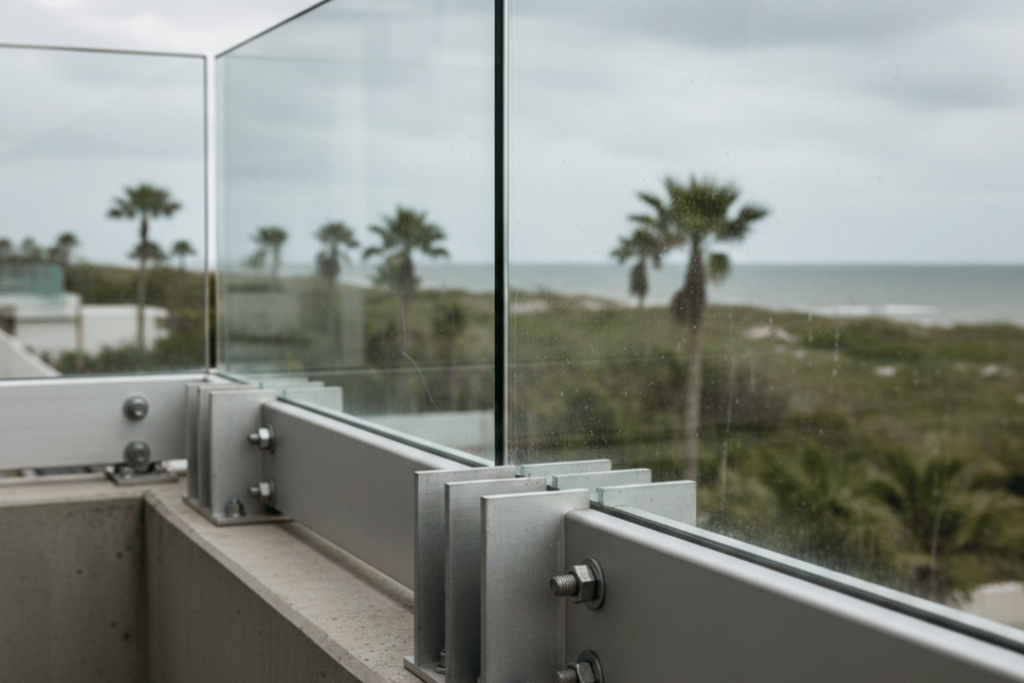
Hurricane-resistant glass railings are engineered safety systems designed to meet Florida’s demanding wind-load and impact requirements. Unlike decorative glass panels, these systems are built for structural performance in high-risk weather zones.
They typically feature:
- Laminated impact-rated glass that remains intact if cracked
- Reinforced aluminum or stainless-steel framing
- Anchoring systems designed for high wind pressures
- Compliance with Florida Building Code standards
The laminated glass used in these systems is designed to hold together even if damaged, maintaining a protective barrier during storm events and preventing dangerous glass fallout.
Storm Protection Designed for Florida Conditions
Florida’s hurricane risk changes how commercial buildings must approach safety features. Elevated walkways, balconies, staircases, and terraces become vulnerable points during extreme weather.
Hurricane-resistant glass railings are engineered to:
- Withstand hurricane-force wind pressures
- Resist impact from wind-driven debris
- Maintain structural integrity during storms
For commercial properties in coastal and high-velocity hurricane zones, these systems provide critical protection while preserving design flexibility.
Safety and Code Compliance in Commercial Environments
Safety is a non-negotiable requirement in commercial buildings. Railing systems must meet strict regulations for height, load resistance, and impact performance—especially in public-facing areas.
Hurricane-resistant glass railings are designed to:
- Prevent falls from elevated surfaces
- Withstand crowd pressure in high-traffic areas
- Meet commercial safety and building code requirements
When properly specified and installed, these systems support both occupant safety and regulatory compliance across Florida jurisdictions.
Enhancing Visibility, Light, and Spatial Flow
One of the most significant benefits of glass railings is their ability to transform a space. Unlike opaque barriers, glass allows light to pass through a building freely.
This improves:
- Natural light distribution
- Visual connection between floors or levels
- Wayfinding and spatial awareness
In offices, hotels, and retail environments, improved visibility contributes to a more open, welcoming atmosphere that benefits both employees and visitors.
Ideal Applications in Florida Commercial Properties
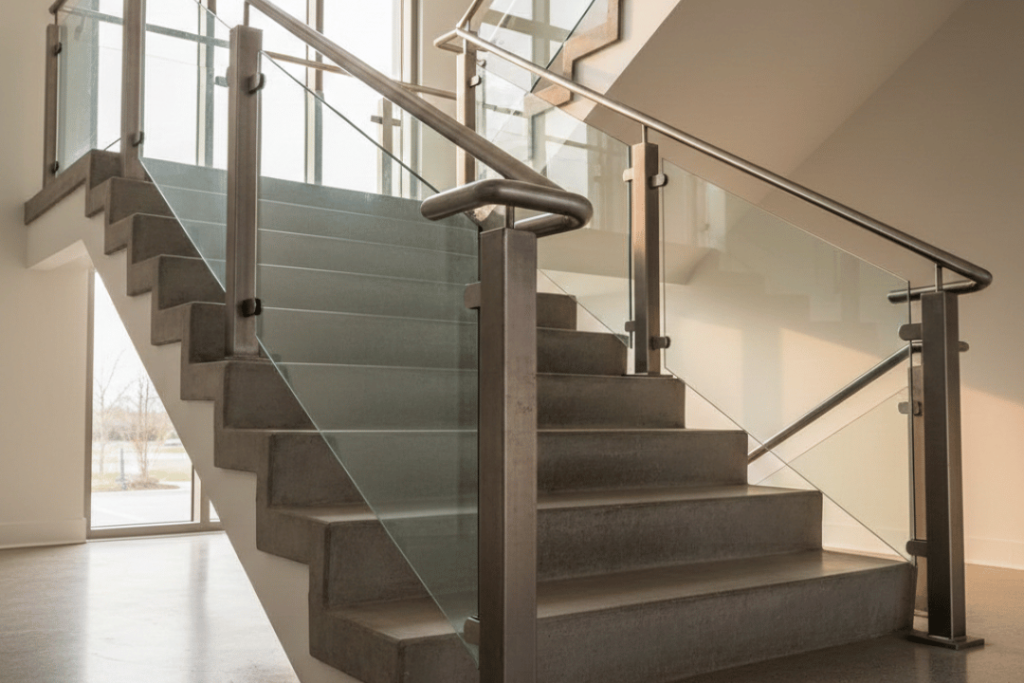
Hurricane-resistant glass railings are used across a wide range of commercial applications throughout Florida, including:
- Office buildings and corporate campuses
- Hotels, resorts, and hospitality venues
- Retail centers and mixed-use developments
- Restaurants and entertainment spaces
- Staircases, balconies, terraces, and elevated walkways
Their versatility makes them suitable for both interior and exterior installations, even in high-exposure environments.
Durability in Coastal and High-Humidity Environments
Florida’s environment is tough on traditional building materials. Salt air, UV exposure, and constant humidity can quickly degrade painted steel or wood railing systems.
Hurricane-resistant glass railing systems offer:
- Corrosion-resistant framing materials
- Glass that resists UV-related degradation
- Reduced maintenance requirements
This durability helps commercial property owners maintain a clean, professional appearance while lowering long-term maintenance costs.
Supporting Modern Branding and Tenant Expectations
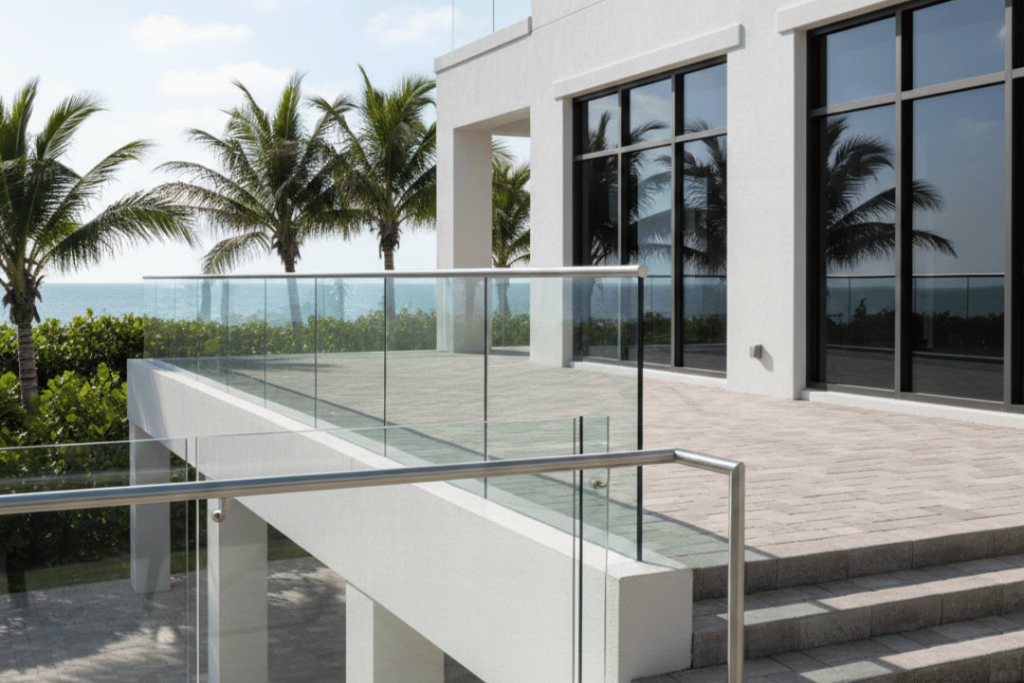
Today’s commercial tenants and customers expect spaces that feel modern, open, and thoughtfully designed. Glass railings align with contemporary architectural trends and elevate the overall look of a property.
For property owners, this means:
- Improved tenant attraction and retention
- Enhanced perceived property value
- Stronger alignment with modern design standards
In competitive Florida markets, these visual upgrades can directly influence leasing and customer engagement.
Seamless Integration with Hurricane-Resistant Building Systems
Hurricane-resistant glass railings integrate naturally with other storm-ready building components, creating a cohesive approach to safety and design.
They pair well with:
- Impact-rated windows and doors
- Commercial storefront systems
- Balcony enclosures and outdoor terraces
This integration allows commercial buildings to maintain consistent aesthetics while strengthening overall storm protection.
Installation Quality Is Critical for Performance
Even the strongest glass railing system relies on proper installation to perform as intended. Structural anchoring, spacing, and alignment are critical, especially in hurricane-prone regions.
Professional installation ensures:
- Compliance with the Florida Building Code
- Proper load transfer and anchoring
- Long-term structural integrity
Working with experienced professionals helps avoid costly failures and ensures the system meets both safety and storm-resistance expectations.
Long-Term Value Beyond Aesthetics
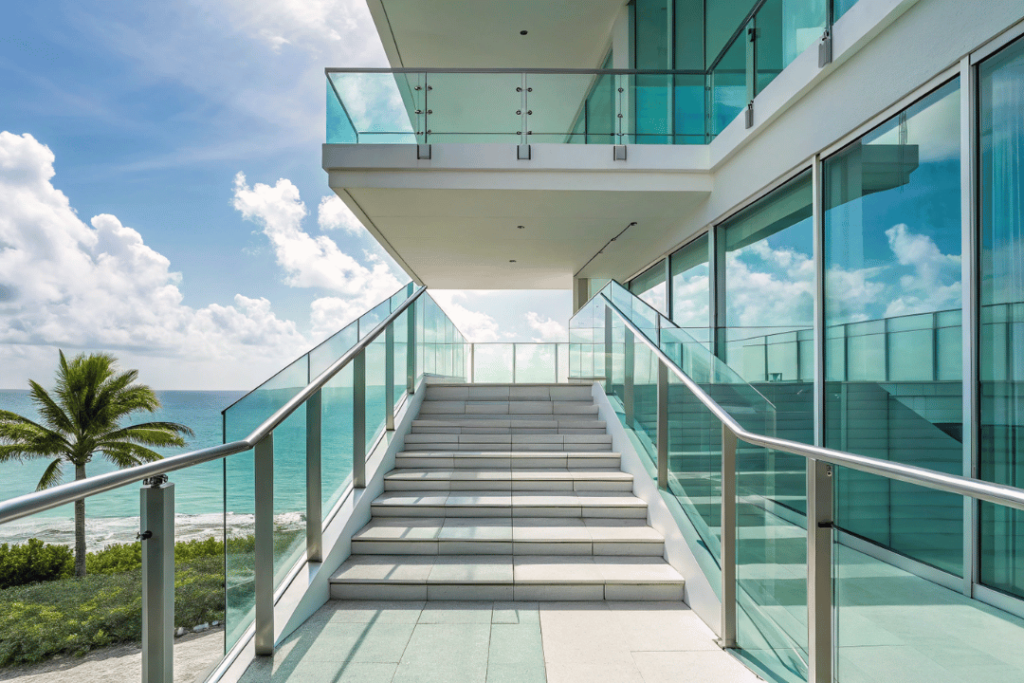
While glass railings are often chosen for their appearance, their long-term value extends well beyond aesthetics. Hurricane-resistant systems contribute to:
- Reduced storm damage risk
- Improved safety performance
- Lower maintenance costs
- Enhanced property appeal
For commercial property owners, this combination supports both operational efficiency and long-term asset value.
Is a Hurricane-Resistant Glass Railing Right for Your Property?
Hurricane-resistant glass railings are an excellent fit for Florida commercial properties that:
- Operate in high-wind or coastal areas
- Require code-compliant safety systems
- Want modern, open architectural design
- Need durable, low-maintenance solutions
They provide a level of performance and visual clarity that traditional railing systems can’t match.
Modernize Your Commercial Space with Guardian Shield Windows & Doors
At Guardian Shield Windows & Doors, we help Florida commercial property owners design and install hurricane-resistant glass railing systems built for safety, durability, and modern appeal. Our team understands Florida’s building codes, storm requirements, and commercial design standards.If you’re ready to modernize your commercial space while preparing for Florida’s extreme weather conditions, contact us today to learn how hurricane-resistant glass railings can elevate your property.