
Glass staircases are becoming increasingly common in modern Florida homes, but many homeowners pause when they first encounter the idea. The concern is understandable. Stairs are a high-traffic, load-bearing feature, and glass is often associated with fragility. It’s natural to ask whether a staircase made with glass can truly be safe for everyday living.
The reality is that residential glass staircases are not built with ordinary glass, nor are they designed as decorative elements alone. In Florida, where building codes are among the strictest in the country, glass stair systems must meet rigorous safety, strength, and impact standards.
This guide from Guardian Shield Windows & Doors explains how residential glass staircases are engineered for safety, what materials are used, how Florida building codes apply, and why properly designed glass staircases are considered a secure option for modern homes.
Why Safety Is the First Question Homeowners Ask
Staircases experience constant stress. They must support body weight, handle movement, and remain stable over decades of use. When homeowners imagine glass staircases, they often picture fragile panels or shattering surfaces, which understandably raises concerns about breakage and injury.
What’s important to understand is that residential glass staircases are structural systems, not decorative glass installations. Every component is engineered with safety margins well beyond everyday use.
In Florida homes, glass staircases are designed to:
- Support consistent live loads
- Resist impact and pressure
- Prevent dangerous breakage
- Maintain stability even if damaged
These systems are evaluated not by appearance, but by performance.
The Type of Glass Used in Residential Staircases
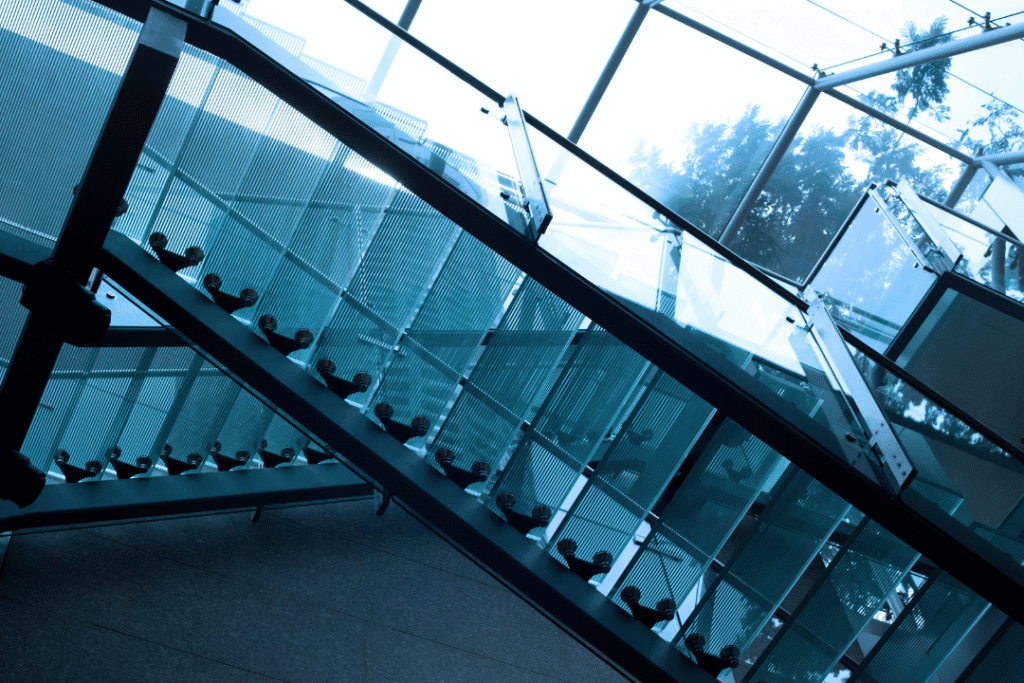
One of the biggest misconceptions about glass staircases is the type of glass involved. Standard window or tabletop glass is never used in staircase applications.
Instead, residential glass staircases rely on tempered glass, laminated glass, or a combination of both.
Tempered Safety Glass
Tempered glass is heat-treated to increase its strength. It is significantly stronger than regular glass and is designed to break into small, dull fragments rather than sharp shards if failure occurs.
This reduces the risk of serious injury and is a baseline requirement for many residential applications.
Laminated Glass for Structural Safety
Laminated glass consists of multiple layers bonded together with a strong interlayer. Even if the glass cracks, the layers remain adhered to the interlayer, keeping the panel intact.
For staircases, laminated glass provides critical benefits:
- Prevents full break-through
- Maintains the barrier even when damaged
- Reduces fall risk
- Adds redundancy to the system
This is the same glass technology used in hurricane impact systems, reinforcing its reliability in Florida homes.
How Glass Staircases Are Engineered as Systems
A safe glass staircase is never just “glass attached to stairs.” It is a system where glass, hardware, anchoring, and structure work together.
Key engineering elements include:
- Load-rated glass thickness
- Reinforced mounting points
- Structural rail or channel systems
- Secure anchoring into floors and stair stringers
The glass panels are designed to distribute weight and force evenly, rather than absorbing pressure at a single point. This system-based design ensures stability during everyday use and unexpected impacts.
Florida Building Code Requirements for Glass Staircases
Florida has some of the most comprehensive building codes in the United States, particularly when it comes to safety-related features. Residential glass staircases must comply with Florida Building Code (FBC) requirements, which include provisions for glass strength, impact resistance, and guardrail performance.
These codes address:
- Minimum glass thickness
- Load resistance standards
- Fall protection requirements
- Guardrail height and spacing
In certain applications, additional standards such as ASTM testing protocols may also apply. The goal is to ensure that glass staircases perform reliably under real-world conditions.
When designed and installed correctly, glass staircases are evaluated the same way as any other structural element in the home.
What Happens If Glass Is Damaged?
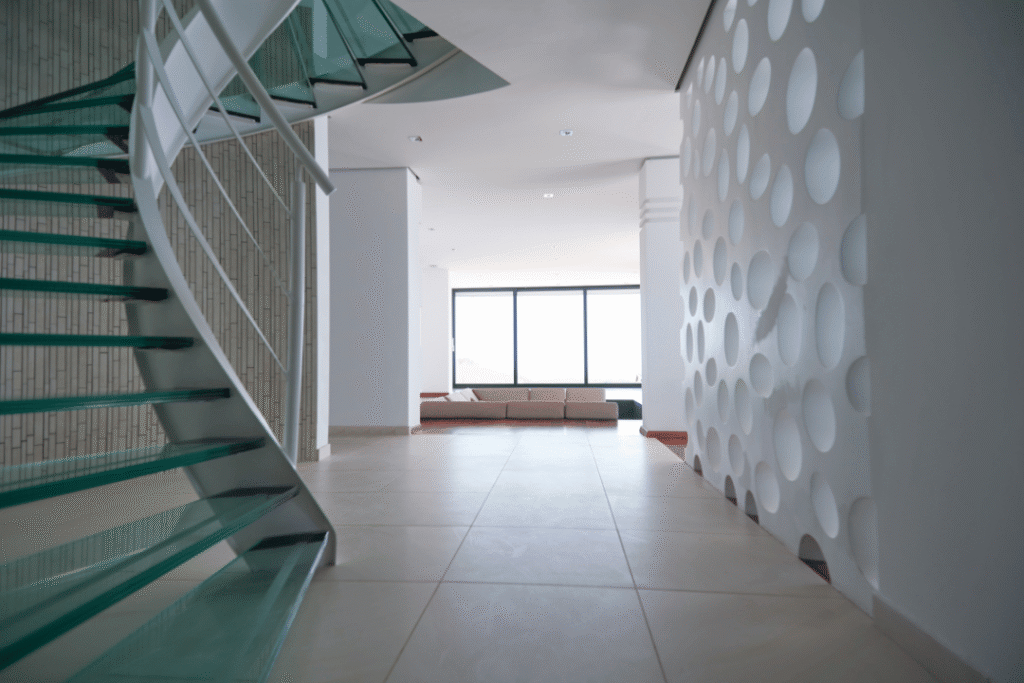
Another common concern is what happens if the glass cracks or is struck by force. This is where laminated safety glass plays a critical role.
If damage occurs:
- The glass may crack, but it stays bonded
- The barrier remains intact
- The opening is not exposed
- Immediate collapse does not occur
This behavior prevents sudden failure and gives homeowners time to address repairs safely. It’s one of the reasons laminated glass is preferred for staircase and railing systems in residential environments.
Slip Resistance and Everyday Use
Safety isn’t only about strength. Everyday usability matters just as much. For staircases that incorporate glass treads or nearby glass panels, slip resistance and visibility are carefully considered.
Modern glass staircase designs often include:
- Textured or treated walking surfaces
- Clear visual contrast for step edges
- Lighting integration to improve visibility
These features help reduce the risk of slips or missteps, making glass staircases suitable for daily use by families and guests.
Are Glass Staircases Safe for Children and Pets?
When properly designed, residential glass staircases are safe for households with children and pets. Laminated glass prevents dangerous breakage, while solid panel designs eliminate large gaps that could pose risks.
Additional safety advantages include:
- Smooth surfaces without splinters
- No balusters that children can climb
- Clear visibility for supervision
As with any staircase, design choices should reflect the household’s needs, but glass staircases do not inherently pose greater risks when built to code.
Long-Term Durability in Florida Homes
Florida’s climate presents challenges such as humidity, heat, and UV exposure. Glass staircases perform well in these conditions because glass does not warp, swell, or rot like some traditional materials.
High-quality glass systems offer:
- Resistance to moisture damage
- Stable performance over time
- Minimal degradation from sunlight
With proper installation and hardware selection, glass staircases maintain both safety and appearance for years.
Why Professional Design and Installation Matter
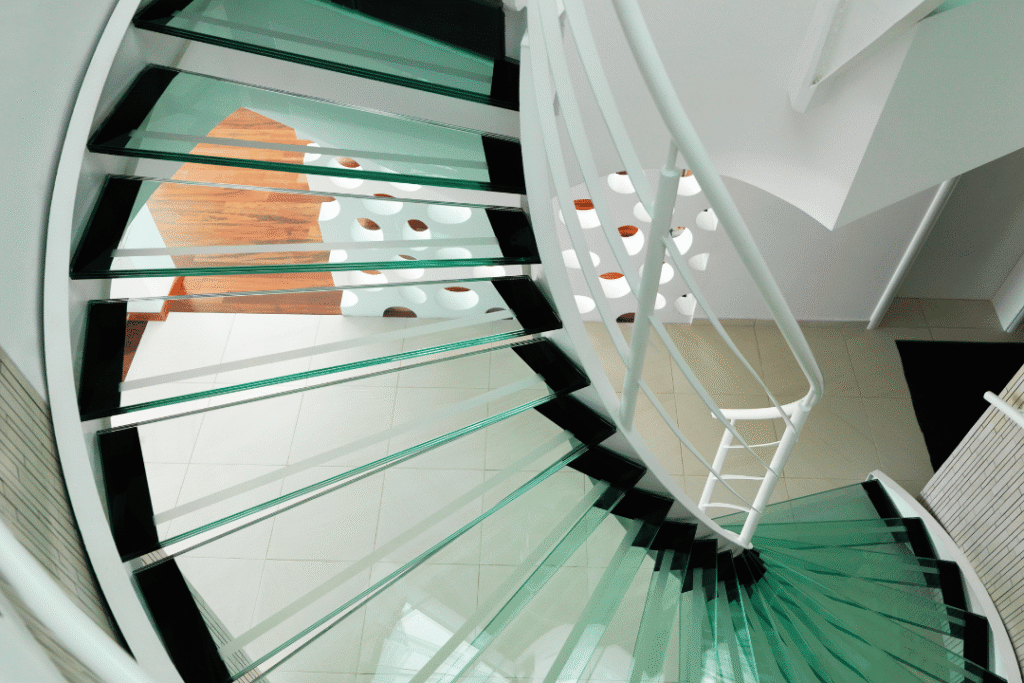
The safety of a residential glass staircase depends heavily on proper design and installation. Incorrect glass selection, poor anchoring, or non-compliant hardware can compromise performance.
Working with experienced professionals ensures:
- Code-compliant materials are used
- Structural loads are properly calculated
- Installation meets Florida safety standards
This is why glass staircases should always be handled by specialists familiar with residential safety requirements.
Guardian Shield Windows & Doors – Glass Safety You Can Trust
At Guardian Shield Windows & Doors, we approach glass staircases as engineered safety systems, not just design features. Our focus is on code compliance, structural integrity, and long-term performance in Florida homes.
We ensure:
- Proper glass selection
- Certified installation methods
- Full adherence to Florida Building Code standards
Our goal is to give homeowners confidence that their glass staircase is as safe as it is visually striking.
Get Expert Guidance on Safe Glass Staircase Design
Residential glass staircases are safe when they are designed with the right materials, engineered systems, and professional installation. Understanding how safety glass works and how Florida standards apply helps homeowners make informed decisions.
If you’re considering a glass staircase or have questions about safety and compliance, connect with Guardian Shield Windows & Doors for expert guidance.
Schedule your free consultation today and explore glass staircase solutions built for Florida homes with safety at the core.