
Florida homes are changing not just in how they look, but in how they are engineered. Today’s homeowners want architectural statement pieces that reflect modern design while still standing up to hurricanes, intense heat, and heavy rain. One feature rising rapidly at the intersection of design and performance is the architectural pivot door.
Once considered purely a luxury design element, pivot doors have evolved into hurricane-rated systems capable of protecting Florida homes without sacrificing style. Their oversized scale, clean lines, and smooth movement make them visually striking, while advancements in impact engineering allow them to meet Florida’s strict storm standards.
In this in-depth guide, Guardian Shield Windows & Doors explains how architectural pivot doors are built for Florida storms, what makes them hurricane-rated, and why they are redefining modern home protection across the state.
H2: Understanding Hurricane-Rated Door Systems in Florida
To appreciate how architectural pivot doors can protect against hurricanes, it’s important to understand what hurricane-rated actually means in Florida. Hurricane resistance is not achieved by aesthetics or material thickness alone; it is the result of system-level engineering designed to preserve the home’s structural envelope during extreme conditions.
Hurricane-rated door systems must resist:
- windborne debris impacts
- extreme positive and negative wind pressure
- rapid pressure cycling from gusting storms
- wind-driven rain and water intrusion
Florida requires compliance with the Florida Building Code (FBC) and, in many areas, High-Velocity Hurricane Zone (HVHZ) standards. Doors are tested as complete assemblies, including slab, glass, frame, hardware, and anchoring, ensuring performance under real storm forces. Architectural pivot doors engineered to meet these standards are no longer just decorative; they are functional storm barriers.
What Are Architectural Pivot Doors?
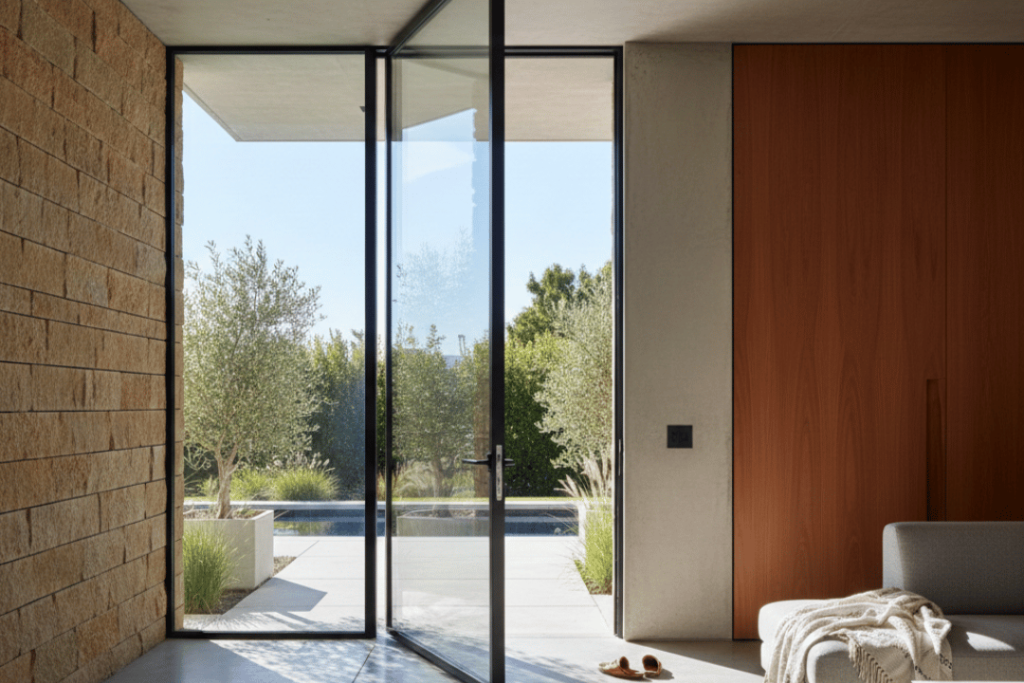
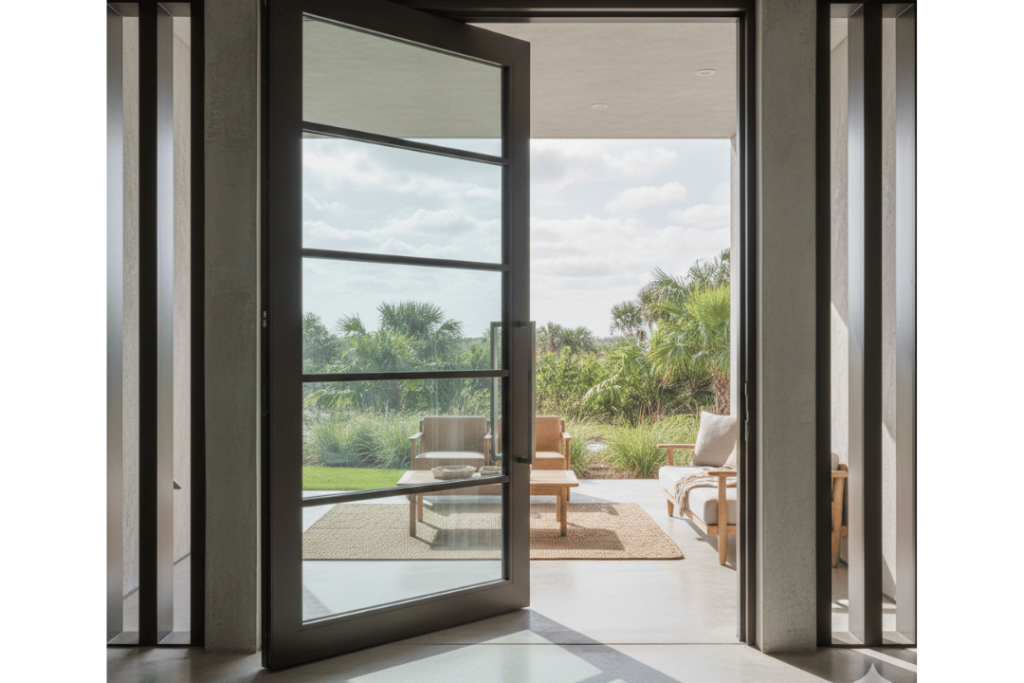
Architectural pivot doors differ from traditional hinged doors in both operation and scale. Instead of swinging on side-mounted hinges, pivot doors rotate on a pivot point located at the top and bottom of the door slab. This design redistributes weight vertically rather than laterally, allowing for significantly larger and heavier door panels.
How Architectural Pivot Door Systems Work
- Oversized door slabs rotate on top and bottom pivot hardware
- Door weight transfers directly into the floor and header
- Reinforced frames stabilize the opening
- Multi-point locking systems secure the slab when closed
- Compression seals engage along the perimeter
This engineering approach makes pivot doors ideal for modern architecture and impact-rated construction, where large door sizes and heavy materials are common.
Why Pivot Doors Are Becoming Architectural Statements in Florida
Florida’s modern home designs emphasize bold entrances, minimalist lines, and seamless transitions between materials. Architectural pivot doors align perfectly with these trends.
Key reasons for their growing popularity include:
- ability to support oversized door panels
- clean, uninterrupted visual lines
- compatibility with glass, metal, wood, and composite materials
- dramatic curb appeal without ornate detailing
For homeowners and architects alike, pivot doors create a strong first impression while complementing contemporary Florida architecture.
Lifestyle Benefits of Architectural Pivot Doors
Beyond appearance, pivot doors enhance daily living in subtle but meaningful ways.
Lifestyle advantages include:
- smooth, balanced movement despite large size
- wider clear openings than traditional hinged doors
- effortless operation for heavy slabs
- improved accessibility and flow
Opening a pivot door feels deliberate and fluid, reinforcing a sense of scale and refinement. For Florida homeowners who value both design and function, pivot doors elevate everyday experiences.
Storm Performance of Hurricane-Rated Pivot Doors
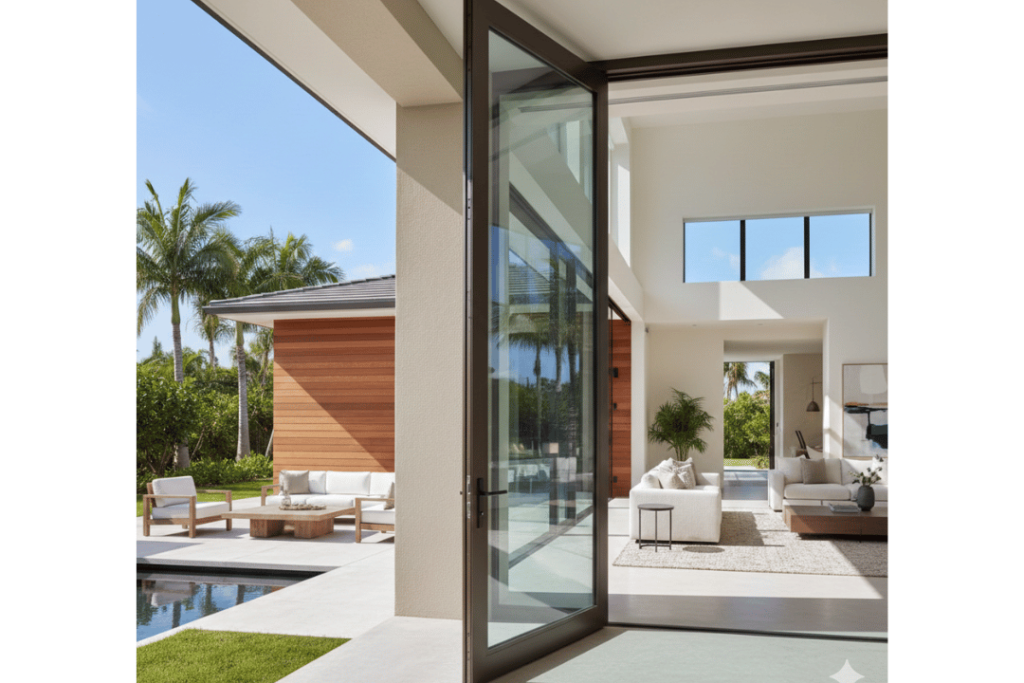
Architectural pivot doors engineered for Florida storms are designed to meet the same impact and pressure requirements as other hurricane-rated openings.
Storm-Protection Features Include:
- laminated impact glass with PVB or SGP interlayers
- reinforced solid or composite cores
- pressure-rated pivot hardware
- multi-point locking mechanisms
- sealed thresholds and compression gaskets
During debris impact, laminated glass may crack but remains intact, preventing wind from entering the home. The pivot mechanism distributes pressure evenly across the slab, helping the door maintain alignment under extreme wind loads.
Structural and Installation Considerations
Pivot doors require precise structural planning, especially when installed in hurricane-prone regions.
Key considerations include:
- reinforced floor slabs and headers
- accurate load calculations for oversized panels
- precise alignment of pivot hardware
- integration with impact-rated frames and seals
Because pivot doors carry weight differently than hinged doors, professional installation by hurricane specialists is essential. Proper anchoring ensures both storm performance and long-term durability.
Materials Used in Hurricane-Rated Architectural Pivot Doors
Architectural pivot doors support a wide range of materials, many chosen for both strength and aesthetics.
Common material options include:
- aluminum-clad systems for corrosion resistance
- reinforced fiberglass or composite cores
- laminated impact glass inserts
- wood veneers bonded to impact-rated substrates
These materials allow homeowners to achieve luxury aesthetics while meeting Florida’s demanding performance standards.
Energy Efficiency and Indoor Comfort
Despite their size, hurricane-rated pivot doors can be highly energy efficient when engineered properly.
Energy-saving features include:
- insulated cores
- Low-E laminated glass
- tight perimeter seals
- thermal-break frames
When closed, pivot doors help block heat, reduce air leakage, and stabilize indoor temperatures critical benefits in Florida’s hot, humid climate.
Security Advantages of Pivot Door Systems
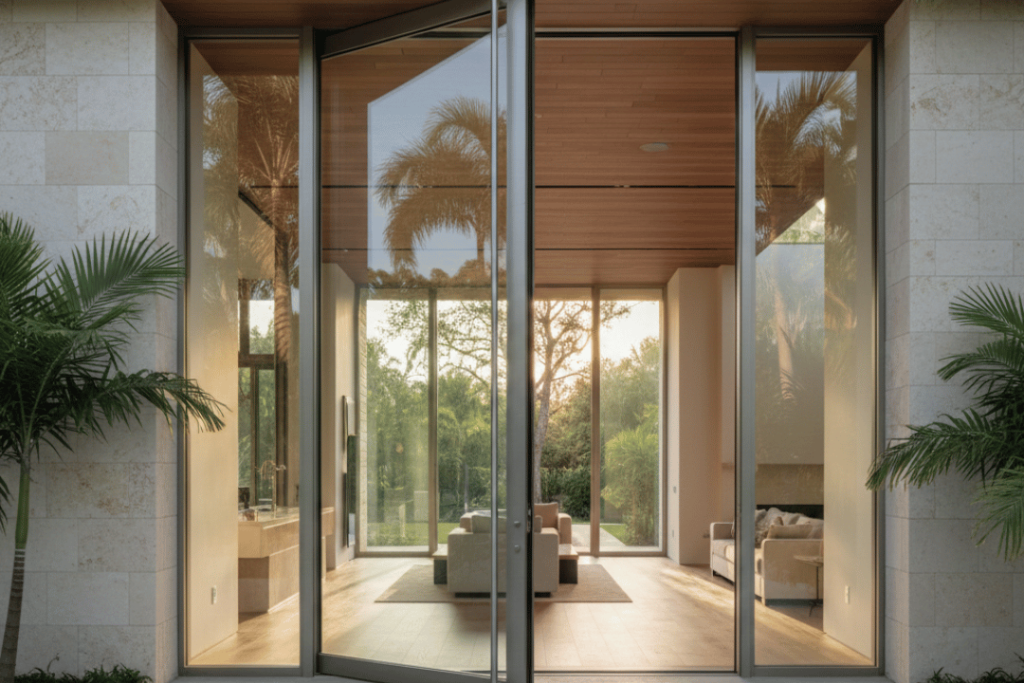
Hurricane-rated pivot doors also enhance home security. Their weight, reinforced construction, and locking systems make forced entry extremely difficult.
Security benefits include:
- resistance to prying and impact
- multi-point locking along the door edge
- reinforced strike plates
- concealed hardware
For Florida homeowners seeking both storm protection and everyday security, pivot doors offer a powerful combination.
How Architectural Pivot Doors Increase Home Value in Florida
In Florida’s competitive real estate market, architectural features that combine design and durability stand out.
Hurricane-rated pivot doors can:
- boost curb appeal
- increase perceived property value
- signal hurricane readiness
- reduce future upgrade needs
Buyers increasingly recognize pivot doors as premium features, especially when paired with hurricane certification and modern design.
Guardian Shield Windows & Doors — Specialists in Architectural Pivot Doors
At Guardian Shield Windows & Doors, we specialize in installing architectural pivot door systems engineered for Florida storms. Our process includes structural evaluation, product selection, and precision installation to ensure compliance with Florida Building Code and HVHZ requirements.
We help homeowners achieve bold architectural style without compromising safety, performance, or comfort.
Experience Where Style Meets Hurricane Protection
Architectural pivot doors prove that Florida storm protection doesn’t have to sacrifice design.
Connect with Guardian Shield Windows & Doors to explore hurricane-rated pivot door systems built for modern Florida homes and extreme weather conditions.
Schedule your free consultation today and get expert guidance on hurricane-rated pivot door systems that combine modern design, structural integrity, and storm-ready protection for Florida homes.