For many inland Florida homeowners, yes. Hurricanes do not stop at the beach. Strong storms have carried damaging winds, flying debris, and tornadoes deep into the state. Depending on where you live, the building code may still require protected openings. And impact windows offer everyday benefits that have nothing to do with storms: a quieter home, UV protection, better security, possible insurance savings, and lower cooling costs when paired with the right glass. Whether they are worth it for you depends on your wind zone, your current windows, your budget, and how long you plan to stay.
Hurricanes Do Not Stop At The Coast
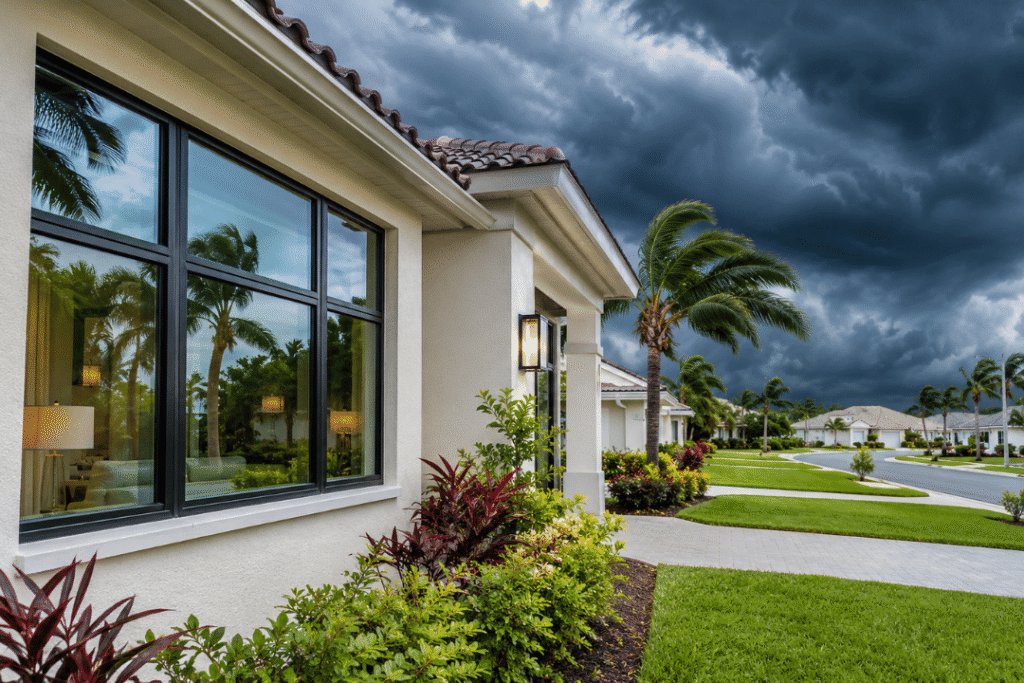
Florida is a narrow peninsula, and a hurricane can cross it in a matter of hours. Some well-documented examples, recorded by the National Hurricane Center:
- Hurricane Charley (2004) made landfall in Southwest Florida as a Category 4 storm and was still a hurricane as it moved through the Orlando area.
- Hurricane Michael (2018) made landfall near Mexico Beach as a Category 5 storm and carried hurricane-force winds well inland into southwest Georgia.
- Hurricane Ian (2022) made landfall in Southwest Florida as a Category 4 storm, then crossed the peninsula, bringing damaging winds and severe flooding to inland communities.
- Hurricane Milton (2024) made landfall near Siesta Key as a Category 3 storm, crossed Central Florida, and exited on the Atlantic coast. A tornado outbreak ahead of the storm struck communities far from where it made landfall.
Winds weaken as a hurricane moves over land, but they can still be strong enough to send branches, roof shingles, fences, and outdoor furniture flying.
Why A Broken Window Matters
When a window breaks during a storm, wind and rain rush inside. Beyond the water damage, that sudden rush of air can pressurize the inside of the home, adding upward force on the roof from within. Keeping openings intact helps keep the building envelope sealed.
What The Code Requires Away From The Coast

The Florida Building Code, published by the Florida Building Commission, does not draw the line at the shoreline. It uses wind speed maps.
Wind-Borne Debris Regions
Glazed openings in wind-borne debris regions must be impact resistant or protected by an approved system, such as shutters. These regions include:
- Areas where the ultimate design wind speed is 140 mph or greater, wherever they are
- Areas within one mile of the coast where the ultimate design wind speed is 130 mph or greater
Because of the first rule, some locations well away from the coast still fall inside a wind-borne debris region. Your local building department can tell you the design wind speed for your address.
If You Are Outside A Wind-Borne Debris Region
Impact protection is not required, but replacement windows must still meet the design pressure required for your home. In this case, impact windows are an upgrade you choose for the protection and benefits they provide, not a code requirement.
Benefits That Have Nothing To Do With The Coast
Insurance Savings
Florida law requires insurers to offer discounts or credits for qualifying windstorm mitigation features, and this applies to homes across the state, not just on the coast. Protected openings are one of the features considered. A wind mitigation inspection documents your home’s features so your insurer can apply any credits. Ask your insurer or agent how much protecting your openings would change your premium before you decide.
Protection From Severe Storms
Inland Florida also sees strong thunderstorms and tornadoes, which can send debris into windows. Impact glass resists flying debris far better than ordinary glass. No residential window is rated to withstand a direct tornado hit, but impact glass can help keep openings intact in many severe storms.
No Shutters To Put Up
Shutters only protect you if someone installs them before the storm. Impact windows are always in place, which matters if you travel, spend part of the year away, or would have trouble lifting heavy panels.
Everyday Comfort And Security
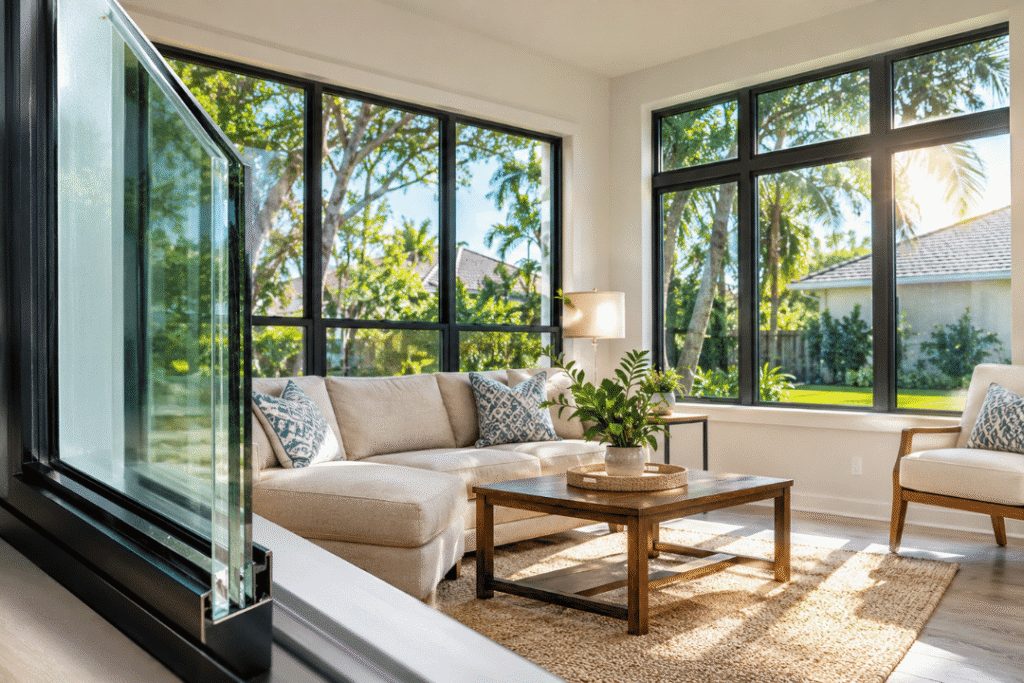
- Quieter home. The laminated interlayer dampens traffic, neighborhood, and airplane noise.
- UV protection. Laminated glass blocks about 99 percent of UV rays, helping prevent fading.
- Security. Impact glass stays bonded to the interlayer when cracked, which makes break-ins slower and noisier.
- Energy savings. Inland Florida summers are just as hot. With Low-E glass and a low solar heat gain coefficient, impact windows can help reduce cooling costs.
When Impact Windows Make The Most Sense Inland
- Your home is in a wind-borne debris region, so protection is required anyway.
- Your current windows are old, single-pane, drafty, or due for replacement.
- Your insurer offers a meaningful credit for protected openings.
- You plan to stay in your home for years and want to avoid putting up shutters.
- You travel or are away for part of the year.
- You want the added noise reduction, UV protection, and security.
When Alternatives May Make Sense
Impact windows cost more up front than most shutter systems. If your windows are relatively new and energy efficient, you are outside a wind-borne debris region, and you are comfortable deploying protection before storms, approved shutters may be a reasonable choice.
| Impact windows | Hurricane shutters | |
| Protection | Always in place | Only when installed before a storm |
| Effort | None before a storm | Must be put up and taken down |
| Everyday benefits | Noise reduction, UV protection, security, energy savings with Low-E glass | Minimal when not deployed |
| Upfront cost | Higher | Generally lower |
| Appearance | Looks like a regular window | Visible hardware or tracks; panels must be stored |
How To Decide
- Find your design wind speed. Ask your local building department whether your address is in a wind-borne debris region.
- Ask your insurer. Find out what credit protected openings would earn on your policy.
- Evaluate your current windows. Age, condition, and energy performance all matter.
- Think about time. The longer you stay, the more years of savings and comfort you get.
- Get a written, itemized quote. Compare impact windows with other protection options for your specific home.
Frequently Asked Questions
Do I need impact windows if I live inland in Florida? It depends on your location. If your home is in a wind-borne debris region, openings must be impact resistant or protected by an approved system such as shutters. Your local building department can confirm your design wind speed.
Do hurricanes really cause damage inland? Yes. Storms such as Charley in 2004, Ian in 2022, and Milton in 2024 crossed Florida and caused damage in inland communities.
Can I get an insurance discount for impact windows inland? Possibly. Florida law requires insurers to offer windstorm mitigation discounts or credits statewide. A wind mitigation inspection documents your features, and your insurer determines the credit.
Are shutters a good alternative to impact windows? Approved shutters can meet code and protect your windows, but they must be installed before each storm and do not provide everyday benefits like noise reduction or UV protection.
Do impact windows protect against tornadoes? No residential window is rated for a direct tornado hit, but impact glass resists flying debris much better than regular glass in many severe storms.
Find Out If Impact Windows Make Sense For Your Home
Guardian Shield Windows and Doors has installed impact windows and doors across Florida for 15 years, for homes on the coast and inland. We will look at your home, review the design pressure your windows need, and give you a clear, itemized quote so you can make the right decision for your budget. Visit guardianshieldwindows.com or call (813) 830-1170 to schedule your free consultation.