There is no single maximum size for impact glass. The largest pane you can install depends on the specific product’s approval, the design pressure your home requires, the makeup of the glass, the frame, and the structure around the opening.
Every impact window and door approved in Florida has tested size limits, and the higher the wind pressure at your location, the smaller the allowable size usually becomes. Fixed picture windows and large sliding glass door panels are where you will find the biggest single panes in homes.
What Counts As “Oversized”?
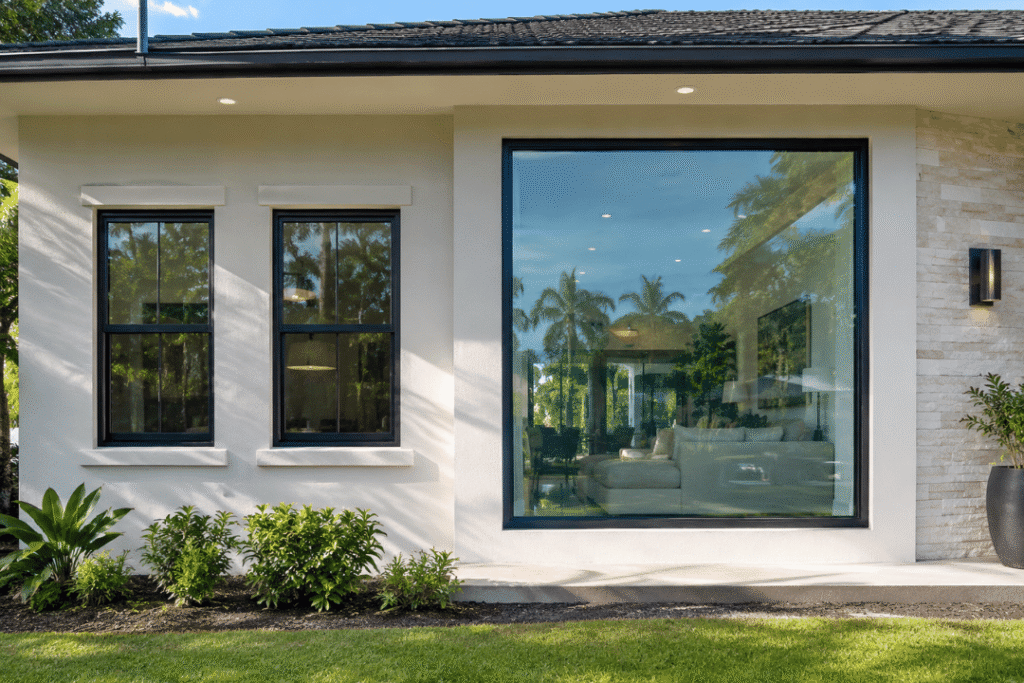
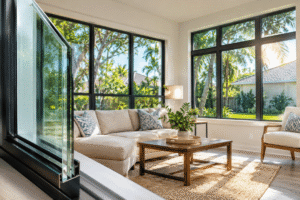
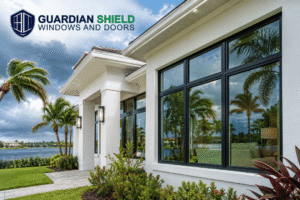
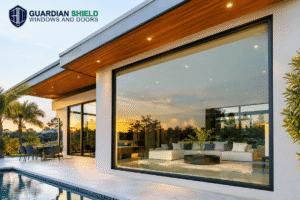
There is no official definition. In the window industry, “oversized” usually describes glass that is larger than a manufacturer’s standard sizes, such as floor-to-ceiling picture windows, tall sliding glass door panels, and large fixed panels in great rooms and stairwells. These pieces often require thicker glass, heavier frames, special handling, and more planning than a typical window.
What Limits The Size Of Impact Glass
1. The Product Approval
Every impact window and door installed in Florida must have Florida Product Approval or a Miami-Dade Notice of Acceptance. To earn it, the product is tested at specific sizes. The approval then lists the maximum sizes allowed and the design pressure each size is rated for. Installing a product larger than its approval allows is not permitted. You can look up approvals on the Florida Building Commission website.
2. Design Pressure At Your Home
Design pressure is the wind load a window must resist, both pushing in and pulling out. The required design pressure depends on your home’s wind speed zone, exposure, building height, and even where the window sits on the wall, since corners face higher pressures than the middle of a wall.
Larger glass flexes more under the same wind pressure. That is why a product’s approval often allows bigger sizes at lower design pressures and smaller sizes at higher ones. A pane size that works for one home may not be allowed on a more exposed home or in the High-Velocity Hurricane Zone in Miami-Dade and Broward counties.
3. The Glass Makeup
Impact glass is laminated: glass layers bonded to a tough interlayer. Larger panes generally need:
- Thicker glass layers to resist bending.
- Stiffer interlayers. Ionoplast interlayers (often known by the brand name SentryGlas) are stiffer and stronger than standard PVB interlayers, which helps larger panes meet higher pressures.
- Heat-treated glass. Heat-strengthened or tempered glass is stronger than standard annealed glass.
- Insulated laminated units for energy performance, which add thickness and weight.
4. The Frame
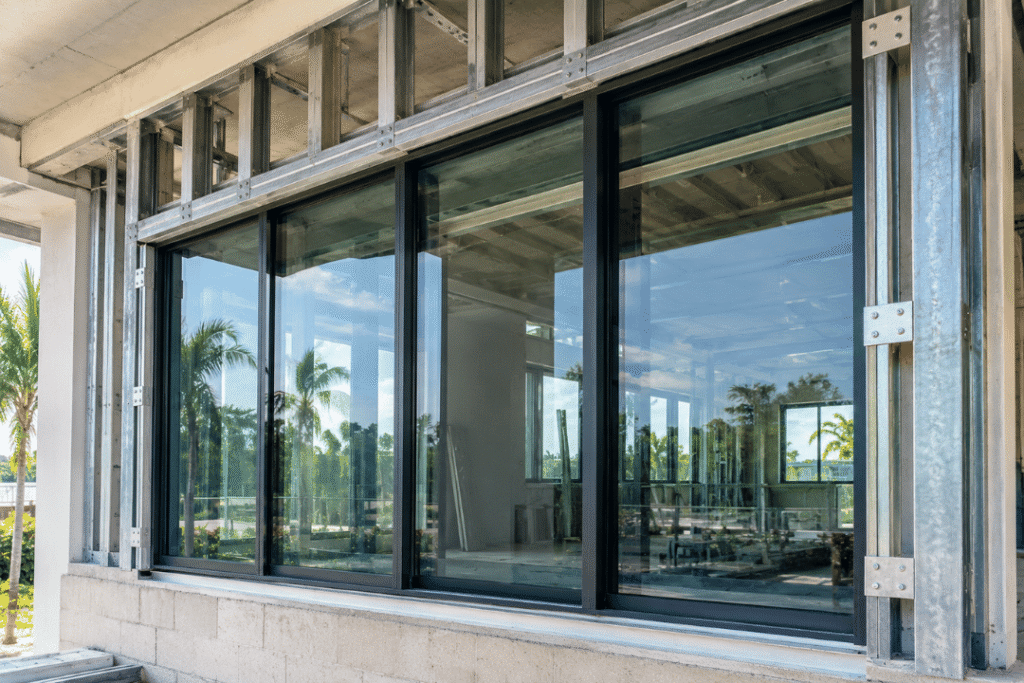
Big glass needs a frame that can hold it. Oversized products typically use deeper frames, reinforced sashes or panels, and heavy-duty rollers and hardware. When several units are joined together, the connecting mullions must also be approved and rated for the design pressure.
5. The Structure Around The Opening
Wind loads on a large window transfer into your walls. The header above the opening must carry the load, and the anchors must be installed exactly as the approval requires. Enlarging an existing opening or creating a new one usually requires structural work, an engineer’s design, and a permit.
Practical Limits Beyond The Code
Glass Manufacturing
Flat glass is commonly produced in large “jumbo” sheets measuring about 130 by 204 inches. Most window glass is cut from sheets like these, and the tempering and laminating equipment used to process glass also has maximum sizes. Specialty facilities can produce larger glass, but it is less common, more expensive, and slower to get.
Weight
Glass weighs about 13 pounds per square foot for every inch of thickness, so big impact panes get heavy fast. Here is an approximate example for a single 5-by-10-foot pane (50 square feet), counting the glass only:
| Glass makeup | Total glass thickness | Approximate glass weight |
| Laminated, two ¼-inch layers | ½ inch | About 330 pounds |
| Insulated laminated, with an added ¼-inch pane | ¾ inch | About 490 pounds |
The interlayer, frame, and hardware add more. That weight affects the frame design, the rollers on sliding doors, and how the glass is handled.
Delivery And Installation
Oversized panes have to travel from the factory to your home and through your property to the opening. Installers consider:
- Whether the glass can fit through gates, doorways, and stairways
- How many people and what lifting equipment are needed, such as glass vacuum lifters or, for upper floors, a crane
- Safe staging space on site
- Longer lead times for custom sizes
These factors are also why replacing a broken oversized pane takes more time and costs more than a standard window.
Ways To Get The Biggest View
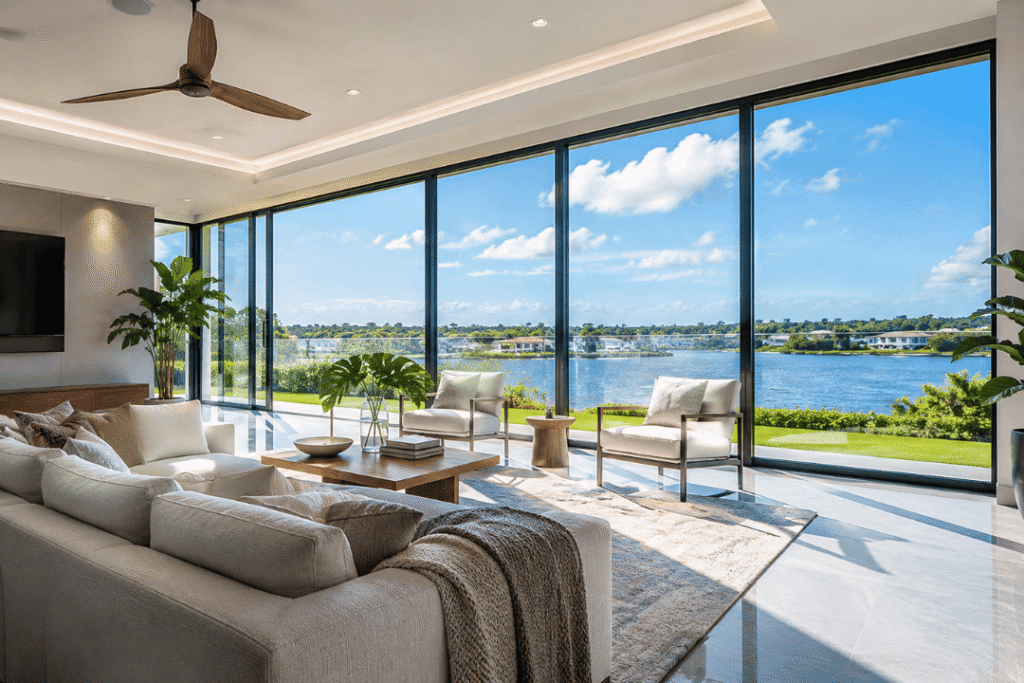
- Fixed picture windows. With no moving parts, fixed windows can usually be made larger than operable windows in the same product family. They are the most common choice for maximum glass.
- Large sliding glass doors. Tall, wide panels bring the outdoors in, and multi-panel sliders can span wide openings by combining several large panels.
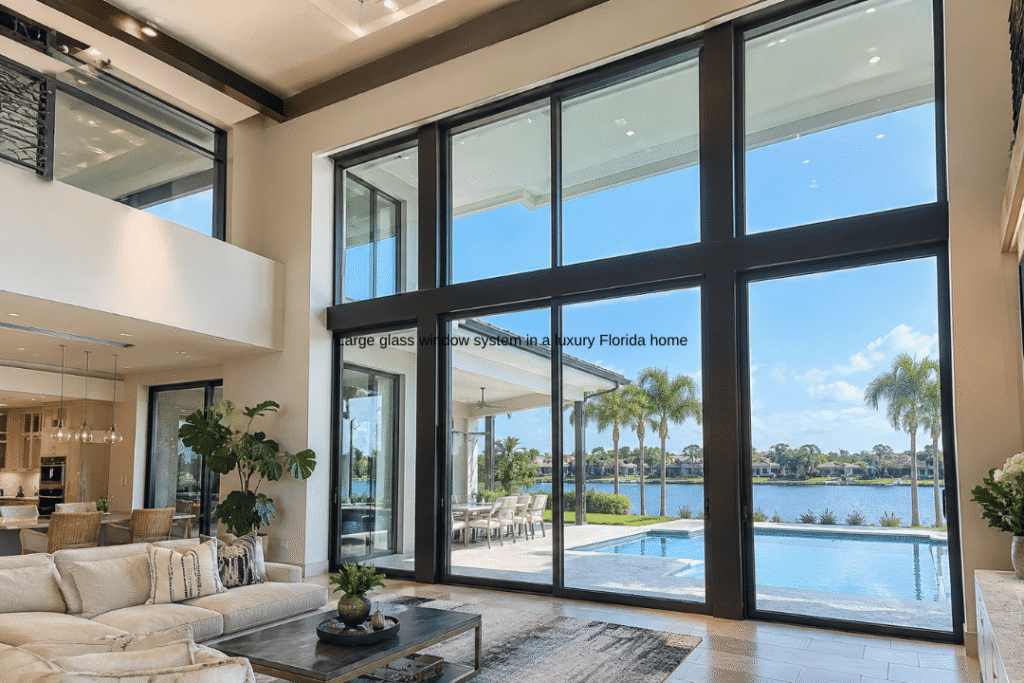
- Mulled window walls. Several units joined with approved structural mullions can create a wall of glass, even when each single pane has a size limit.
- Pairing fixed and operable units. A large fixed center window flanked by smaller operable windows gives a big view plus ventilation.
- Thin, low-profile frames. Some product lines use narrower frames to show more glass at the same opening size.
Cost And Tradeoffs
- Higher cost per square foot. Thicker glass, stiffer interlayers, heavier frames, and special handling all add cost as panes get larger.
- Energy and comfort. More glass means more solar heat on sunny walls. Low-E glass with a low solar heat gain coefficient is especially important for large west- and south-facing panes.
- Lead time. Custom oversized products often take longer to manufacture and deliver.
- Replacement. If an oversized pane is ever damaged, replacing it can take longer and cost more than a standard size.
- Structural work. Enlarging openings adds engineering, permitting, and construction costs.
Frequently Asked Questions
What is the largest impact window I can get? It depends on the product’s approval and the design pressure required at your home. An installer can check which products and sizes are approved for your specific openings.
Are oversized impact windows as strong as smaller ones? Yes, when they are approved for the size and design pressure required and installed exactly as the approval specifies. Larger panes meet those requirements by using thicker glass, stronger interlayers, and heavier frames.
Why can my neighbor have a bigger window than I can? Design pressure can differ between homes based on exposure, building height, and where the window sits on the wall. A size allowed on one home may not be allowed on another.
Can I make my window openings bigger? Often, yes, but it usually requires structural changes, an engineered design, and a permit.
Do oversized impact windows cost more? Yes. Larger panes typically cost more per square foot because of the thicker glass, stronger frames, and extra handling involved.
Plan Your Big View With Guardian Shield
Guardian Shield Windows and Doors has installed impact windows and doors across Florida for 15 years. We will measure your openings, check which products and sizes are approved for the design pressure at your home, and walk you through the options for the largest view possible. Visit guardianshieldwindows.com or call (813) 830-1170 to schedule your free consultation.