
If your impact windows are fogging up between the panes, the airtight seal on the insulated glass unit has most likely failed. Moist air has slipped into the space between the glass, and it condenses when the temperature changes. You cannot wipe it away, and it will not go away on its own. The fix is usually replacing the glass unit, not the whole window, and it may be covered by your warranty.
Before you worry, make sure the fog is actually between the glass. In Florida’s humidity, most window fog is harmless condensation on the surface.
The Three Kinds Of Window Fog
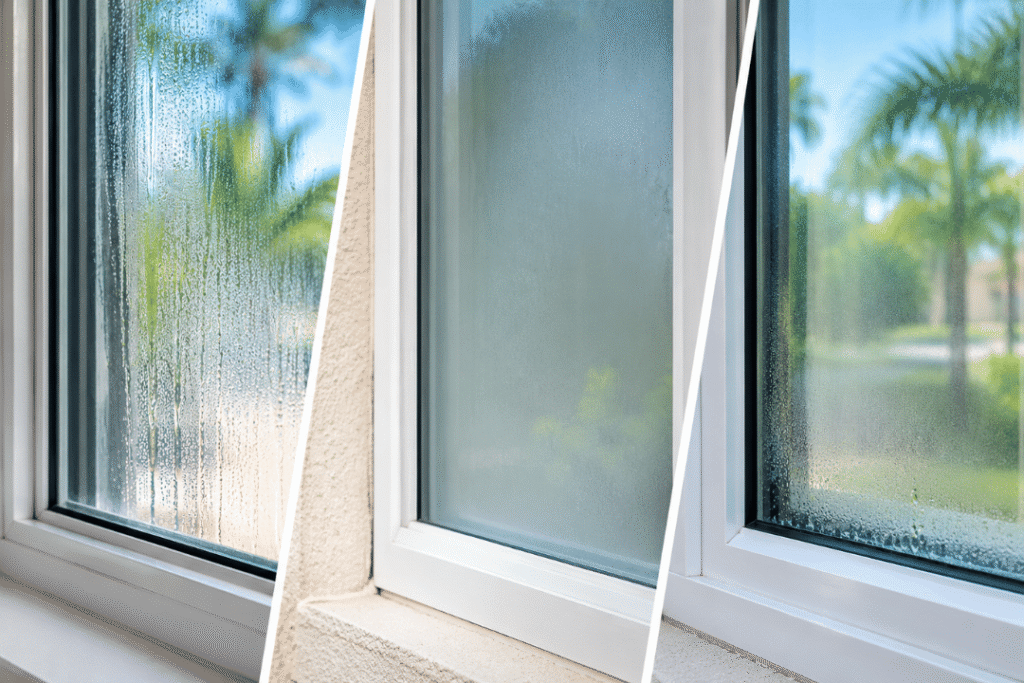
| Where the fog is | What it means | What to do |
| Outside surface | Normal. Cold glass from your AC meets warm, humid outdoor air, usually on summer mornings. It is actually a sign your glass is insulating well. | Nothing. It clears as the sun warms the glass. |
| Inside surface | Indoor humidity is high, often from cooking, showers, or an AC that is not dehumidifying enough. | Run exhaust fans, check your AC, and consider a dehumidifier. |
| Between the panes | The seal on an insulated glass unit has failed and moisture has gotten inside. | Have the glass unit inspected and replaced. |
The quick test: Wipe the glass on the outside, then on the inside, with a dry cloth. If the fog is still there, it is between the panes.
One important detail: fogging between the glass can only happen in insulated impact windows, which pair laminated glass with a second pane and a sealed air or gas space. Single laminated impact glass has no gap inside it. If that type of glass looks cloudy or hazy, the cause is different, and we cover it below.
What Causes The Seal To Fail?
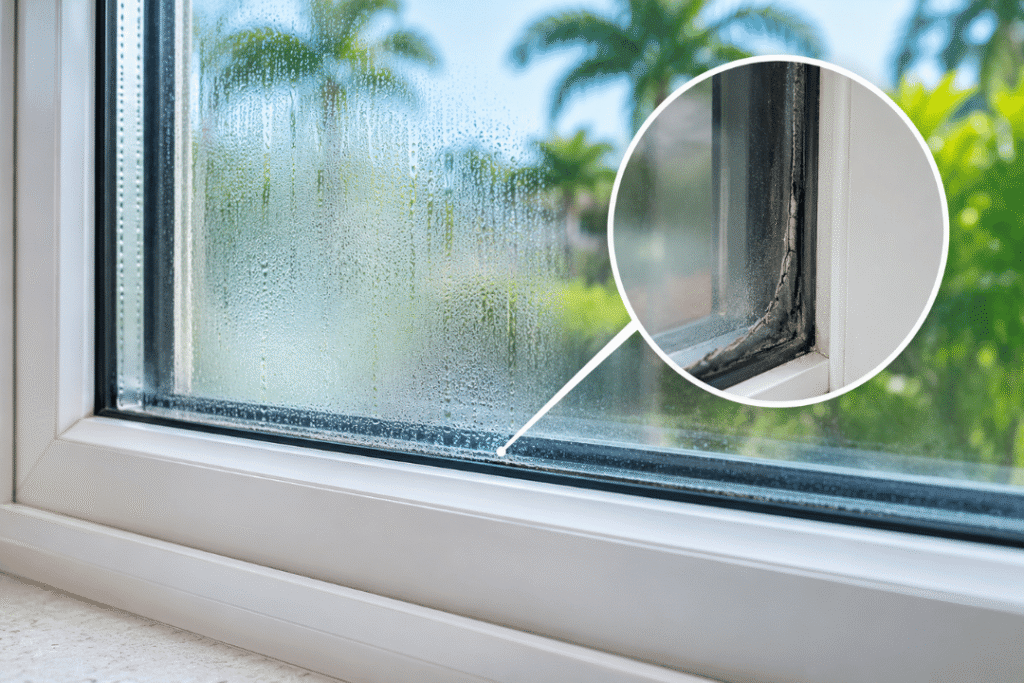
An insulated glass unit is sealed around its edges, and a drying agent inside the spacer absorbs any small amount of moisture. Over time, that system can break down. Common causes include:
- Heat and sun. Florida sun heats the glass every day, and the unit expands and contracts. Years of that cycling can weaken the edge seal, especially on south- and west-facing windows.
- Age. Drying agents eventually fill up, and seals wear out. Older units are more likely to fog.
- Water sitting on the seal. Clogged weep holes can leave water pooled against the bottom of the glass, which breaks down the seal faster.
- Pressure washing and harsh cleaners. High pressure and strong solvents can damage the edge seal.
- Installation or manufacturing problems. A frame that is out of square, or a defect in the unit, can stress the seal and cause early failure.
Is Fogging Between The Glass A Problem?
It is not an emergency, but it should not be ignored.
- Energy efficiency drops. Once the seal fails, the insulating gas (often argon) leaks out and humid air replaces it. The window insulates less, and your AC works harder.
- It gets worse. Fog can come and go at first, then turn into permanent haze, water droplets, or white mineral streaks inside the glass.
- You lose your view. The point of impact windows is a clear view without shutters. A foggy unit ruins that.
- Storm protection. A failed insulating seal does not by itself mean the laminated glass has lost its impact resistance. Still, have it inspected so a professional can confirm the laminated layer and frame are sound before hurricane season.
Fogging Vs. Delamination In Laminated Glass
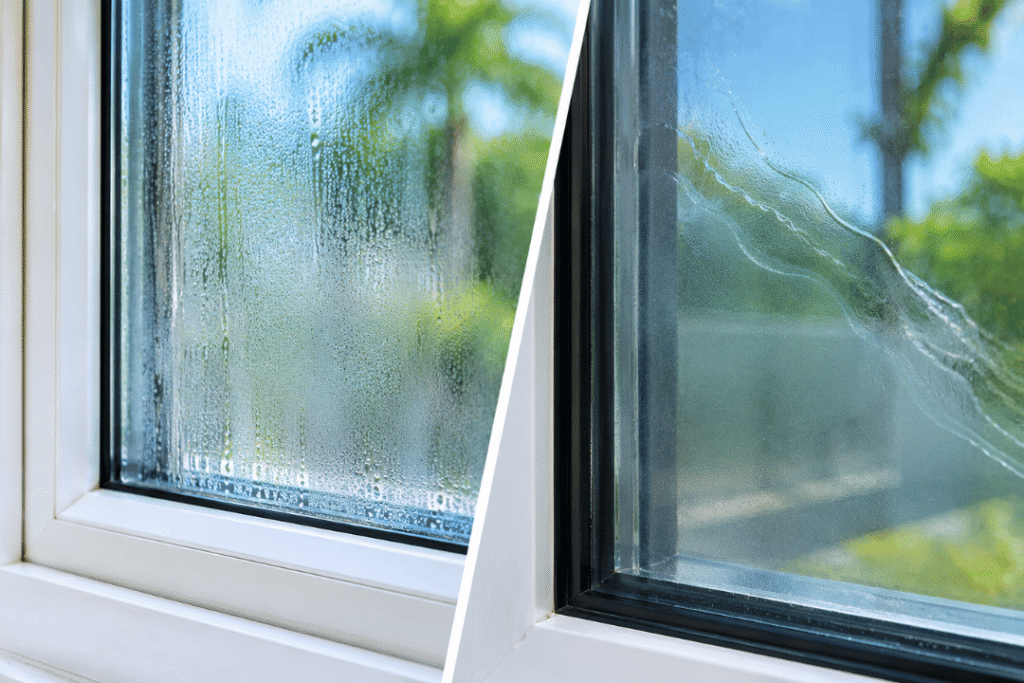
Sometimes what looks like fog is actually delamination, a different problem that affects the laminated glass itself. Laminated impact glass is two layers of glass bonded to a clear interlayer. If that bond starts to break down, you may notice:
- A milky or cloudy band along the edges of the glass
- Small bubbles or clear spots inside the glass
- Haze that does not move or change with the temperature
| Fogging (seal failure) | Delamination | |
| Type of glass | Insulated glass units only | Laminated glass, single or insulated |
| What you see | Mist, droplets, or haze that can change with weather | Milky edges, bubbles, or fixed cloudy areas |
| Main cause | Failed edge seal lets in moisture | Interlayer bond breaks down, often from moisture at the edges, heat, or harsh chemicals |
| Fix | Replace the glass unit | Replace the glass unit |
Delamination is more serious for storm protection, because the bond between the glass and interlayer is what holds the glass in place during an impact. If you see signs of it, call your installer for an inspection.
How To Fix Foggy Impact Windows
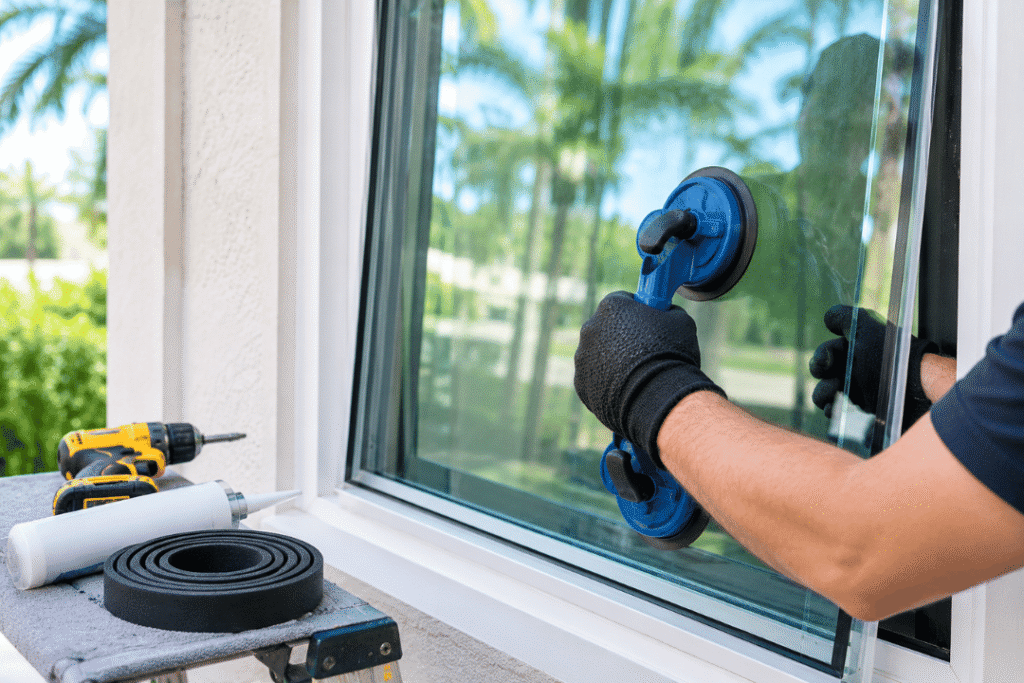
Replace the glass unit. In most cases, the frame is fine and only the glass unit needs to be replaced. This costs much less than a full window replacement. On impact windows, the new glass must match the manufacturer’s approved glass package so the window still meets its Florida Product Approval or Miami-Dade NOA. That is why this job belongs with an experienced impact window installer, not a general glass shop.
Avoid “defogging” services. Some companies drill small holes in the glass to dry out the space and then seal the holes. This is not a good idea for impact windows. It can void your warranty, may compromise the product approval, and often does not restore the insulating gas or the original performance.
Check your warranty first. Many manufacturers cover insulated glass seal failure for a set number of years, and some for as long as you own the home. Find your paperwork, note the brand and the date of installation, and contact your installer. If they installed the windows, they can usually handle the warranty claim for you.
How To Prevent Seal Failure
- Keep weep holes clear so water never pools against the glass.
- Clean with a garden hose and mild soap, never a pressure washer or harsh solvents.
- Make sure the windows were installed level, square, and properly anchored.
- Inspect seals and caulking once a year as part of regular care.
- Choose quality products from established manufacturers with strong glass warranties.
Frequently Asked Questions
Why is there condensation between my impact window panes? The edge seal on the insulated glass unit has failed, letting humid air inside. The moisture condenses when the glass cools or warms.
Can fog between the glass be cleaned? No. The space is sealed, so you cannot reach it. The glass unit needs to be replaced.
Does foggy glass mean my impact window will not protect me in a hurricane? Not necessarily. A failed insulating seal does not by itself mean the laminated glass has failed, but delamination or cracks can affect protection. Have the window inspected.
Is condensation on the outside of my windows bad? No. Morning condensation on the outside is common in Florida and usually means your glass is keeping the cool air inside.
Is foggy glass covered by warranty? Often, yes. Many manufacturers warranty insulated glass seals for years. Check your paperwork or call your installer.
Get Your Foggy Windows Inspected
Guardian Shield Windows and Doors has installed and serviced impact windows across Florida for 15 years. We can tell you whether your fog is a failed seal, delamination, or just humidity, and help with warranty claims and approved glass replacement. As one customer put it:
“They respond to calls and communication is excellent.” — Kevin C., Google review
Call (813) 830-1170 to schedule an inspection.