
Impact windows are built to take a hurricane, but they still need simple, regular care to stay clear, seal tightly, and open and lock smoothly. Clean the glass with mild soap and a soft cloth, keep tracks and weep holes clear, lubricate the hardware, and check the seals once a year. In Florida’s salt air and humidity, a little maintenance goes a long way toward protecting your investment.
Here is exactly how to clean and maintain your impact windows and doors, how often to do it, and the mistakes that can shorten their life.
Why Maintenance Matters In Florida

Florida is tough on windows. Salt spray, sand, pollen, heavy rain, and intense sun all build up on glass and frames. Left alone, that buildup can:
- Scratch the glass when you finally clean it
- Corrode aluminum frames and hardware, especially near the coast
- Clog weep holes so rainwater backs up instead of draining
- Make sliding doors stick and locks hard to close
- Wear out seals and weatherstripping, letting in air and water
When a storm is coming, you want every window to close and lock properly. Regular care also helps keep your manufacturer’s warranty valid, since some warranties exclude damage caused by neglect.
What You Need
- Mild dish soap or a gentle, non-abrasive glass cleaner
- A bucket of warm water
- Soft microfiber cloths or a non-scratch sponge
- A squeegee with a soft rubber blade
- A soft brush and a vacuum with a crevice tool
- A small plastic pick or pipe cleaner for weep holes
- Silicone-based lubricant for tracks, rollers, and hardware
- A garden hose (not a pressure washer)
How To Clean Impact Window Glass, Step By Step
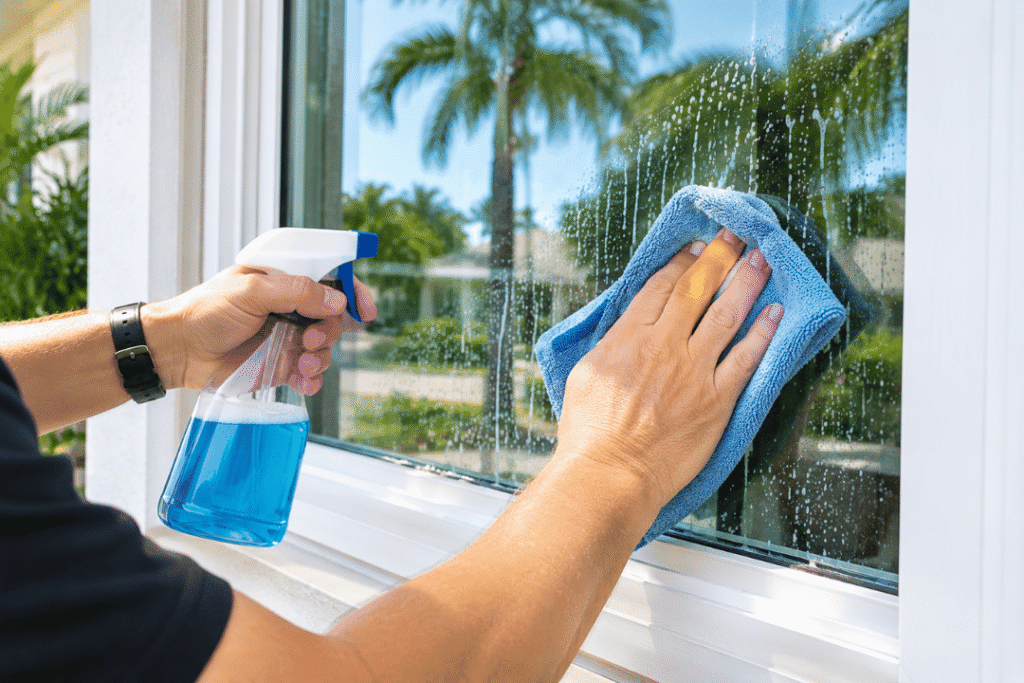
Impact glass is laminated: two layers of glass bonded to a tough interlayer. The outside surfaces clean like regular glass, but the edges of the laminate and any coatings deserve a gentle touch.
- Pick the right time. Clean on a cloudy day or when the glass is in shade. Direct sun dries the soap too fast and leaves streaks.
- Rinse off loose dirt. Gently spray the outside glass with a garden hose to wash away sand and salt. Wiping grit across dry glass is the most common cause of scratches.
- Wash with mild soap. Mix a few drops of dish soap in warm water. Wash the glass with a soft microfiber cloth or non-scratch sponge, working from top to bottom.
- Rinse again. Rinse away all the soap so it does not leave a film.
- Squeegee and dry. Pull a squeegee across the glass in overlapping strokes, wiping the blade after each pass. Finish the edges and corners with a dry microfiber cloth.
- Clean the inside the same way. Indoors, skip the hose. Spray a gentle cleaner onto the cloth rather than the glass so liquid does not run into the frame and seals.
For stubborn spots like hard water, tree sap, or bird droppings, soak the area with warm, soapy water for a few minutes and wipe again. Never scrape the glass with a razor blade or metal tool.
Guardian Shield tip: If you live near the coast, rinse your windows and frames with fresh water every few weeks, and after any storm. Salt left to dry on the frame is what causes most corrosion we see on older windows.
How To Maintain Frames, Tracks, And Hardware
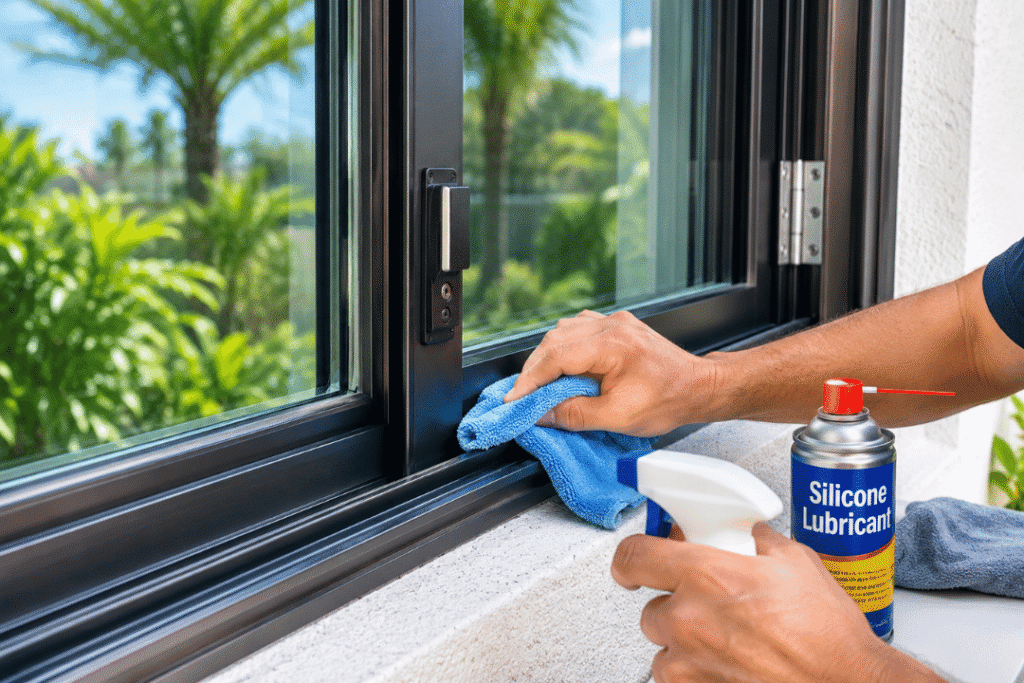
The glass gets the attention, but the frame and moving parts are what keep your windows sealed and working.
Frames. Wipe vinyl and aluminum frames with the same mild soapy water and a soft cloth. On aluminum, look for chalky white spots or pitting, which signal corrosion from salt.
Tracks. Sliding windows and doors collect sand, leaves, and bugs in their tracks. Vacuum the track with a crevice tool, loosen packed dirt with a soft brush, then wipe it clean. A dirty track makes doors hard to slide and wears out the rollers.
Weep holes. These small openings at the bottom of the frame let rainwater drain out. If they clog, water can back up and leak inside during heavy rain. Gently clear them with a plastic pick or pipe cleaner, then pour a little water into the track to make sure it drains outside. Never seal or caulk over weep holes.
Locks, handles, and rollers. Spray a small amount of silicone-based lubricant on locks, hinges, and rollers, then open and close each window a few times. Avoid oil-based products, which attract dirt and sand.
Seals and weatherstripping. Look for cracked, shrinking, or peeling caulk around the outside of the frame and torn or flattened weatherstripping. Damaged seals let in air, water, and humidity.
Impact Window Maintenance Schedule
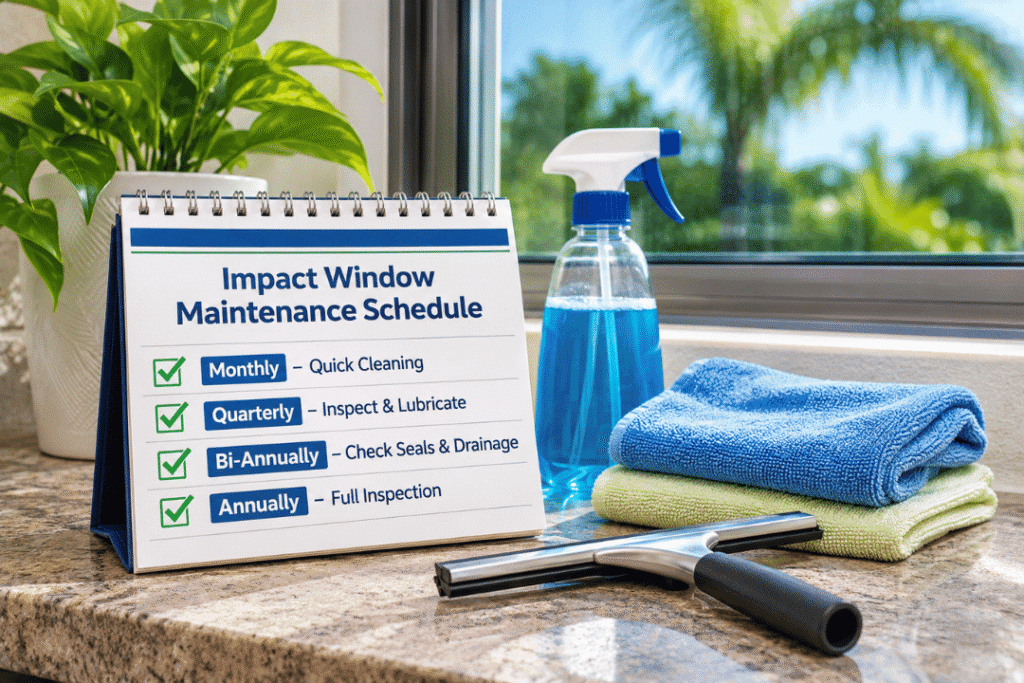
| Task | How often | Coastal homes |
| Clean the glass | Every 2 to 3 months | Monthly |
| Rinse frames with fresh water | Every few months | Every few weeks and after storms |
| Vacuum and wipe tracks | Every 3 months | Monthly |
| Clear weep holes | Every 6 months | Every 3 months |
| Lubricate locks, hinges, and rollers | Twice a year | Every 3 months |
| Inspect seals, caulk, and weatherstripping | Once a year | Twice a year |
| Test every lock and latch | Before hurricane season (by June 1) | Before hurricane season (by June 1) |
Mistakes That Shorten The Life Of Impact Windows
- Using a pressure washer. High pressure can force water past seals and damage weatherstripping. A garden hose is all you need.
- Scraping with razors or steel wool. These scratch the glass and can damage coatings.
- Harsh chemicals. Abrasive powders, solvents, and strong ammonia or vinegar mixes can harm frame finishes, seals, and the edges of laminated glass. Stick with mild soap.
- Applying aftermarket window film without checking. Some films can trap heat in laminated glass and may void your warranty. Ask your manufacturer first.
- Caulking over weep holes. This traps water inside the frame.
- Ignoring stiff locks. A lock that is hard to close today may not seal properly when a storm hits.
When To Call A Professional
Cleaning and basic care are easy to do yourself, but some problems need an expert:
- Fog, moisture, or haze between the panes of an insulated unit (a sign of a failed seal)
- Cloudy edges, bubbles, or discoloration inside the laminated glass
- Cracked or chipped glass, even if it is still holding together
- Water leaking inside around the frame during rain
- Locks that will not engage, or sliding doors that stay hard to move after cleaning
- Bent frames or corrosion you cannot wipe away
Many of these are covered by manufacturer warranties, so keep your paperwork and call your installer before attempting repairs yourself.
Frequently Asked Questions
What is the best way to clean impact windows? Rinse off loose dirt, wash with mild dish soap and warm water using a soft cloth, rinse again, and dry with a squeegee and microfiber cloth.
Can I use Windex on impact windows? A gentle, non-abrasive glass cleaner is generally fine on the glass surfaces. Spray it onto the cloth, not the window, and check your manufacturer’s care guide, since some recommend avoiding ammonia-based products.
How often should impact windows be maintained? Clean the glass every few months, clear tracks and weep holes a few times a year, and inspect seals once a year. Coastal homes need more frequent rinsing because of salt.
How long do impact windows last? With proper installation and regular care, quality impact windows can last decades. Maintenance protects the seals, hardware, and frames that wear out first.
Can I pressure wash impact windows? No. High pressure can damage seals and force water into the frame. Use a garden hose instead.
Need Help With Your Impact Windows?
Guardian Shield Windows and Doors has installed and serviced impact windows and doors across Florida for 15 years. Whether you need a pre-hurricane-season checkup, help with a sticky slider, or new impact windows, our team is quick to respond. As one customer put it:
“I always got a very quick response (usually within an hour, but definitely the same day) from everyone that I ever contacted, whether it be by phone, text, or email.”
Call (813) 830-1170 to schedule a free inspection or estimate.