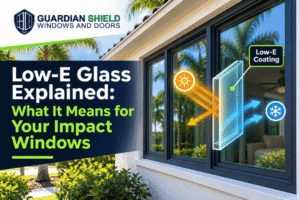
Low-E glass is window glass with an ultra-thin, invisible metal coating that reflects heat while letting daylight through. On an impact window in Florida, it is the feature that turns a storm-rated window into an energy-saving one. If you are comparing quotes, the Low-E option you choose will affect your comfort and cooling costs more than almost any other decision.
This guide explains how Low-E works, which ratings to compare, and how to pick the right glass for your home.
What does Low-E mean?
Low-E stands for low emissivity. Emissivity is how much heat a surface radiates. A Low-E coating is made of microscopic layers of metal, often silver, that reflect infrared (heat) and ultraviolet light while letting most visible light pass through. The result: the sun’s heat bounces back outside, and your room stays brighter and cooler than with tinted glass alone.
How Low-E works with Impact Glass
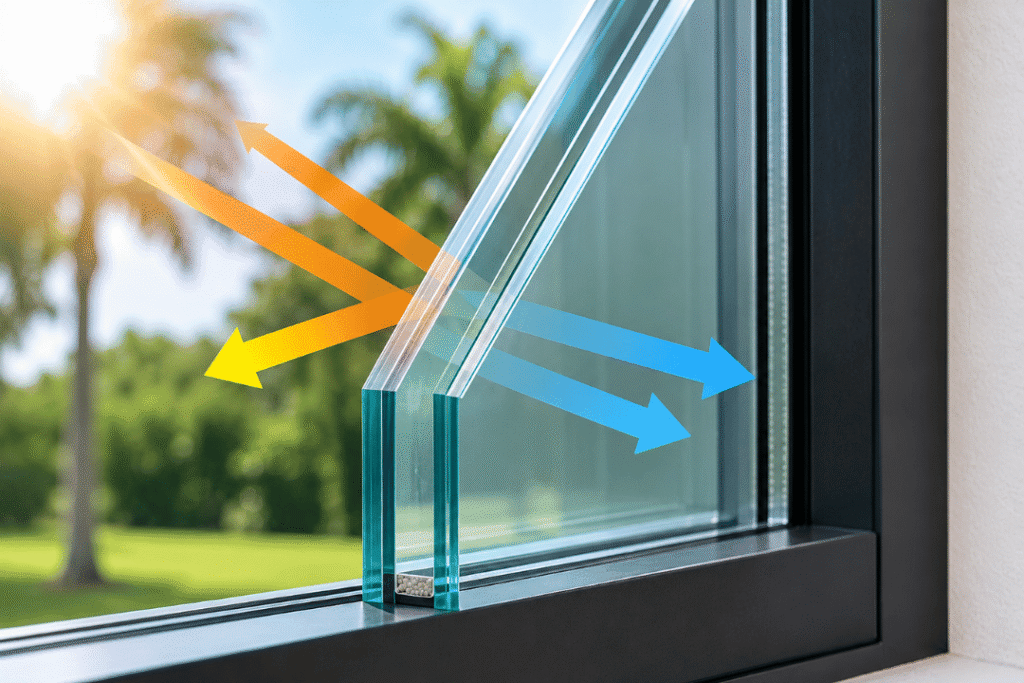
Impact windows use laminated glass: two layers of glass bonded to a strong interlayer that holds the glass together if it breaks. Low-E can be added in two common ways:
- Laminated glass with a Low-E coating. The coating sits on one of the laminated layers. This is a single, thinner unit with good solar control.
- Insulated laminated glass (IGU). A laminated pane paired with another pane and a sealed, often argon-filled gap, with Low-E on one of the inner surfaces. This adds insulation and usually delivers the best energy performance.
In hot climates like Florida, the coating is usually placed toward the outside of the window so it reflects solar heat before it enters the glass unit. The manufacturer chooses the exact position based on the glass design.
The Ratings That Matter
Every certified window has an NFRC label. These are the numbers to compare:
| Rating | What it measures | What to look for in Florida |
| SHGC (Solar Heat Gain Coefficient) | How much of the sun’s heat gets through, from 0 to 1 | Lower is better; about 0.25 or below on sunny sides |
| U-factor | How fast heat moves through the whole window | Lower is better; ENERGY STAR Southern zone is 0.40 or less |
| VT (Visible Transmittance) | How much daylight gets through, from 0 to 1 | Higher keeps rooms brighter; balance it with SHGC |
| LSG (Light-to-Solar Gain) | VT divided by SHGC | 1.25 or higher means the glass lets in light while blocking heat |
| Air leakage | How much air passes through the frame | Lower is better; 0.30 or less is a common benchmark |
Types of Low-E coatings
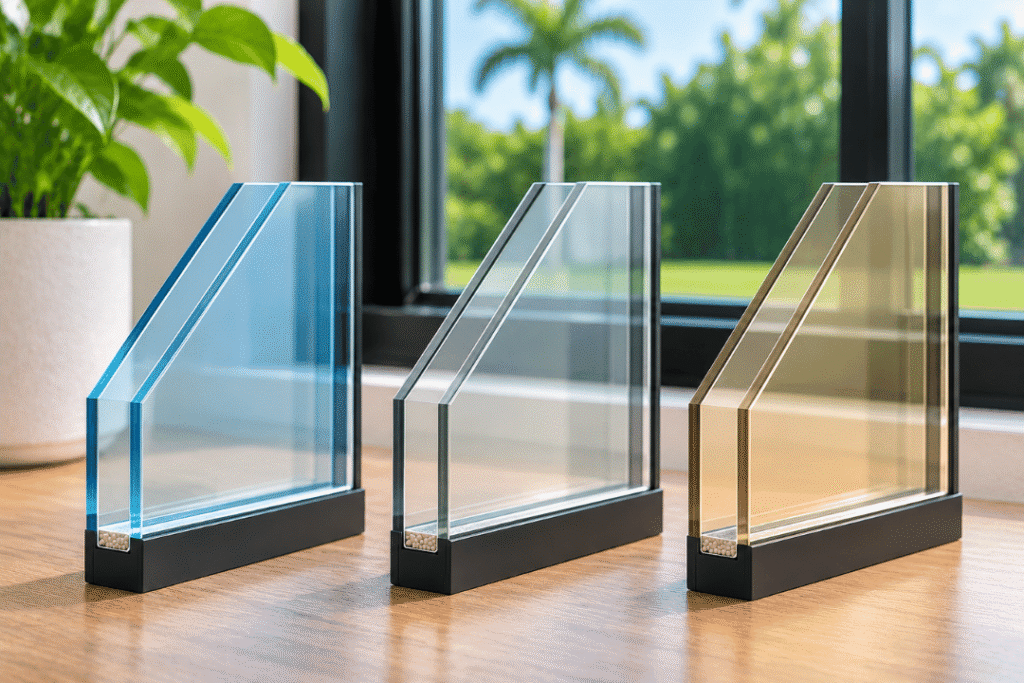
- Hard-coat (pyrolytic) Low-E. Baked onto the glass during manufacturing. Durable, but blocks less solar heat. Better suited to cooler climates.
- Soft-coat (sputtered) Low-E. Applied in a vacuum chamber in very thin layers. Much better at blocking solar heat, which is why it dominates in Florida.
- Double- and triple-silver coatings. More silver layers mean stronger solar control. Triple-silver products offer very low SHGC while keeping the glass fairly clear.
Low-E vs. Tinted Glass vs. Window Film
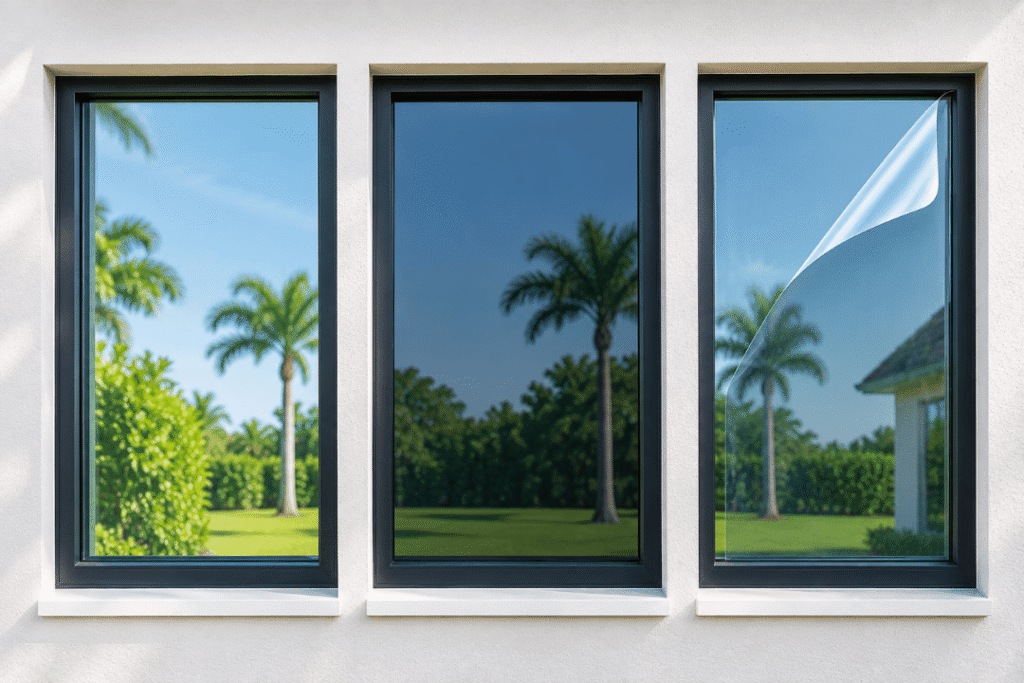
| Option | Heat control | Daylight | Notes |
| Clear laminated glass | Low | Very high | Strong protection and UV blocking, little heat control |
| Tinted laminated glass (gray, bronze) | Moderate | Lower | Absorbs heat; rooms look darker |
| Low-E laminated glass | High | High | Best balance for most Florida homes |
| Low-E insulated laminated glass | Highest | High | Top energy performance; costs more |
| Aftermarket window film | Varies | Varies | Can void some window warranties; check first |
Is Low-E Worth It on Impact Windows?
For most Florida homes, yes. You are already investing in new windows, and Low-E usually adds a modest share to the total cost compared with clear laminated glass. In return you get cooler rooms, less glare, less fading, and lower cooling costs, especially on west- and south-facing walls.
A few tradeoffs to know:
- Some Low-E glass has a slight tint or reflective look. Ask to see samples in daylight.
- Very low SHGC glass can reduce light for indoor plants.
- You may choose different glass for different sides of the house to balance light and heat.
Guardian Shield customers often say how much brighter and more open their homes feel with new impact glass. One homeowner wrote:
“I have been pleasantly surprised about the large, unobstructed view that I now have when I decided to order the sliding style of windows. I feel like I get a ‘picture window’ view.”
Frequently Asked Questions
What is Low-E glass on impact windows? It is laminated impact glass with a thin metal coating that reflects solar heat and UV while letting daylight through.
Does Low-E glass make windows darker? Slightly, depending on the coating. Many spectrally selective coatings stay fairly clear while blocking most solar heat.
Can Low-E be added to impact windows I already have? Not as a factory coating. Window film is an option, but it can affect warranties, so check with your manufacturer first.
Is Low-E the same as tinted glass? No. Tint absorbs heat and darkens the glass. Low-E reflects heat and can keep more natural light.
See Low-E Glass Options in Person
With 15 years of experience, Guardian Shield Windows and Doors installs impact windows from leading manufacturers such as PGT, CGI, ES Windows, ECO Window Systems, Pella, and Andersen, with a range of Low-E options across Florida. We bring glass samples to your home so you can compare light and color before you decide. Call (813) 830-1170 to schedule a free consultation.