Yes, impact windows can lower your Florida electric bill, but the hurricane protection itself doesn’t save you money. The savings come from the glass package: a Low-E coating, an insulated (double-pane) unit, and a tight installation. Choose the wrong glass and you get a stronger window with almost no change on your bill.
Here is what actually drives savings, what numbers are realistic, and how to make sure your new windows pay you back every month.
Why Windows Matter So Much in Florida
In Florida, air conditioning is usually the largest single line on a home’s electric bill. The U.S. Department of Energy estimates that heat gain and loss through windows accounts for roughly 25 to 30 percent of residential heating and cooling energy use. In a hot, sunny climate, most of that is solar heat pouring through the glass and forcing your AC to run longer.
Older Florida homes often still have single-pane, clear glass in aluminum frames. Aluminum conducts heat quickly, and clear glass lets in most of the sun’s heat. That combination is one of the most expensive setups in this climate.
What Makes An Impact Window Energy Efficient (And What Doesn’t)
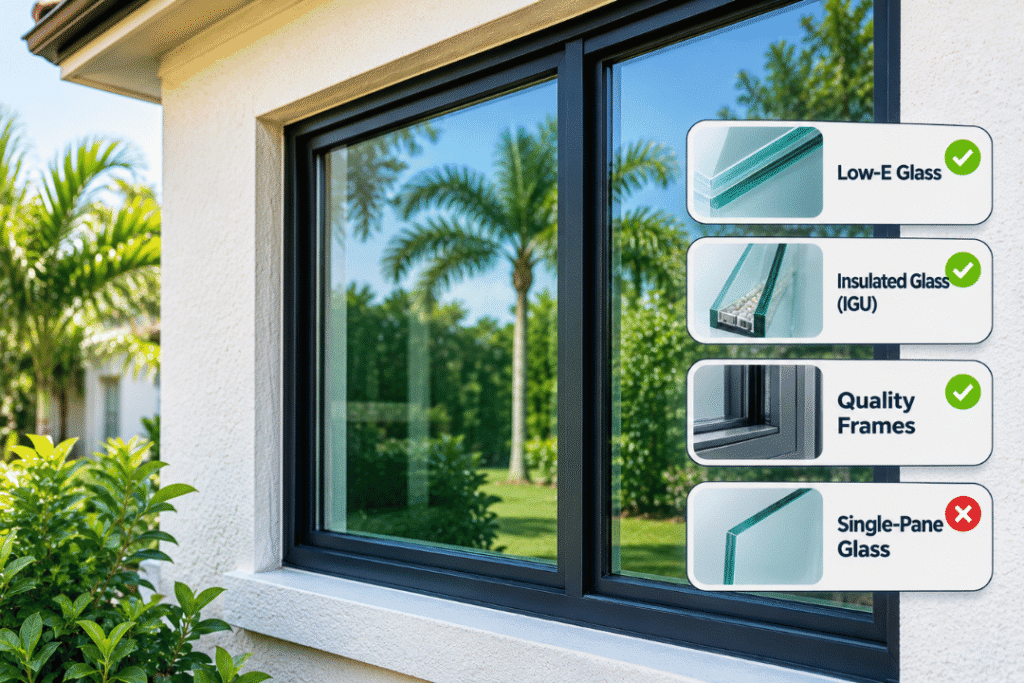
Every impact window uses laminated glass: two layers of glass bonded to a tough plastic interlayer. That layer keeps the glass in place during a storm and blocks about 99 percent of UV rays, which protects floors and furniture from fading. On its own, though, laminated glass does only a little to stop heat.
These are the features that actually move your bill:
- Low-E coating. A microscopically thin metal coating that reflects solar heat while letting visible light through. This is the single biggest factor in Florida.
- Low SHGC (Solar Heat Gain Coefficient). This rating, from 0 to 1, shows how much solar heat gets through. Lower is better in Florida. ENERGY STAR’s Southern zone calls for 0.23 or lower.
- Insulated glass units. Two panes with a sealed gap (often argon-filled) slow heat transfer far better than one laminated pane. Ask whether your quote is for monolithic laminated glass or an insulated laminated unit.
- U-factor. Measures how well the whole window resists heat flow. Lower is better.
- Frame material. Vinyl and thermally broken aluminum frames lose far less energy than standard aluminum.
- Air sealing. A perfect window installed with gaps still leaks cool air. Installation quality matters as much as the product.
How Much Can You Realistically Save?
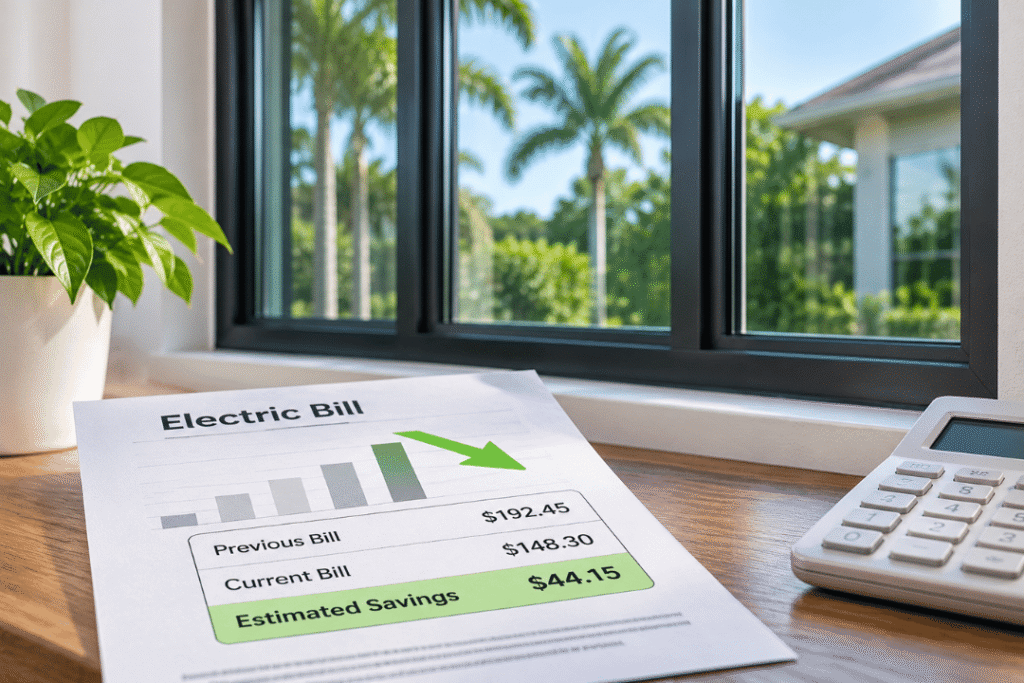
Savings depend on what you are replacing, your home’s size and orientation, your AC, and your thermostat habits. Be wary of anyone who promises a specific percentage without looking at your home.
| Upgrading from | Upgrading to | Typical impact on cooling costs |
| Single-pane clear glass, aluminum frame | Insulated Low-E impact glass, vinyl or thermally broken frame | Largest savings; often noticeable on monthly bills |
| Single-pane clear glass | Single laminated impact glass with Low-E | Moderate savings |
| Single-pane clear glass | Clear laminated impact glass, no Low-E | Small savings, mostly from better sealing |
| Older double-pane Low-E windows | New impact windows | Small savings; the main gains are protection and noise |
As an illustration only: if your bill averages $180 a month and about half of that is cooling, a 15 percent drop in cooling energy saves around $13 a month, or about $160 a year. Homes with lots of west- and south-facing glass often see more.
Guardian Shield customers feel the difference quickly. One homeowner wrote in a Google review:
“I have also already noticed a substantial change in energy savings. During the day I will often have to turn my thermostat warmer because my new windows are blocking out so much heat the house feels too cold.”
Benefits Beyond The Bill
- More comfortable rooms. Low-E glass cuts the heat you feel standing near a sunny window.
- Smaller AC loads. Less heat gain can mean your system cycles less and may last longer.
- Insurance savings. Impact-rated openings can earn windstorm mitigation credits on your homeowners policy after a wind mitigation inspection.
- No more shutters. You stay protected 24/7 without putting up panels before every storm.
- Quieter home and less fading. Laminated glass dampens street noise and blocks UV.
How To Choose Impact Windows That Actually Save Energy
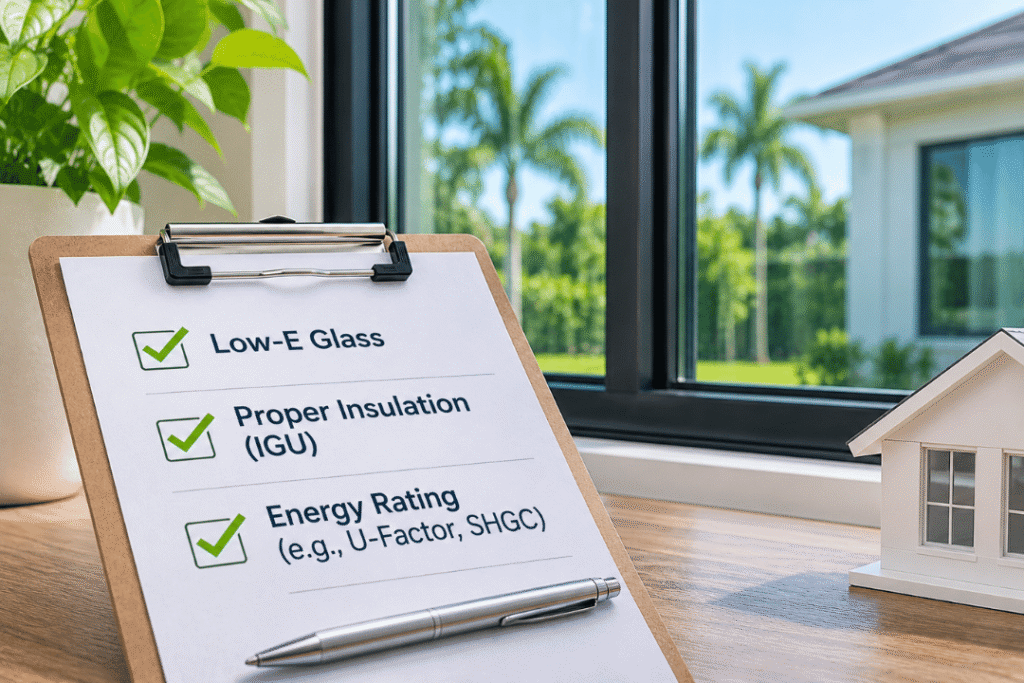
- Ask for the NFRC label values (U-factor, SHGC, visible transmittance) for the exact glass package quoted.
- Aim for an SHGC of about 0.25 or lower on sun-exposed sides of the house.
- Compare insulated laminated units against single laminated glass for your budget.
- Ask whether the product is ENERGY STAR certified for the Southern climate zone.
- Confirm the installer seals, insulates, and inspects every opening, and that the product has Florida Product Approval or a Miami-Dade NOA.
Incentives And Grants
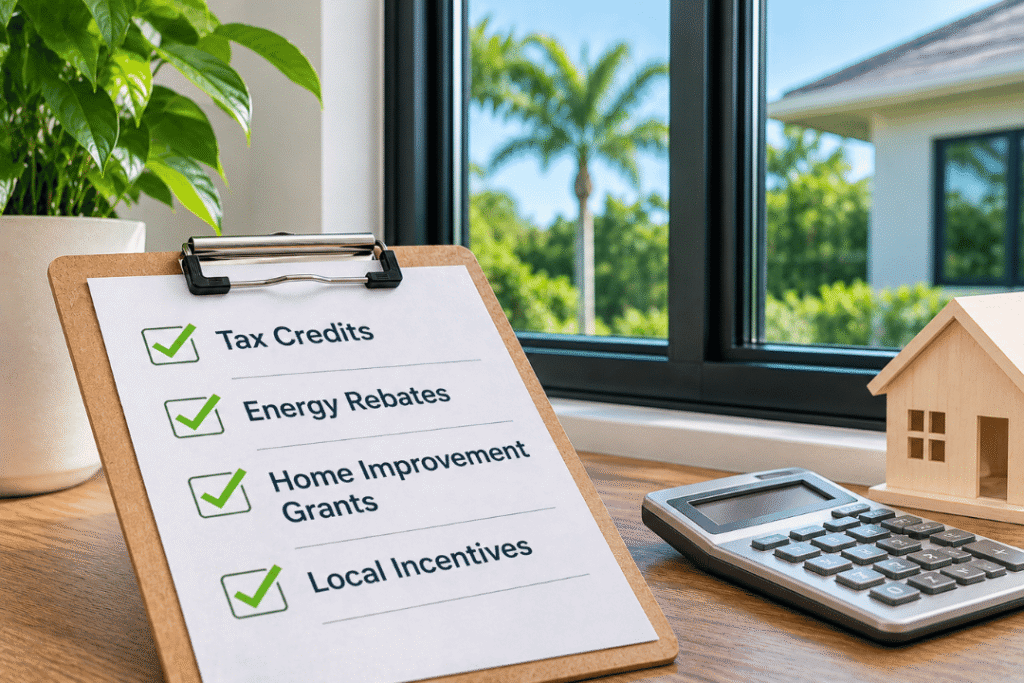
The federal 25C energy efficient home improvement tax credit for windows ended for installations after December 31, 2025. Check with your utility, local programs, and the My Safe Florida Home program for current options, and talk with a tax professional.
Guardian Shield has hands-on experience guiding homeowners through the My Safe Florida Home program. As one customer put it:
“I could tell they were very experienced in working with the grant program because they knew the process of each stage from ordering the correct windows, to installing the windows to ensure inspections were passed.”
Frequently Asked Questions
Do impact windows lower electric bills in Florida? They can, mainly when they include Low-E glass with a low SHGC and are well installed. Clear laminated glass alone saves little.
Are impact windows more energy efficient than regular windows? Not automatically. The impact rating is about storm strength. Energy efficiency depends on the coating, glass layers, frame, and installation.
What SHGC should I look for in Florida? Lower is better. ENERGY STAR’s Southern zone calls for 0.23 or lower; many homeowners target about 0.25 or below.
How long does it take for impact windows to pay for themselves? Energy savings alone rarely pay off the full cost quickly. Combined with insurance discounts, lower AC wear, no shutter costs, and higher home value, the return is much stronger.
Get An Energy-Focused Impact Window Quote
Guardian Shield Windows and Doors has installed impact windows across Florida for 15 years. We show you the NFRC ratings for every option so you know exactly what you are paying for. Financing options are available. Call (813) 830-1170 for a free in-home estimate.