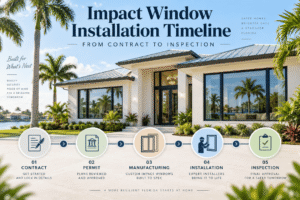
A final impact window inspection is the last stage of a permitted window replacement project. During this inspection, the local building department verifies that the completed installation complies with the approved permit documents and applicable building requirements.
The inspector may examine the installed products, verify accessible installation details, review the relevant approval documentation and confirm that required earlier inspections have been completed.
For Florida homeowners, this step is important because installing hurricane-resistant windows is not simply about purchasing impact glass. The complete assembly must be appropriate for the property and installed correctly.
What Is a Final Impact Window Inspection?
A final inspection is a building department review conducted near the end of a permitted window installation project.
Under Section 110 of the Florida Building Code’s administrative provisions, permitted work is subject to inspection. The code also requires work to remain accessible for inspection as necessary and prohibits proceeding beyond certain inspection stages before receiving the required approval.
Depending on the jurisdiction and installation, a project may require an earlier inspection of anchoring or other installation details before they are concealed.
1. The Inspector Reviews the Permit Information
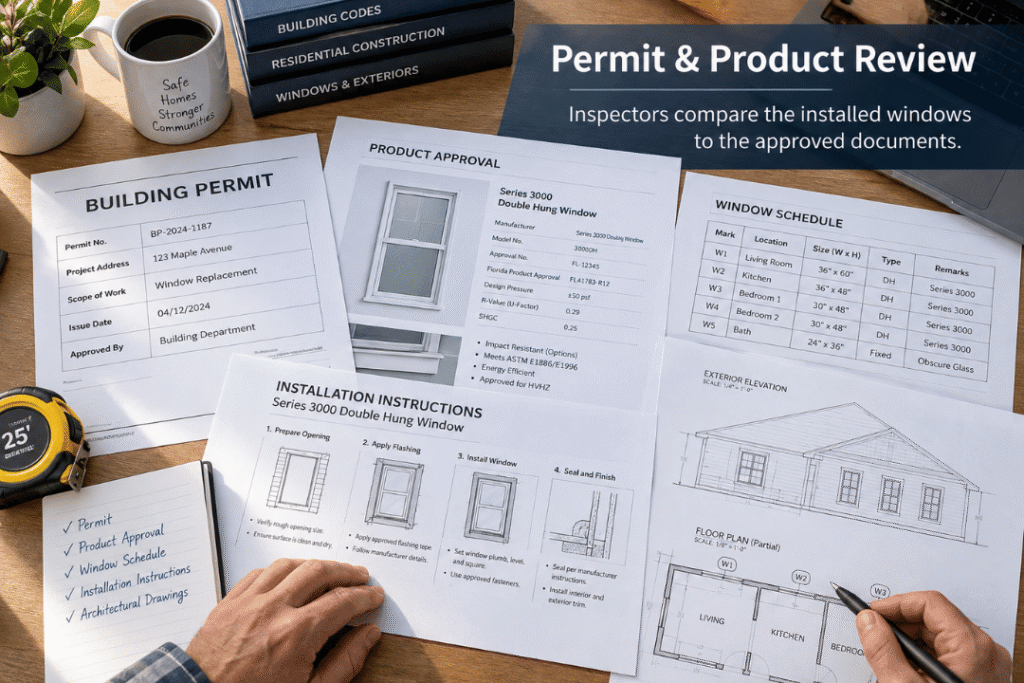
Before or during the inspection, the inspector may review the approved permit documentation.
Relevant documents may include the permit, window schedule, Florida Product Approval or Miami-Dade Notice of Acceptance, and approved installation instructions.
For example, if the approved permit identifies a specific window model, substituting a different model without the required approval could create an inspection issue.
Florida’s product-approval system allows products to be searched using their approval numbers, manufacturer information and performance characteristics.
2. Product Approval and Window Identification
One important inspection consideration is whether the installed windows correspond to the approved products. The inspector may verify manufacturer information, product markings, model identification or other available documentation.
Florida product approvals can identify information such as the permitted model, impact-resistance classification, design pressure and limitations of use.
The installer should ensure the actual product matches the approved configuration and the requirements established for the property.
3. Window Anchoring and Fastener Installation
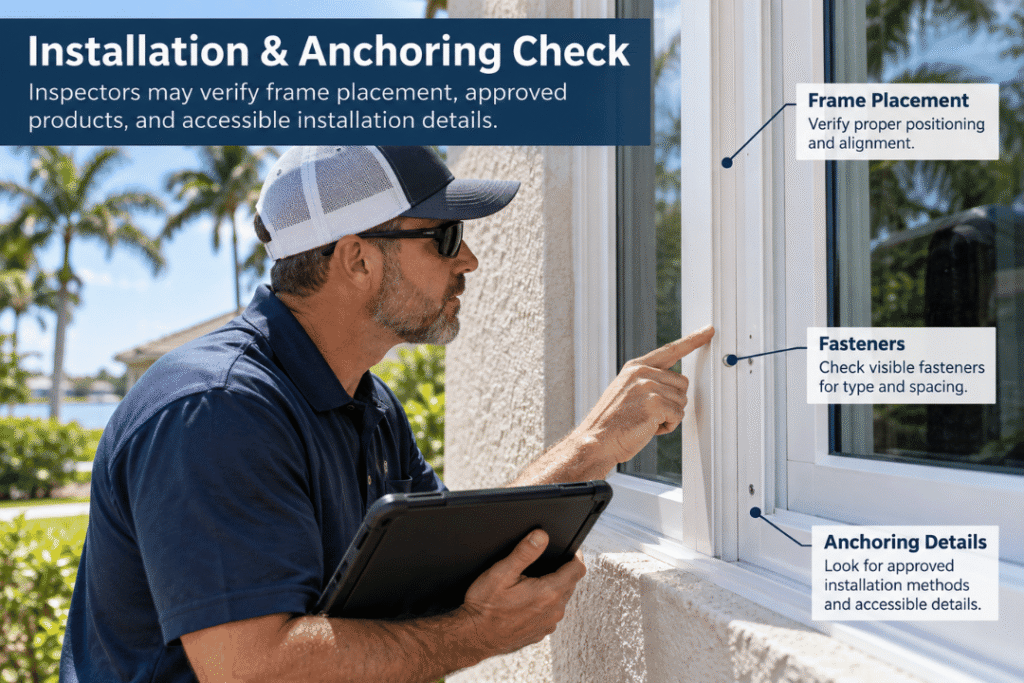
Impact windows depend on more than their glass. Frames and anchors transfer wind forces into the surrounding structure. Installation instructions may specify fastener types, spacing, embedment, edge distances and permitted substrates.
Where anchoring details are part of the inspection requirements, inspectors may examine accessible fasteners or rely on required earlier inspection records. Concealed work should not be covered before the necessary inspection approval has been obtained.
4. Frame Placement and Installation Quality
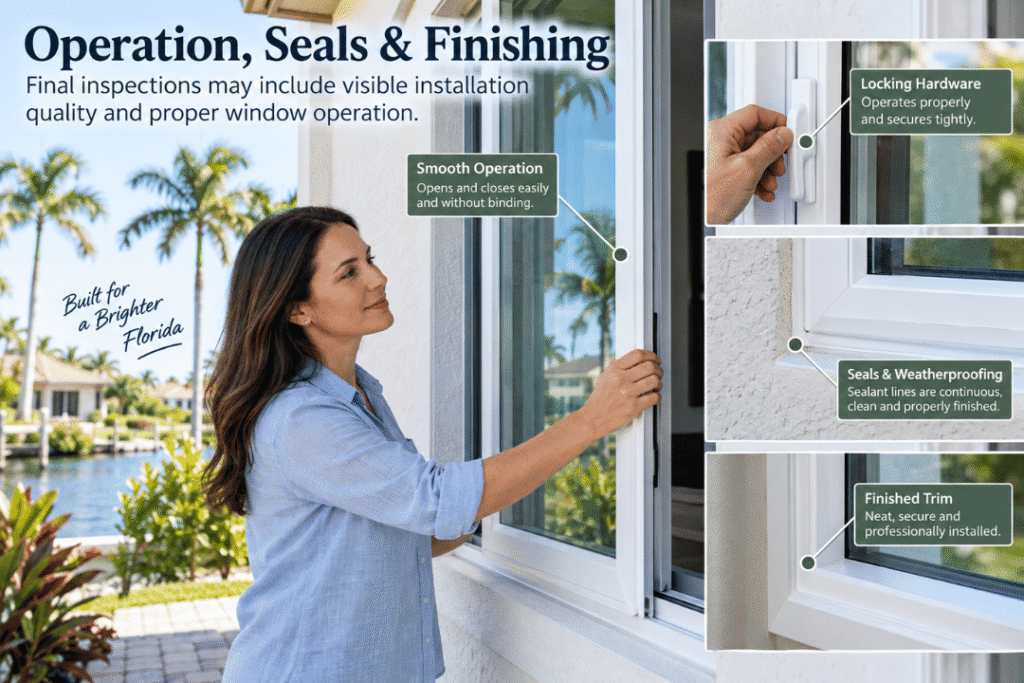
The inspector may also evaluate observable installation conditions relevant to code compliance. These can include the placement of the window, visible frame conditions and whether the completed installation is consistent with the approved documents.
Poor installation can create problems such as:
- uneven frame positioning
- inadequate anchoring
- improperly finished openings
- water intrusion
- difficulty operating windows
Not every cosmetic defect is a building-code violation, and a final inspection is not a substitute for the homeowner’s own workmanship review. However, installation deficiencies affecting code compliance may need to be corrected before approval.
5. Window Operation and Safety
Depending on the window configuration and local inspection requirements, inspectors may check relevant safety and operation features.
For example, a window intended to satisfy an emergency escape or rescue opening requirement must remain suitable for that purpose.
Report unusually stiff operation, damaged hardware or visible misalignment to the installer before the project is considered complete.
6. Waterproofing and Exterior Finishing
Window installations need appropriate sealing and water-management details for the approved assembly and surrounding construction.
The inspector may examine visible conditions or review required earlier inspections, depending on the jurisdiction. Homeowners should also look for obvious workmanship issues, such as incomplete exterior finishing or visible gaps.
Ongoing maintenance, correct installation and the performance limitations of the selected product remain important.
7. What Happens if the Window Inspection Fails?
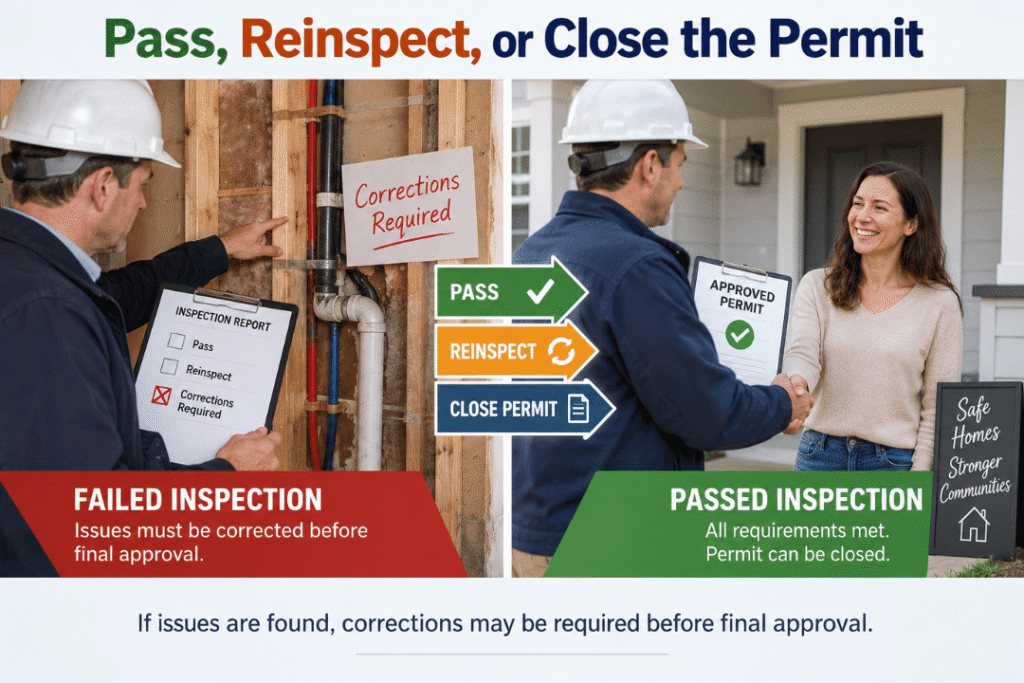
If the inspector identifies work that does not comply with the approved documents or applicable requirements, the inspection may not be approved.
The installer or permit holder must then address the issues and arrange any required reinspection. A failed inspection does not automatically mean the entire window installation must be replaced.
Some issues may involve documentation, missing approval information or correctable installation details. The necessary remedy depends on what the inspector identifies.
8. How Long Does the Final Inspection Take?
A straightforward replacement involving a few windows may require less time than a large property with numerous openings and complex installation details.
Homeowners should ask their installer when the final inspection is scheduled and whether someone needs to be present to provide access. Do not assume that installation day and final inspection day will always be the same.
9. Does Passing the Final Inspection Close the Permit?
A successful final inspection is an important step toward closing the permit. However, homeowners should verify the permit’s official status with the building department.
Additional administrative steps or other outstanding inspection requirements may still need to be completed. Ask your contractor to confirm that the permit has been finalised. Retain the completed permit information along with your product and installation records.
These documents may be useful for future renovations, property transactions and insurance-related verification.
10. Is a Final Inspection the Same as a Wind Mitigation Inspection?
A building department inspection addresses the permitted installation and applicable code requirements. A wind mitigation inspection documents qualifying hurricane-resistance features for an insurer’s consideration.
The wind mitigation inspection may involve reviewing the home’s opening protection along with other construction characteristics. Passing a final impact window inspection does not automatically generate an insurance discount.
Homeowners interested in potential credits should consult their insurance carrier and arrange a qualifying wind mitigation inspection where appropriate.
How to Prepare for Your Final Impact Window Inspection
Before inspection day, confirm that the installation is complete, required documents are available and any earlier inspection requirements have been satisfied.
Open and close the windows, check the locks and identify any visible finishing problems that need the contractor’s attention. Your installer should coordinate the official inspection requirements with the appropriate building department.
Complete Your Impact Window Project With Guardian Shield
Guardian Shield Windows & Doors helps Florida homeowners upgrade their properties with impact-resistant windows and doors suited to their home’s requirements.
Whether you are replacing ageing windows or improving hurricane protection, our team can help you understand the installation process and applicable inspection requirements.
Contact us today to discuss your impact window replacement project and request a consultation.