Impact storefront glass helps Florida restaurants and retail businesses protect their commercial properties against windborne debris while maintaining attractive, transparent storefronts.
For businesses in hurricane-prone areas, an appropriately approved and installed impact-resistant storefront system can provide continuous protection without requiring temporary shutters over every protected opening.
But hurricane resistance is only one consideration.
Commercial storefront glazing also influences security, customer visibility, natural lighting, energy performance and the appearance of a business.
At Guardian Shield Windows & Doors, we help Florida commercial property owners explore impact-resistant storefront systems that combine protection with practical architectural design.
What Is Impact Storefront Glass?
Impact storefront glass is glazing used in an approved commercial storefront assembly designed and tested to resist specified windborne-debris impacts and cyclic wind pressures.
It commonly incorporates laminated glass with an interlayer designed to help hold broken glass together.
During a severe impact, the glass may crack. The objective is for the tested assembly to resist penetration and maintain the required performance.
The Florida Building Commission explains that impact-resistant glazed products are designed to absorb debris impacts and help prevent breaches in the building envelope. A damaged panel may still require replacement after a storm.
The complete system matters, including the glazing, framing, anchors and installation details.
1. Hurricane Protection Without Sacrificing Storefront Visibility
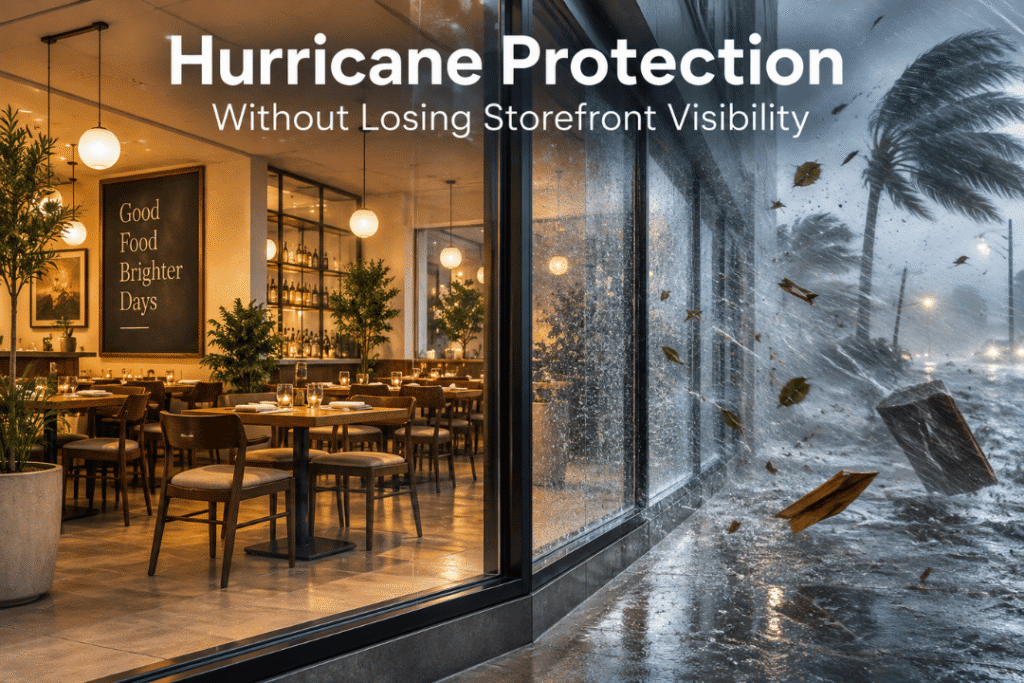
Restaurants and retail stores depend on visibility.
Customers need to see entrances, merchandise displays, dining areas and promotional signage.
Traditional hurricane protection methods may require shutters or other coverings to be deployed before a storm.
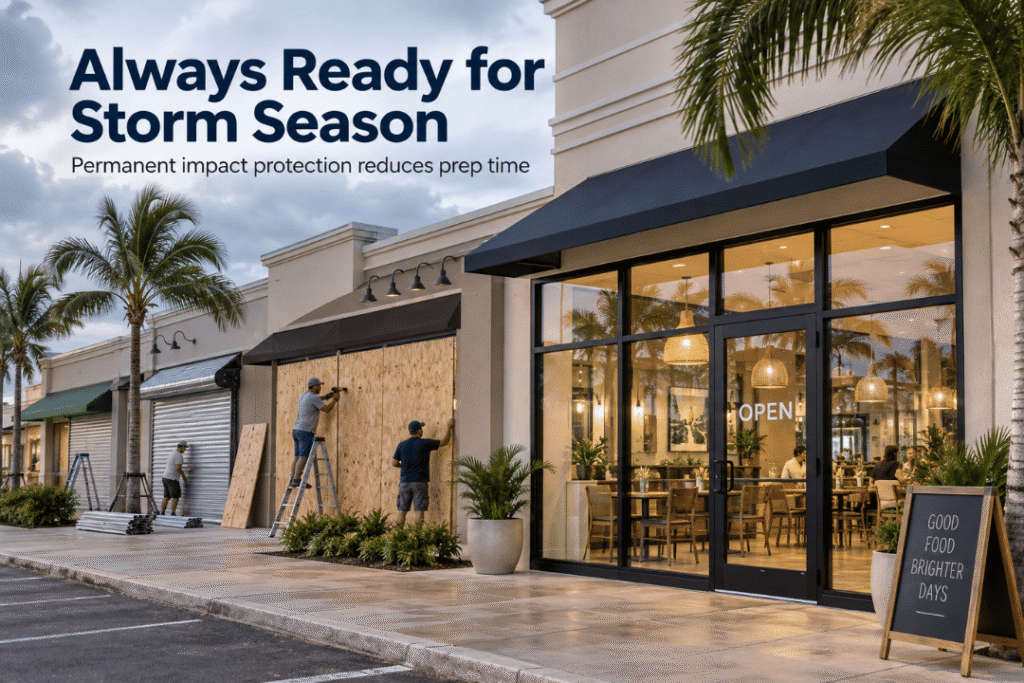
With an appropriately approved impact storefront system, hurricane protection is built into the assembly.
That allows the glazing to remain in place during everyday business operations.
For a retail store, this means customers can continue seeing product displays through the glass.
For a restaurant, large windows can continue showcasing the dining environment.
An impact storefront can therefore combine normal storefront functionality with permanent storm-readiness features.
2. Reduced Risk of Windborne-Debris Damage
Flying debris is a major hazard during hurricanes.
Objects carried by strong winds can strike windows, doors and exposed commercial entrances.
If a conventional glass opening fails, wind and rain may enter the building.
This can damage interior finishes, merchandise, equipment and furnishings.
Impact-resistant storefront systems are intended to reduce the likelihood of an opening being breached when subjected to the impacts and pressures covered by their approvals.
For restaurants, this can be particularly important where glazing separates the exterior from dining areas and expensive interior equipment.
For retail stores, maintaining the building envelope helps protect inventory and interior spaces.
Impact glass is not damage-proof, but a properly specified system provides an additional level of protection against qualifying storm hazards.
3. Improved Security Against Certain Forced-Entry Attempts

Security is another consideration for commercial storefronts.
Large glass panels can be vulnerable to smash-and-grab attempts.
Laminated impact glazing can make penetration more difficult than breaking ordinary annealed glass because the interlayer helps retain fractured glass.
However, hurricane impact ratings are not the same as burglary-resistance ratings.
Businesses with particular security requirements should ask about relevant forced-entry testing, frames, locking systems and complete assembly performance.
The most effective storefront security plan considers more than the glass.
Doors, locks, accessible hardware, frames and surrounding construction also matter.
4. Better Natural Lighting for Retail Interiors
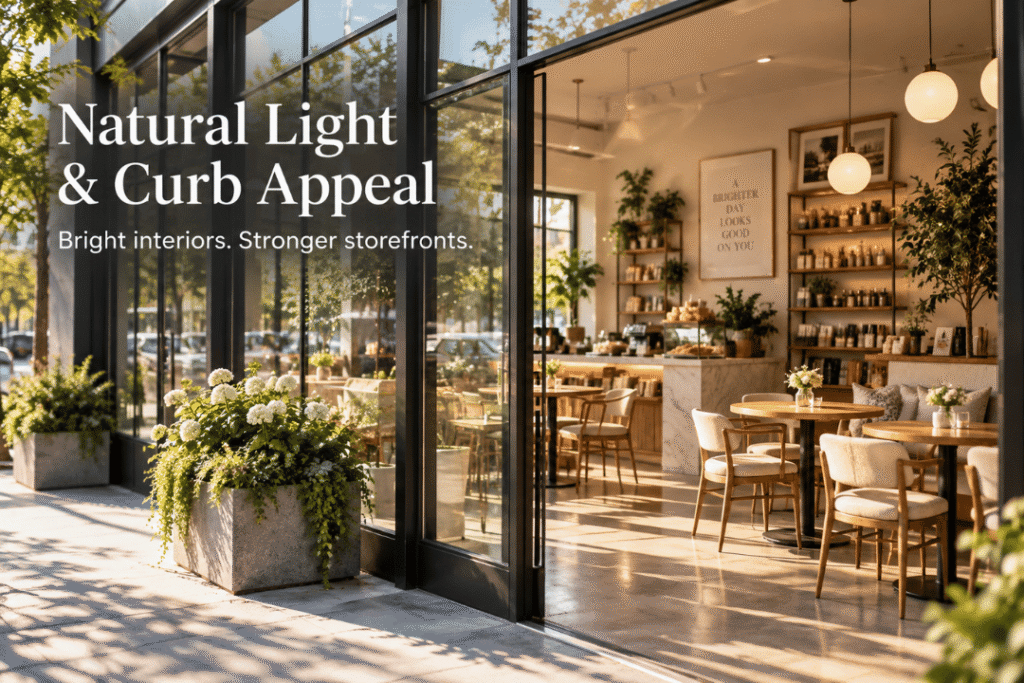
Large storefront windows allow natural light to reach interior spaces.
For retail businesses, daylight can illuminate merchandise and make the shop appear more open.
For restaurants, expansive glass can create brighter dining spaces and visual connections to outdoor areas.
Impact glazing allows businesses to retain these architectural benefits while incorporating hurricane-resistant protection.
Glass selection still matters.
Depending on the product, businesses may be able to choose different tints, coatings and insulating configurations to manage brightness and solar heat gain.
The goal is to balance visibility, daylight, comfort and energy performance.
5. Potential Energy-Efficiency Improvements
Florida businesses frequently deal with substantial cooling demands.
Large areas of commercial glazing can influence how much solar heat enters the building.
Impact resistance alone does not guarantee energy efficiency.
However, impact storefront systems may be available with energy-efficient glazing options such as Low-E coatings and insulating glass.
Business owners should compare the actual system’s U-factor and Solar Heat Gain Coefficient when energy performance is important.
A suitable glass package can help manage solar heat gain while maintaining the storefront’s appearance.
For restaurants with large west-facing windows, this can be particularly relevant during the afternoon.
6. A More Attractive Commercial Storefront
The storefront is often the first architectural feature customers notice.
Outdated framing, damaged glass or heavily obstructed windows can detract from the building’s appearance.
Modern impact storefront systems can offer clean aluminium framing, large glass panels and a coordinated visual design.
This can be useful for restaurants seeking contemporary dining environments and retail stores that rely on display visibility.
Possible applications include:
- restaurant entrances and dining-area windows
- boutique retail storefronts
- shopping-centre units
- cafés and bakeries
- showroom glazing
- ground-floor commercial offices
Frame proportions, finishes and glazing configurations should be selected according to the building’s design and structural requirements.
7. Less Dependence on Temporary Storm Preparation
Business owners often have limited time to prepare when a hurricane approaches.
Employees may need to secure merchandise, protect equipment, coordinate closures and manage other operational responsibilities.
Approved impact storefront glazing provides continuous protection for the openings it covers.
That can reduce the need to install separate temporary hurricane coverings over those openings.
This does not eliminate the need for a hurricane preparation plan.
Businesses must still secure exterior furniture, signs, loose equipment and other vulnerable components.
Nevertheless, permanent impact protection can simplify one important part of storm preparation.
8. Potential Insurance Considerations
Some Florida commercial insurers consider building construction, wind resistance and opening protection when evaluating properties.
However, installing impact storefront glass does not automatically guarantee a premium reduction.
Available credits and underwriting treatment depend on the insurer, policy, building characteristics and supporting documentation.
Business owners should speak with their insurance provider before calculating potential savings.
Retaining permits, product approvals and installation records can help document the improvements.
9. Impact Storefront Glass Must Meet Florida Requirements
Not all storefront glazing is suitable for every Florida property.
The necessary system depends on the building location, height, wind exposure, opening dimensions and applicable code requirements.
Businesses in Miami-Dade and Broward may also face High Velocity Hurricane Zone requirements.
Before selecting a product, confirm:
- Florida Product Approval or another applicable approval pathway
- required design pressures
- impact classification where required
- permitted glass dimensions
- frame and anchoring specifications
- installation requirements
An approved impact glass panel does not automatically make an otherwise unapproved storefront assembly compliant.
The full system must be appropriate for the intended application.
10. Professional Installation Is Essential
Even a properly tested storefront system depends on correct installation.
The frames must be anchored to suitable structural substrates.
Glass must be installed according to the approved details.
Waterproofing, sealants and drainage also require attention.
Poor installation can cause leaks, movement, premature deterioration or reduced performance.
Commercial property owners should work with qualified installers familiar with the applicable Florida code and product-approval requirements.
Is Impact Storefront Glass Worth It for Restaurants and Retail Stores?
The value depends on the property and business needs.
For restaurants and retail stores in hurricane-prone locations, impact storefront glass can combine permanent storm protection with everyday benefits such as visibility, natural lighting and attractive design.
It may also support a broader security and energy-efficiency strategy when the correct products are selected.
The decision should account for the building’s exposure, glazing dimensions, business operations, budget and installation requirements.
Protect Your Florida Storefront With Guardian Shield Windows & Doors
Guardian Shield Windows & Doors provides commercial impact window and door solutions for Florida businesses.
Our commercial services include hurricane-rated storefront systems designed to accommodate the needs of retail properties, restaurants and other commercial buildings.
Whether you are replacing damaged storefront glazing, upgrading an older commercial entrance or planning a new retail fit-out, we can help you explore suitable impact-resistant configurations.
Contact Guardian Shield Windows & Doors to discuss impact storefront glass for your Florida restaurant or retail property.