Florida homeowners love wide glass openings that connect indoor living spaces to patios, lanais, and pools. Sliding impact doors make that possible while still providing hurricane protection. But when choosing a system, many homeowners face an important question:
What’s the difference between pocket sliding impact doors and traditional sliding impact doors?
While both offer storm resistance and energy efficiency, they function differently and serve different design goals. In this guide, Guardian Shield Windows & Doors explains how pocket and traditional sliding impact doors compare in structure, performance, installation, and overall value for Florida homes.
What Are Traditional Sliding Impact Doors?
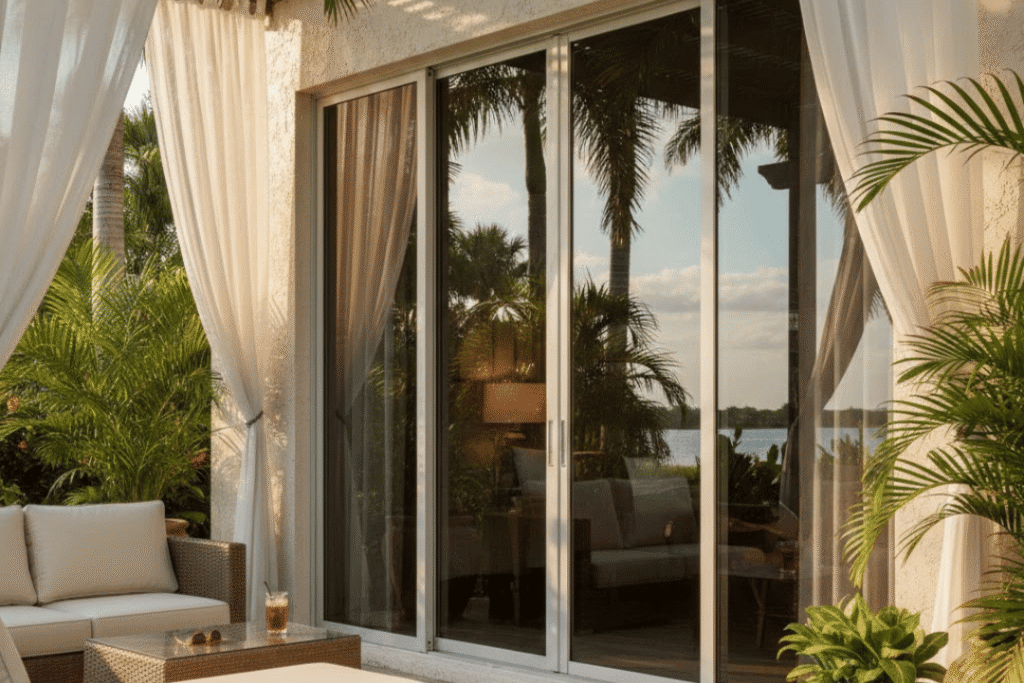
Traditional sliding impact doors operate on a visible track system where one or more panels slide behind a fixed panel. When open, the moving panel overlaps the stationary panel.
Key characteristics include:
- One or more sliding panels
- At least one fixed panel
- Visible stacked panels when open
- Reinforced frames and laminated impact glass
These systems are widely used in Florida homes because they provide hurricane protection while maintaining a large glass surface area.
What Are Pocket Sliding Impact Doors?
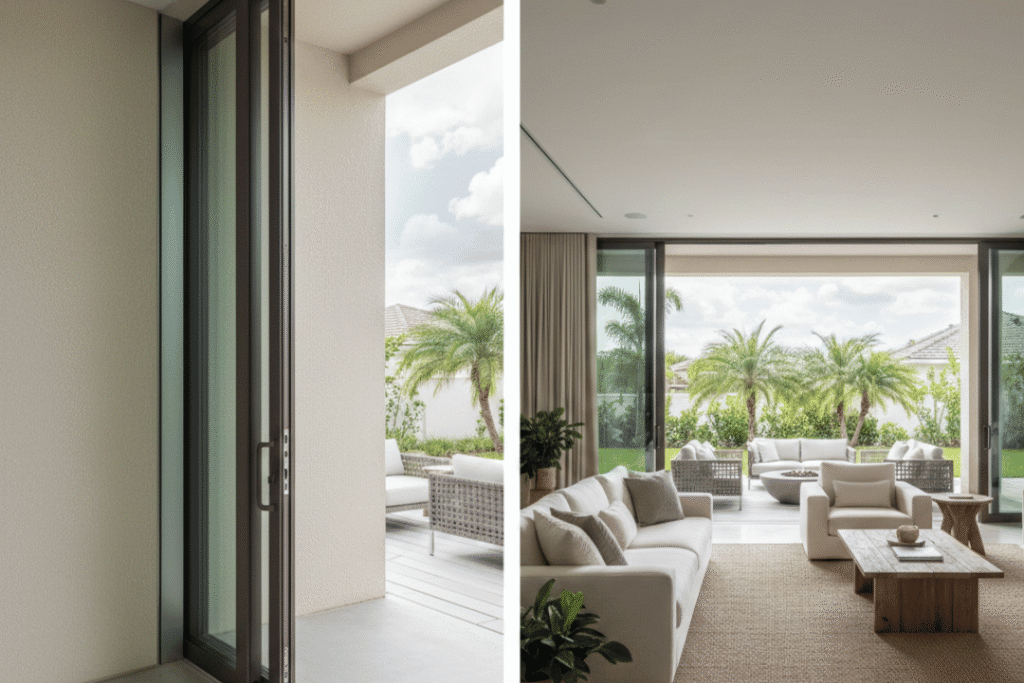
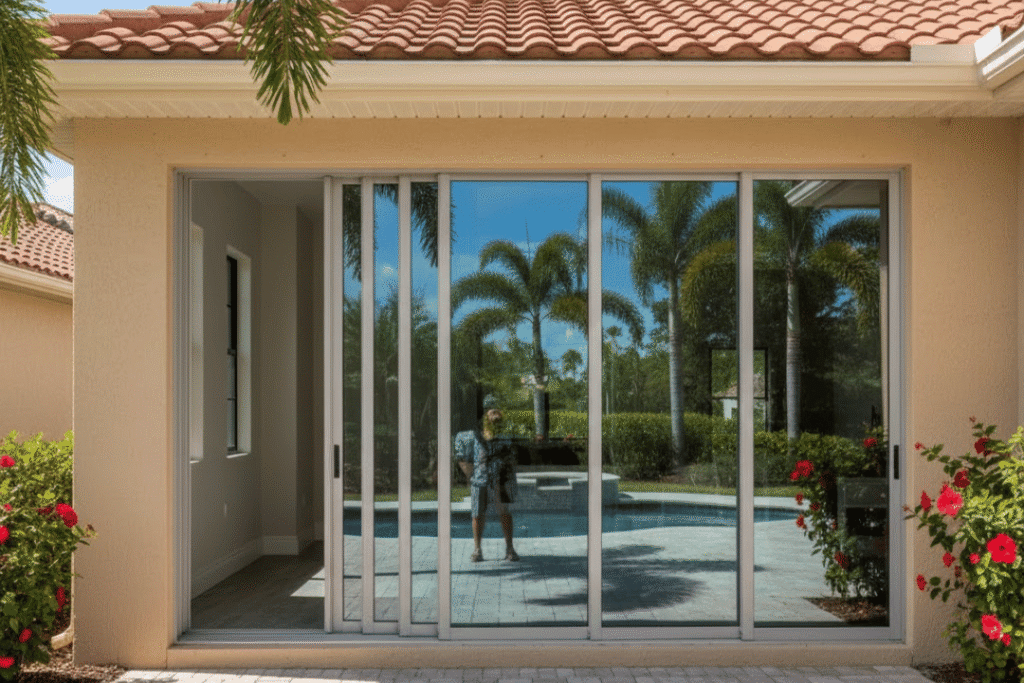
Pocket sliding impact doors operate differently. Instead of stacking behind a fixed panel, the sliding panels disappear into a concealed wall cavity when opened.
Key features include:
- Panels that slide completely into a wall pocket
- Fully open wall span with no visible stacked panels
- Clean, unobstructed opening
- Structural reinforcement within the wall
Pocket systems are popular in high-end Florida homes that prioritize seamless indoor–outdoor transitions.
The Biggest Difference: Opening Space
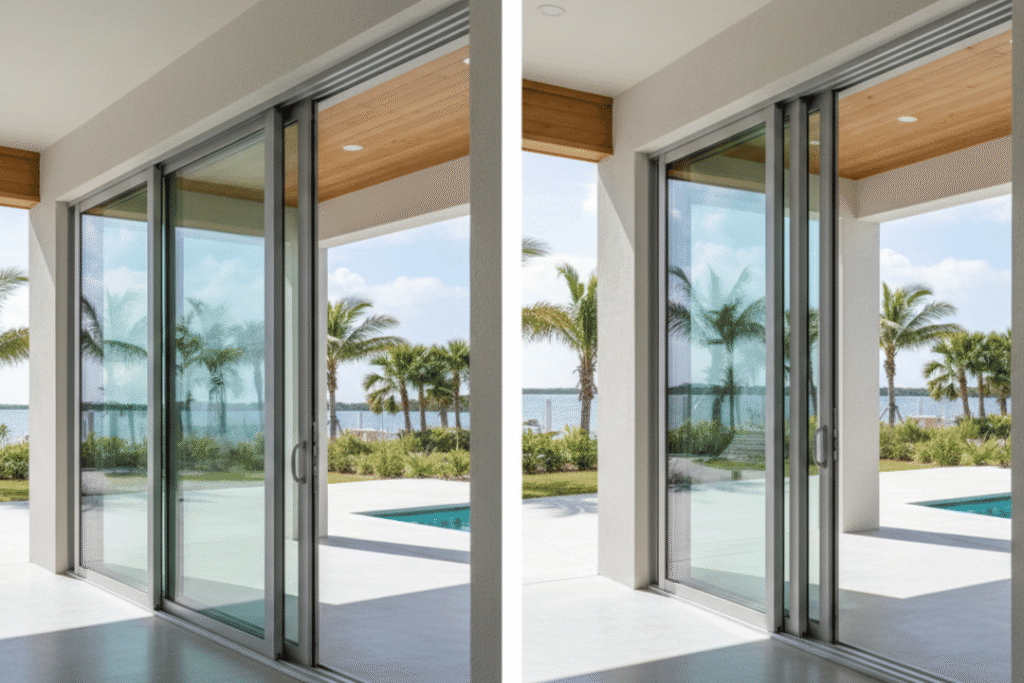
The most noticeable difference between pocket and traditional sliding impact doors is the amount of usable opening space.
Traditional sliding doors:
- Open partially
- Always leave one fixed panel in place
- Limit the total clear opening
Pocket sliding doors:
- Can open nearly 100% of the wall span
- Create a wide, uninterrupted opening
- Maximize airflow and connection to outdoor spaces
For Florida homeowners who want to fully open their living room to a patio or pool deck, pocket systems offer a dramatic effect.
Hurricane Protection: Are They Equally Strong?
Both pocket and traditional sliding impact doors can be engineered to meet Florida Building Code (FBC) hurricane requirements.
Both systems typically use:
- Laminated impact-rated glass
- Reinforced aluminum or vinyl frames
- Multi-point locking systems
- Wind pressure and impact testing certification
However, because pocket doors involve wall cavities, proper structural reinforcement is critical. When properly installed and rated, both systems provide equivalent hurricane resistance.
The difference lies not in the glass but in how the system integrates into the structure.
Structural and Installation Considerations
Traditional sliding impact doors are easier to install because they do not require wall cavity modifications. They are often ideal for:
- Retrofits
- Replacements
- Homes with existing openings
Pocket sliding doors require:
- Structural wall cavity space
- Reinforced framing around the pocket
- Careful waterproofing and sealing
Because of these structural requirements, pocket systems are typically easier to incorporate during new construction or major renovations.
Maintenance and Long-Term Durability
Florida’s coastal climate affects all sliding systems, regardless of type.
Traditional sliding doors:
- Have accessible tracks
- Easier to inspect and maintain
- Simpler roller replacement
Pocket sliding doors:
- Concealed track systems
- Require proper drainage design
- May require professional servicing if issues occur inside the wall cavity
Both systems need regular cleaning and lubrication, especially in coastal environments where salt and sand accumulate.
Design Aesthetics and Visual Impact
From a design perspective, pocket sliding doors offer a more dramatic and minimalist aesthetic.
Traditional sliding doors:
- Maintain visible stacked panels
- Slightly interrupts full wall openness
Pocket sliding doors:
- Disappear completely into the walls
- Create seamless transitions
- Provide cleaner architectural lines
For modern Florida homes with open-concept designs, pocket systems often align better with the overall aesthetic vision.
Cost Differences Between the Two Systems
Pocket sliding impact doors generally cost more than traditional sliding systems due to:
- Structural wall modifications
- Additional framing and engineering
- More complex installation
Traditional sliding doors are typically more budget-friendly and practical for homeowners who want impact protection without structural remodeling.
Budget, timeline, and construction phase often determine which system is more appropriate.
Energy Efficiency and Insulation
Both systems can offer similar energy efficiency when using high-quality impact-rated glass and insulated frames.
Energy efficiency depends more on:
- Glass coatings (Low-E)
- Proper installation
- Weather sealing
Because pocket systems involve wall cavities, proper insulation around the pocket area is essential to prevent air leakage.
When Traditional Sliding Impact Doors Are the Right Choice
Traditional systems are ideal when:
- Replacing existing patio doors
- Working within a limited renovation budget
- Structural wall modification isn’t feasible
- Simplicity and accessibility are priorities
They offer reliable performance, hurricane protection, and lower installation complexity.
When Pocket Sliding Impact Doors Make More Sense
Pocket systems are ideal when:
- Building a new home
- Planning a major renovation
- Prioritizing full-width indoor–outdoor openings
- Seeking a high-end architectural finish
For Florida homeowners who want a fully open living space during cooler months, pocket doors provide unmatched openness.
So, What’s the Best Option for Your Florida Home?
The best choice depends on your:
- Budget
- Structural layout
- Design goals
- Renovation scope
- Hurricane protection needs
Both pocket and traditional sliding impact doors can meet Florida’s storm requirements when properly rated and installed.
The key difference is how much openness and architectural integration you want.
Work With Florida Sliding Door Experts
At Guardian Shield Windows & Doors, we help Florida homeowners choose between pocket and traditional sliding impact doors based on structural feasibility, budget, and long-term performance. Our systems are engineered for hurricane resistance, coastal durability, and smooth operation.If you’re planning a new build or upgrading your patio doors, contact us today to explore sliding impact door solutions tailored to your home.