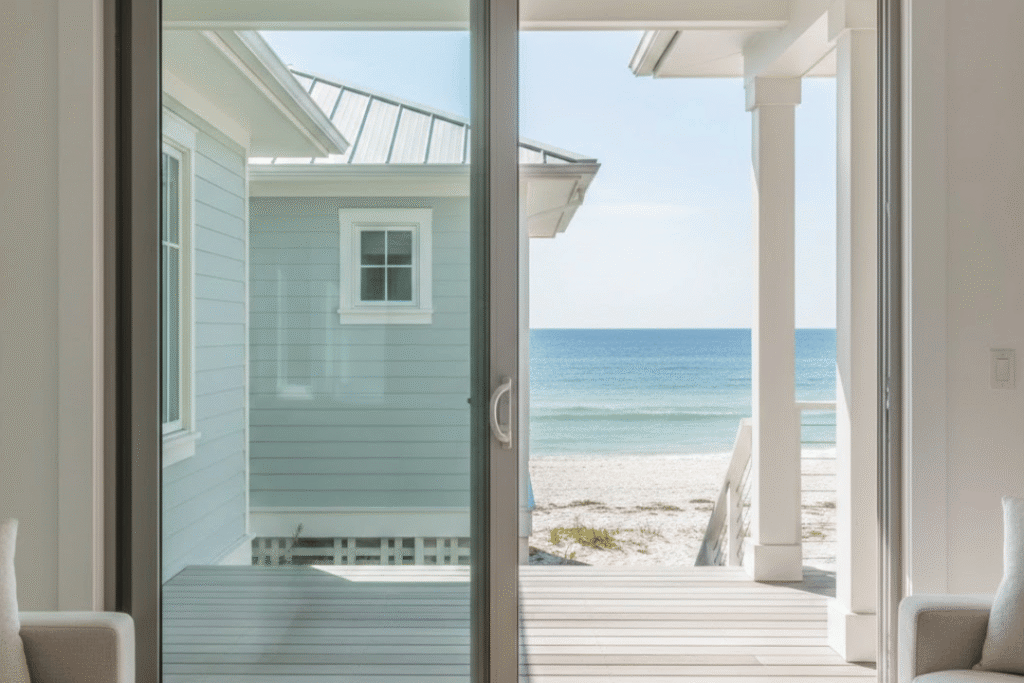
Florida’s coastal environment is beautiful, but it can be harsh on building materials. Homes near the ocean face constant exposure to salt air, humidity, heat, and wind. While impact sliding doors are designed to withstand hurricanes and strong storms, one area that homeowners often overlook is the sliding door track system.
Over time, corrosion in coastal sliding impact door tracks can lead to operational issues, structural weakening, and premature system failure. Preventing corrosion isn’t just about maintaining appearance; it’s about preserving the performance, safety, and hurricane resistance of your impact-rated door system.
In this guide, Guardian Shield Windows & Doors explains why corrosion occurs, how it affects sliding impact door tracks, and what Florida coastal homeowners can do to prevent long-term damage and costly repairs.
Why Coastal Environments Accelerate Corrosion
Coastal Florida homes are exposed to airborne salt particles carried by ocean winds. Even if your home isn’t directly on the beach, salt can travel miles inland and settle on exterior surfaces.
Salt exposure contributes to:
- Oxidation of metal components
- Breakdown of protective finishes
- Accelerated wear on moving parts
- Rust formation in vulnerable areas
Salt acts as an electrolyte, speeding up the corrosion process when moisture is present. Because sliding door tracks sit low and often collect water, they become prime areas for corrosion to begin.
Humidity also plays a major role. Florida’s high moisture levels create the perfect environment for corrosion to develop quickly if protective coatings are compromised.
Why Sliding Impact Door Tracks Matter
Sliding impact doors rely heavily on their track systems for proper operation and structural performance. Unlike hinged doors, sliding doors distribute weight across rollers that move along a metal track.
The track system supports:
- Smooth panel movement
- Weight distribution across large glass panels
- Alignment of locking mechanisms
- Resistance to wind pressure during storms
If corrosion compromises the track, it can affect door alignment, increase friction, strain rollers, and reduce long-term durability. In severe cases, corrosion can interfere with proper sealing, which impacts energy efficiency and storm resistance.
How Corrosion Affects Hurricane Performance
Many homeowners don’t realize that track corrosion can indirectly affect hurricane protection. Impact sliding doors are engineered systems, meaning every component, including the track, plays a role in performance.
When corrosion weakens metal tracks:
- Panels may not seal tightly
- Locking mechanisms may not align correctly
- Structural integrity can be compromised
- Wind pressure resistance may decrease
While the laminated impact glass may remain strong, weakened hardware can reduce overall system performance during extreme weather.
Common Signs of Corrosion in Sliding Door Tracks
Homeowners in coastal Florida should inspect their sliding impact door tracks several times per year. Early warning signs include:
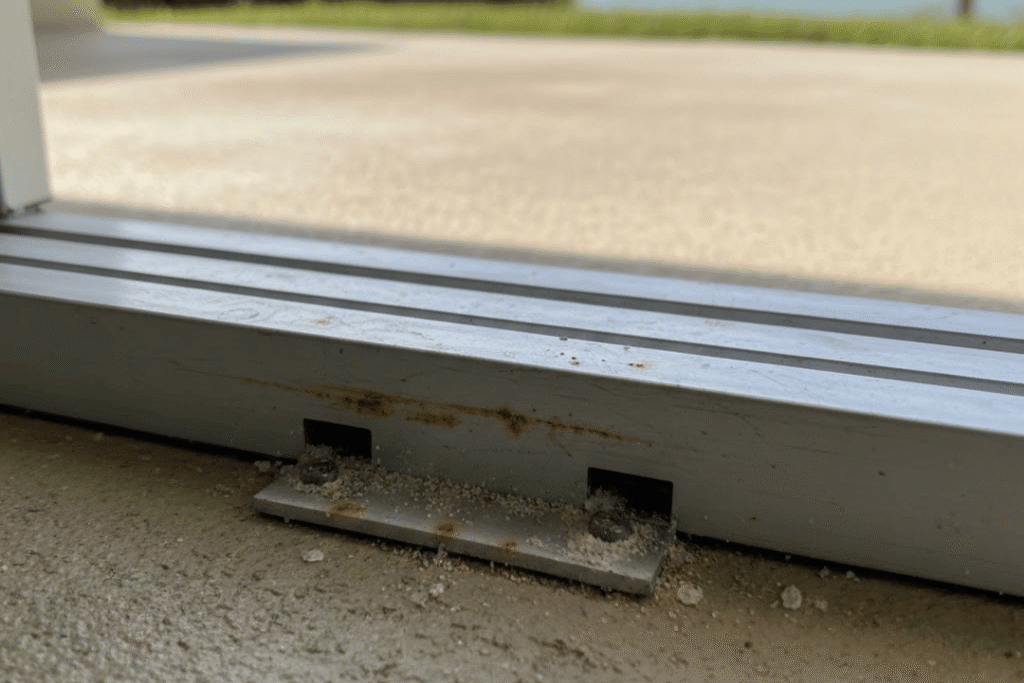
- Discoloration or rust spots
- Pitting or surface flaking
- Difficulty opening or closing the door
- Grinding or scraping noises during operation
- Water is pooling inside the track
Even minor surface corrosion should be addressed early before it spreads beneath protective coatings.
Materials Matter: Choosing Corrosion-Resistant Components
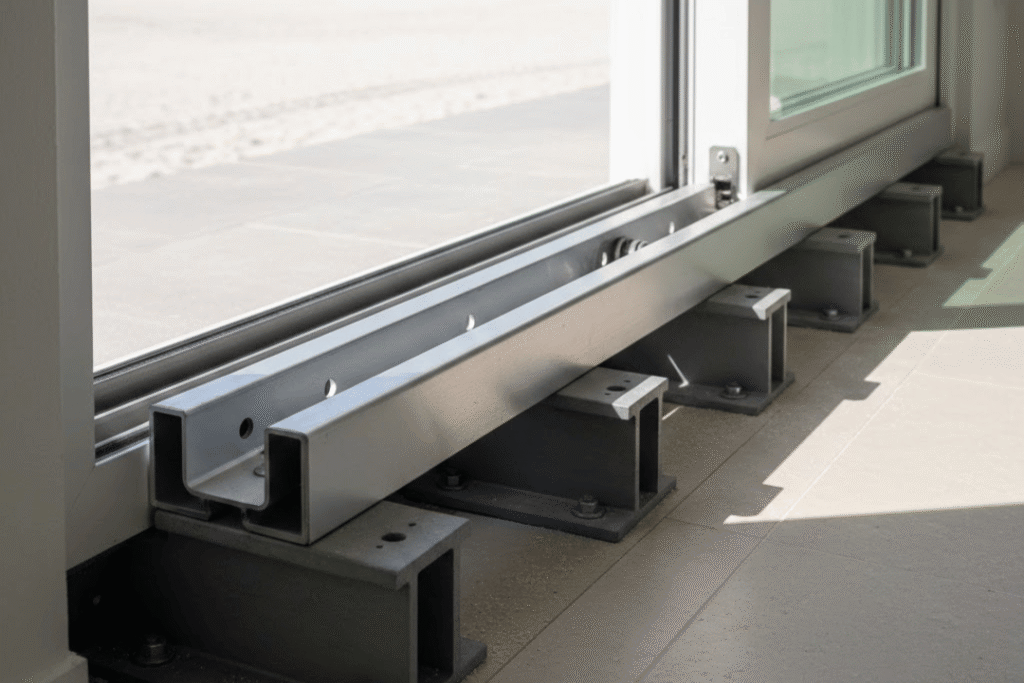
Modern impact sliding doors designed for coastal regions use corrosion-resistant materials. However, not all systems are created equal.
Key corrosion-resistant features include:
- Marine-grade aluminum frames
- Stainless steel fasteners and screws
- Protective anodized or powder-coated finishes
- Reinforced track systems designed for salt exposure
Marine-grade aluminum is especially important because it forms a natural oxide layer that helps resist further corrosion. High-quality finishes add another layer of defense.
Choosing a sliding door system specifically rated for coastal environments significantly reduces long-term corrosion risks.
Proper Drainage Prevents Long-Term Damage
Water accumulation in door tracks accelerates corrosion. Coastal rain, humidity, and storm runoff can collect in lower track channels, especially after heavy weather.
Well-designed systems include:
- Built-in drainage channels
- Weep holes to release trapped water
- Sloped track designs for runoff
- Sealed joints to reduce moisture intrusion
Homeowners should regularly check that drainage pathways are clear. Blocked weep holes can trap water for extended periods, accelerating rust formation.
The Impact of Sand and Debris
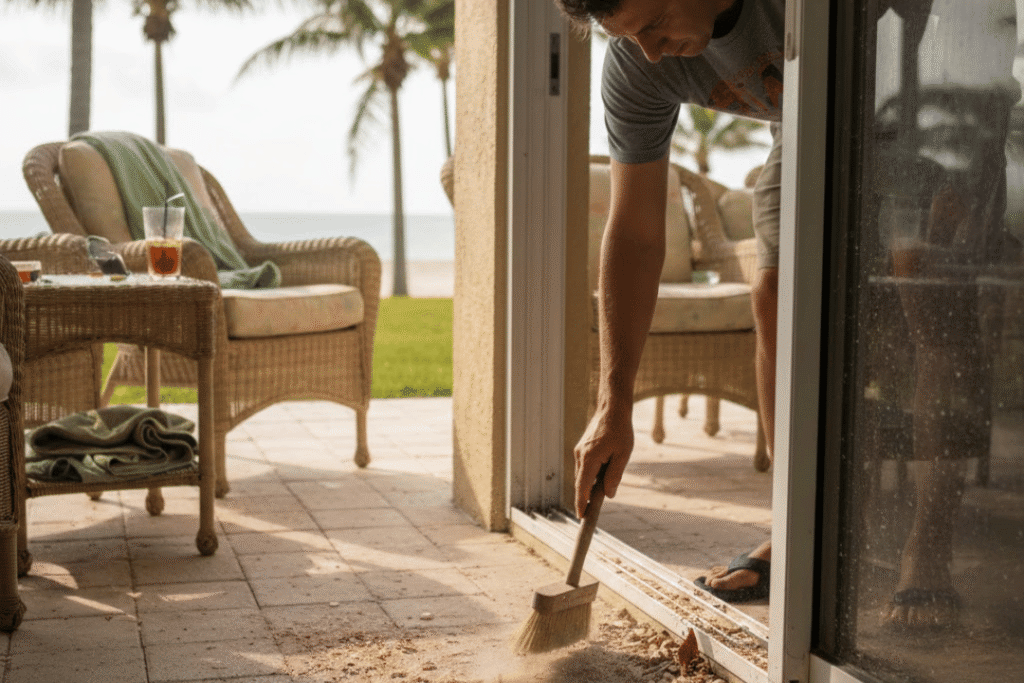
Coastal environments often introduce sand into sliding door tracks. Sand may seem harmless, but it can trap moisture and scratch protective coatings.
Over time, sand can:
- Wear down anodized finishes
- Increase friction on rollers
- Create small abrasions where corrosion begins
Routine cleaning helps:
- Remove abrasive particles
- Prevent moisture retention
- Maintain smooth operation
Even small accumulations of sand can gradually weaken protective finishes and create corrosion points.
Maintenance Tips for Coastal Sliding Impact Doors
Preventative maintenance is the most effective way to protect sliding door tracks from corrosion. Coastal homes should follow a consistent care routine.
Recommended maintenance steps include:
- Rinsing tracks with fresh water monthly
- Gently cleaning debris with a soft brush or vacuum
- Drying tracks after cleaning
- Avoiding harsh chemical cleaners
- Inspecting fasteners and track surfaces for early corrosion
For oceanfront homes, bi-weekly rinsing may be advisable during high-salt seasons.
Lubrication and Protective Treatments
Using appropriate lubricants can help reduce friction and protect metal components. However, homeowners must choose the correct products.
Avoid:
- Oil-based lubricants that attract dirt and sand
- Harsh solvents that strip protective coatings
Instead, use manufacturer-approved silicone-based lubricants designed specifically for sliding door tracks. These products reduce friction without creating residue buildup.
Some coastal homeowners also apply light protective treatments recommended by the manufacturer to extend surface protection.
When Corrosion Becomes a Structural Concern
Minor surface corrosion may be manageable with maintenance. However, deeper pitting, rust expansion, or track warping can affect structural performance.
Severe corrosion can lead to:
- Misaligned panels
- Compromised locking mechanisms
- Reduced storm resistance
- Increased stress on rollers and hardware
- Difficulty sealing against wind and rain
If corrosion spreads beneath the surface or affects structural components, professional evaluation is essential.
Professional Inspection and Coastal Upgrades
For homeowners in high-salt coastal zones, periodic professional inspections can identify hidden issues before they become major repairs.
Upgrades may include:
- Replacing damaged track components
- Installing higher-grade corrosion-resistant hardware
- Upgrading rollers for smoother operation
- Reinforcing track systems for extended durability
Proactive upgrades can significantly extend the lifespan of impact sliding doors, especially in homes directly exposed to ocean spray.
Why Installation Quality Matters in Coastal Areas
Even the most corrosion-resistant system can fail prematurely if installed improperly. Proper sealing, flashing, anchoring, and drainage are critical in coastal environments.
Professional installation ensures:
- Correct flashing and moisture barriers
- Proper alignment of tracks
- Secure anchoring into structural framing
- Proper water diversion away from tracks
Poor installation can allow moisture to infiltrate beneath the track, accelerating corrosion from within the system, where it’s harder to detect.
Long-Term Protection for Coastal Florida Homes
Preventing corrosion in sliding impact door tracks isn’t just about maintenance; it’s about preserving hurricane protection, smooth operation, and long-term home value.
Coastal homeowners who invest in:
- High-quality impact-rated systems
- Marine-grade materials
- Routine maintenance
- Professional inspections
They are far more likely to enjoy long-lasting performance even in harsh oceanfront conditions.
Taking proactive steps today can prevent costly replacements tomorrow.
Protect Your Coastal Sliding Impact Doors with Guardian Shield
At Guardian Shield Windows & Doors, we install sliding impact door systems designed specifically for Florida’s coastal conditions. Our products are engineered with corrosion-resistant materials and built to withstand both hurricanes and salt exposure.
If you live near the coast and want to ensure your sliding impact doors remain strong, smooth, and storm-ready, contact Guardian Shield Windows & Doors today for expert guidance and service.