
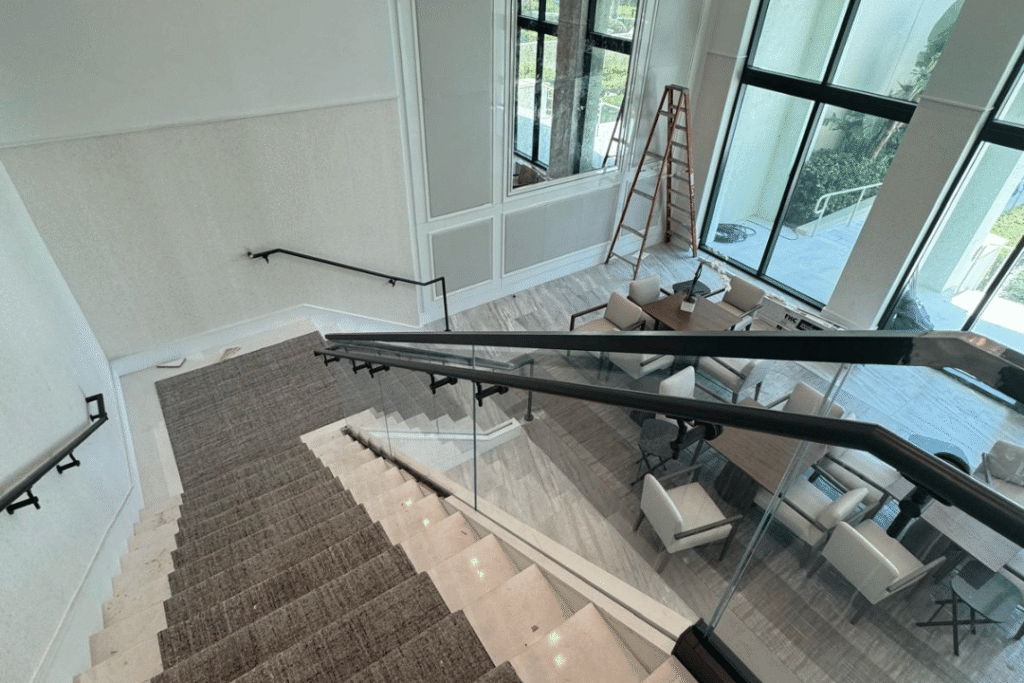
Florida’s commercial architecture is increasingly defined by openness, natural light, and modern materials that support both form and function. From office buildings and retail spaces to hotels and mixed-use developments, business owners and architects are moving away from heavy, enclosed stairwells toward designs that feel open, inviting, and visually connected. One feature driving this shift is the glass staircase.
Glass staircases were once viewed primarily as luxury or decorative elements, but in today’s commercial environments, they serve a much broader purpose. When properly engineered, glass stair systems enhance spatial flow, improve visibility, and support safety requirements — all while elevating the overall architectural identity of a building. In Florida, where humidity, durability, and code compliance matter as much as aesthetics, glass staircases have become a strategic design choice rather than a stylistic risk.
In this guide, Guardian Shield Windows & Doors explores the architectural advantages of glass staircases in Florida commercial buildings and explains why they are becoming a defining element in modern commercial design.
Understanding Commercial Glass Systems in Florida Buildings
Before examining the architectural benefits of glass staircases, it’s important to understand how commercial glass systems are designed and regulated in Florida. Unlike decorative residential features, commercial glass elements must meet strict performance and safety standards.
Commercial glass systems are engineered to:
- support occupant safety and building code compliance
- withstand daily wear in high-traffic environments
- resist humidity, corrosion, and UV exposure
- integrate seamlessly with structural framing
Florida commercial projects must comply with the Florida Building Code (FBC), which governs material strength, load requirements, and safety glazing standards. Glass staircases designed for commercial use rely on laminated or tempered safety glass and reinforced framing systems to meet these requirements.
What Are Glass Staircases in Commercial Buildings?
Glass staircases are architectural stair systems that incorporate glass components as primary visual elements. These may include glass balustrades, glass panels, glass risers, or full glass sidewalls paired with metal or concrete stair structures.
How Commercial Glass Stair Systems Work
- laminated or tempered safety glass panels
- structural steel or aluminum stair frameworks
- engineered anchoring and mounting hardware
- slip-resistant stair treads
- integrated handrail systems
While glass provides transparency and light, the underlying structure carries the load. This balance allows staircases to remain visually light while meeting commercial safety and durability standards.
Enhancing Architectural Openness and Flow
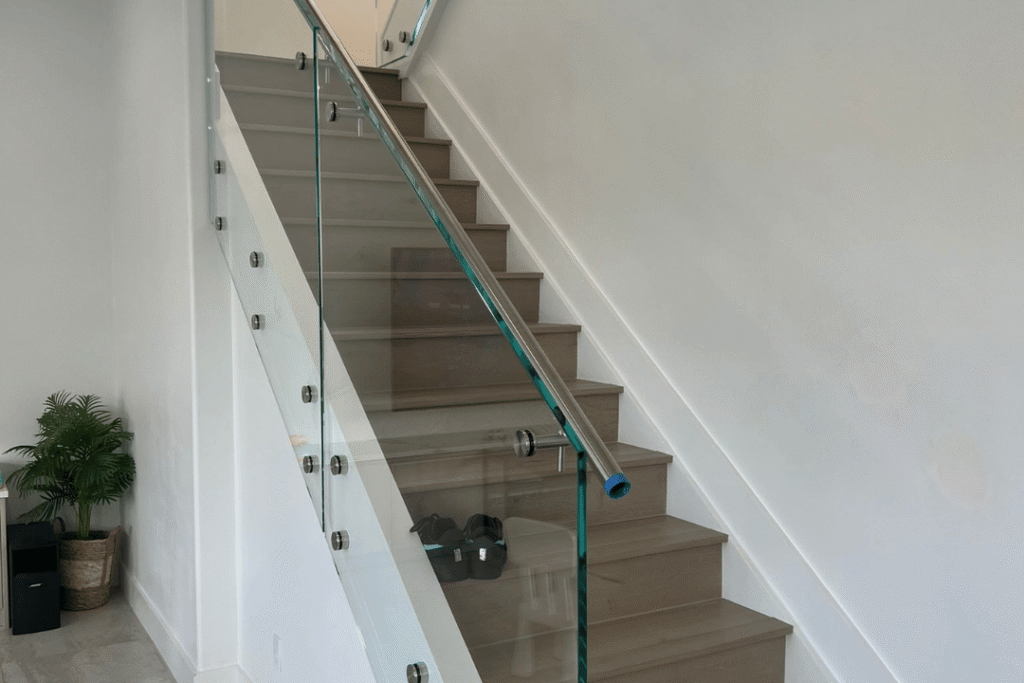
One of the most significant architectural advantages of glass staircases is how they influence spatial perception. Traditional stairwells often create visual barriers that divide spaces and block natural light.
Glass staircases:
- allow light to pass through multiple levels
- create visual continuity between floors
- reduce the feeling of enclosure
- make interiors feel larger and more connected
In Florida commercial buildings, where open layouts are increasingly preferred, glass staircases help create seamless transitions between spaces while maintaining a modern, uncluttered appearance.
Maximizing Natural Light in Commercial Interiors
Natural light is a key design priority in Florida architecture. Glass staircases support this goal by eliminating opaque barriers that block daylight.
Benefits include:
- improved interior brightness
- reduced reliance on artificial lighting
- enhanced employee and customer comfort
- better visibility in shared spaces
By allowing light to flow freely between floors, glass staircases contribute to healthier, more inviting commercial environments.
Supporting Modern Brand Identity and Design Language
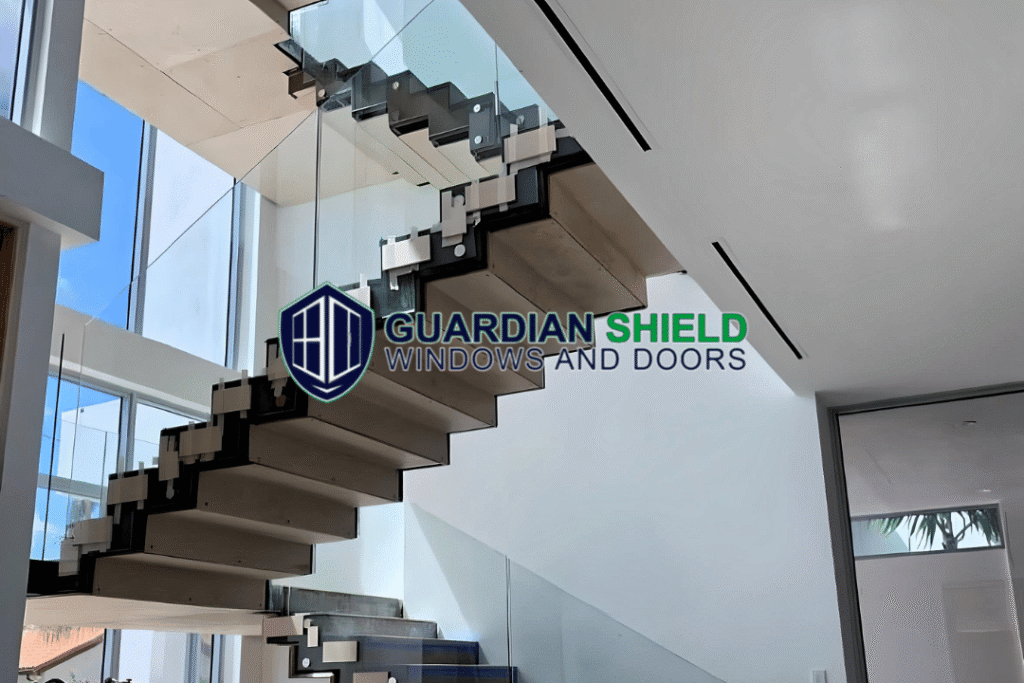
For commercial buildings, architecture often communicates brand values. Glass staircases align with modern branding that emphasizes transparency, innovation, and sophistication.
Design advantages include:
- clean, contemporary aesthetics
- compatibility with minimalist interiors
- seamless integration with glass walls and railings
- strong visual impact without visual heaviness
Retail spaces, corporate offices, and hospitality venues use glass staircases to reinforce modern brand identity while maintaining functional circulation paths.
Safety and Code Compliance in Florida Commercial Staircases
Safety is a top priority for any commercial building feature. Glass staircases are engineered to meet or exceed safety standards when designed correctly.
Key safety features include:
- laminated safety glass that holds together if damaged
- tempered glass for impact resistance
- reinforced mounting systems
- compliant handrails and guard heights
Florida Building Code requirements ensure that glass stair components perform reliably under daily use and unexpected impacts.
Durability in Florida’s Climate
Florida’s humidity, heat, and coastal conditions demand materials that resist corrosion and degradation.
Glass staircases offer:
- resistance to moisture and humidity
- non-corrosive surfaces
- long-term clarity with proper maintenance
- compatibility with corrosion-resistant framing
When paired with high-quality hardware and finishes, glass stair systems consistently maintain their performance and appearance over time in Florida’s commercial environments.
Glass Staircases in High-Traffic Commercial Spaces
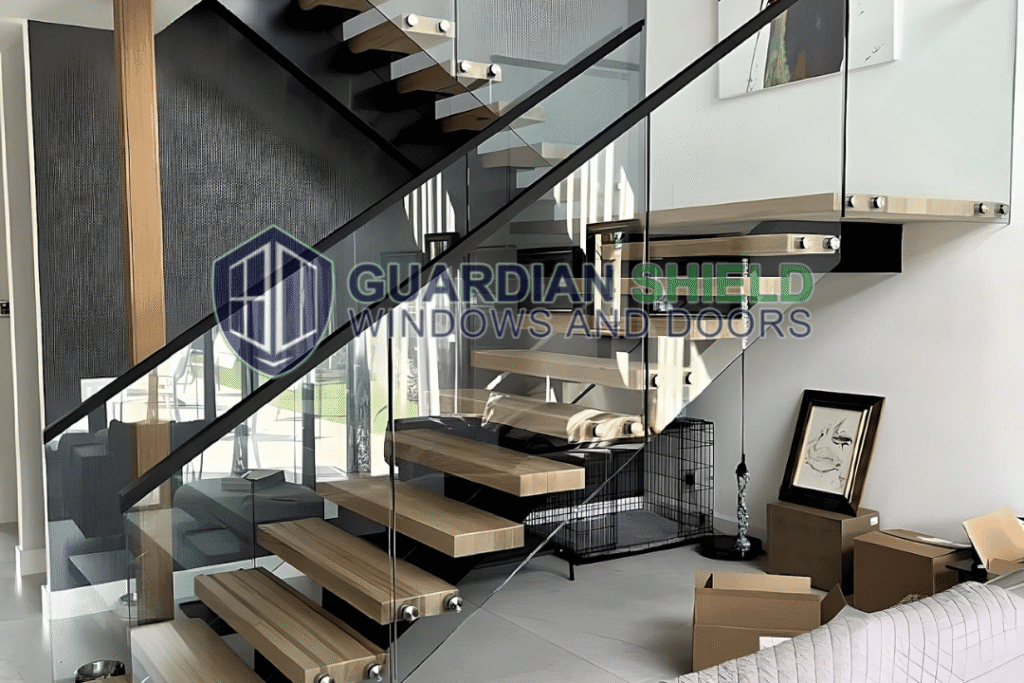
Commercial staircases must withstand frequent use. Glass stair systems are designed with this demand in mind.
Performance advantages include:
- robust glass thickness for load resistance
- engineered anchoring for stability
- slip-resistant walking surfaces
- ease of inspection and cleaning
These features make glass staircases suitable for offices, retail centers, hotels, and public-facing buildings.
Integrating Glass Staircases With Other Architectural Elements
Glass staircases often work best when coordinated with other glass features.
Common integrations include:
- glass railings and balustrades
- interior glass walls
- open atriums and mezzanines
- metal or concrete stair structures
This cohesion creates a consistent architectural language throughout the building.
Long-Term Value for Florida Commercial Properties
Glass staircases contribute to long-term property value by combining design appeal with functional durability.
Value-driven benefits include:
- increased visual appeal for tenants and visitors
- enhanced perception of quality
- reduced need for aesthetic updates
- alignment with modern architectural trends
As commercial design evolves, glass staircases remain relevant rather than dated.
Guardian Shield Windows & Doors — Specialists in Commercial Glass Systems
At Guardian Shield Windows & Doors, we design and install commercial glass systems that support modern architecture while meeting Florida Building Code requirements. Our expertise extends beyond windows and doors to integrated glass solutions that enhance safety, performance, and design cohesion.
We work with property owners, architects, and builders to deliver glass systems that perform reliably in Florida’s demanding commercial environments.
Elevate Commercial Architecture With Glass Staircases
Glass staircases offer Florida commercial buildings a powerful combination of architectural elegance and functional performance. Guardian Shield Windows & Doors provides expertly engineered glass solutions that enhance openness, safety, and long-term durability.
Schedule a consultation today to explore how glass staircases can elevate the design and usability of your Florida commercial space.