In Florida, commercial entry systems must do far more than look modern or function smoothly. They must comply with strict accessibility regulations, support public safety in high-traffic environments, and withstand extreme weather conditions unique to the state. For many commercial buildings, automatic sliding doors have become the preferred solution but only when they are properly designed, installed, and maintained.
From ADA compliance and pedestrian safety to hurricane preparedness and Florida building code requirements, automatic sliding doors play a critical role in how businesses operate and protect their properties. Choosing the right system is not just a design decision; it’s a compliance and risk-management decision.
In this guide, Guardian Shield Windows & Doors breaks down everything Florida property owners, facility managers, and commercial decision-makers need to know about ADA-compliant, safe, and storm-ready automatic sliding door systems.
Why Automatic Sliding Doors Matter in Florida
Florida presents a unique combination of challenges for commercial buildings. The state experiences heavy foot traffic year-round due to tourism, dense urban centers, healthcare demand, and retail activity. At the same time, Florida businesses must account for heat, humidity, and severe weather.
Commercial entry systems in Florida must handle:
- Constant public use
- Accessibility requirements for all visitors
- Energy efficiency in hot, humid conditions
- Exposure to hurricanes and tropical storms
An entry door is often the most frequently used component of a commercial building. When it fails, whether due to poor compliance, safety issues, or storm damage, it can disrupt operations, increase liability, and create costly repairs.
Automatic sliding doors are increasingly chosen because they address accessibility, safety, and efficiency in a single, integrated system.
Understanding ADA Requirements for Automatic Sliding Doors
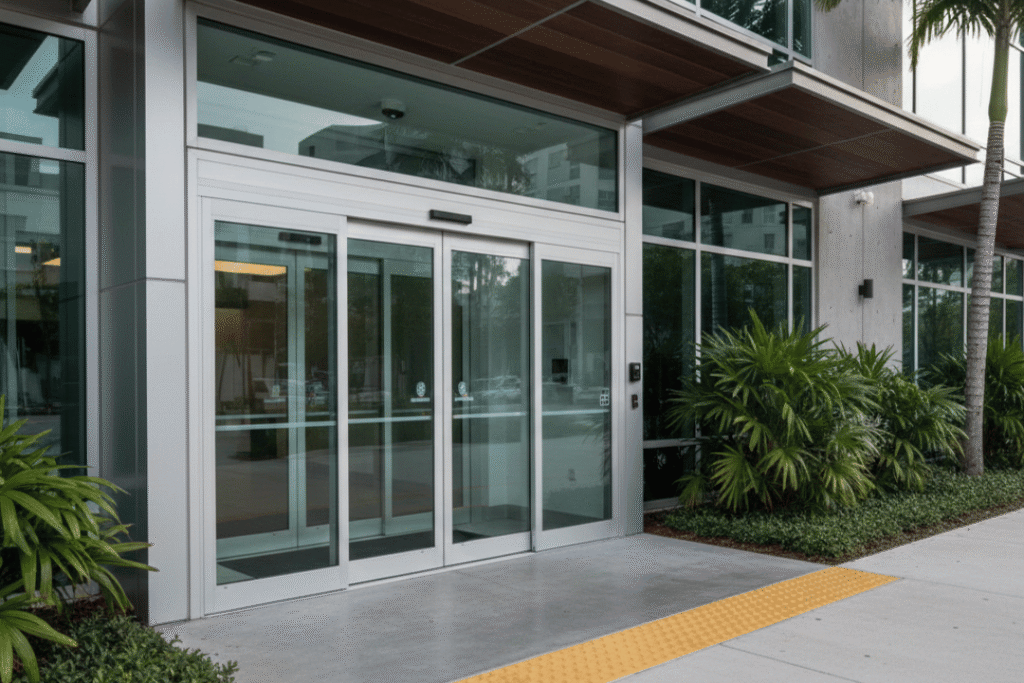
The Americans with Disabilities Act (ADA) establishes standards to ensure public and commercial spaces are accessible to individuals with disabilities. Entry doors are a key part of these requirements.
Automatic sliding doors support ADA compliance by:
- Providing hands-free operation
- Eliminating the need to push or pull heavy doors
- Accommodating wheelchairs, walkers, and mobility devices
Key ADA considerations for automatic sliding doors include:
- Adequate, clear opening width
- Proper sensor placement and activation range
- Safe opening and closing speeds
- Clear, unobstructed paths of travel
While automatic doors help meet accessibility requirements, ADA compliance is not automatic. Systems must be correctly specified and installed to meet all guidelines. Improper sensor calibration or poor installation can result in non-compliance and potential violations.
Built-In Safety Features for High-Traffic Environments
Safety is essential in Florida commercial buildings where large numbers of people enter and exit throughout the day. Automatic sliding doors are engineered with multiple safety mechanisms designed to protect users.
Modern safety features include:
- Motion sensors that detect approaching pedestrians
- Presence sensors that prevent doors from closing prematurely
- Obstacle detection systems to avoid contact
- Controlled opening and closing speeds
These features reduce the risk of accidents, especially in environments such as hospitals, retail centers, airports, and government buildings. Properly functioning safety systems also help businesses reduce liability and maintain a safe experience for visitors and staff.
Emergency Egress and Life Safety Considerations
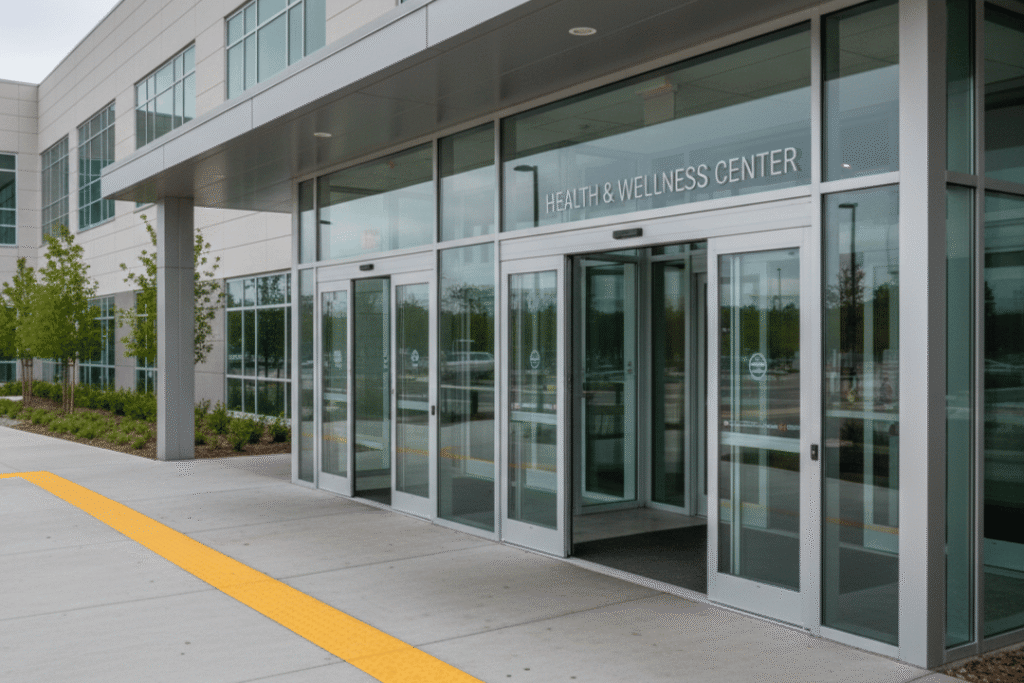
In emergencies, doors must allow occupants to exit quickly and safely. Automatic sliding doors are designed with life-safety features that support emergency egress.
Common emergency features include:
- Breakaway door panels that swing open under pressure
- Fail-safe operation during power outages
- Integration with fire alarm and security systems
These features ensure that automatic doors do not become barriers during emergencies. In Florida, where power outages can occur during storms, this fail-safe functionality is especially important.
Storm Readiness: A Florida-Specific Requirement
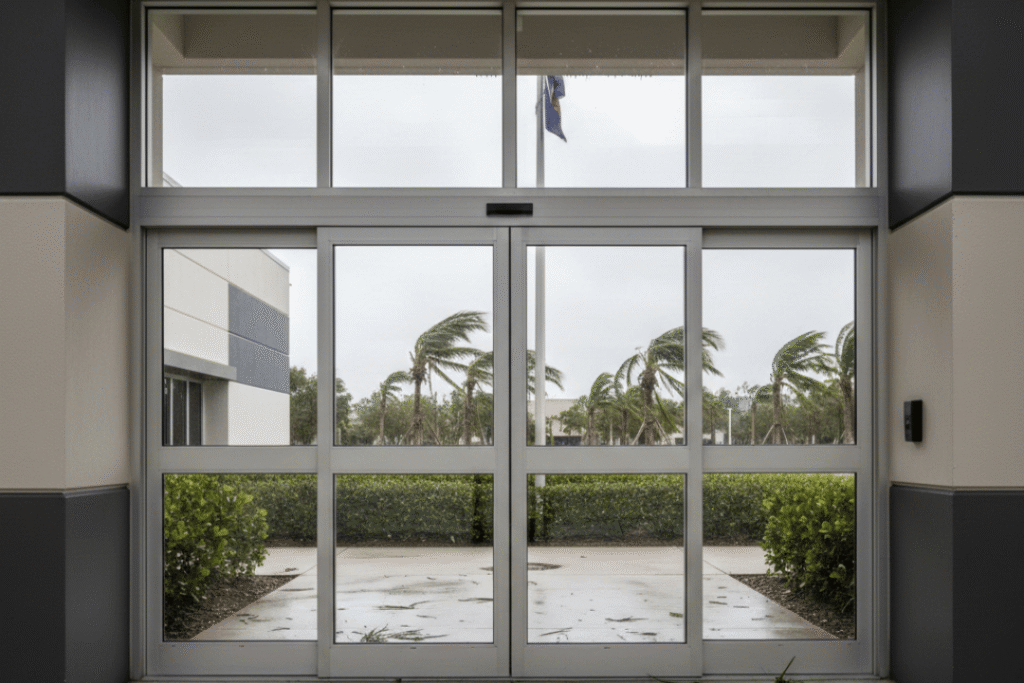
Florida’s weather conditions make storm readiness a critical factor when selecting commercial entry systems. Hurricanes bring strong winds, pressure changes, and wind-driven debris that can compromise poorly designed doors.
Storm-ready automatic sliding door systems may include:
- Reinforced aluminum framing
- Impact-rated glass options
- Secure locking systems for storm events
- Integration with impact storefront systems
While not all automatic sliding doors are impact-rated by default, they can be incorporated into hurricane-resistant commercial entrance assemblies when properly engineered. This is particularly important in coastal and high-velocity hurricane zones.
Florida Building Code and Commercial Door Compliance
Florida enforces some of the most stringent building codes in the country. Commercial entry systems must meet specific requirements outlined in the Florida Building Code (FBC).
Automatic sliding doors must comply with:
- Wind load and pressure standards
- Accessibility and life-safety regulations
- Structural and glazing requirements
Failure to meet these standards can result in inspection delays, failed permits, or costly retrofits. Working with professionals familiar with Florida’s regulatory environment helps ensure doors are compliant from the start.
Energy Efficiency and Environmental Control
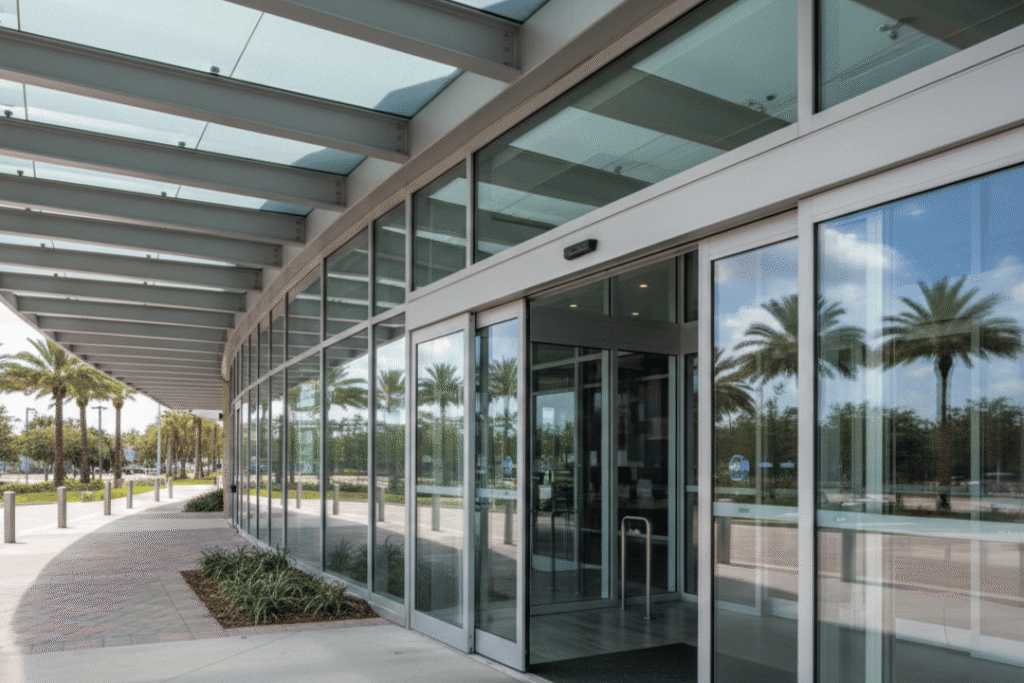
Automatic sliding doors also contribute to energy efficiency an important consideration for Florida commercial properties where cooling costs are significant.
These systems help:
- Reduce the duration doors remain open
- Minimize air exchange between indoors and outdoors
- Maintain more stable indoor temperatures
By closing quickly and opening only when needed, automatic sliding doors support HVAC efficiency and help maintain a comfortable indoor environment for customers and employees.
Where Automatic Sliding Doors Are Commonly Used in Florida
Automatic sliding doors are widely used across Florida’s commercial sectors, including:
- Hospitals and medical facilities
- Retail stores and shopping centers
- Hotels and hospitality venues
- Office buildings and corporate campuses
- Educational and government facilities
Their ability to combine accessibility, safety, durability, and energy efficiency makes them suitable for nearly any public-facing building.
Installation Quality Is Critical
Even the best automatic sliding door system will underperform if it’s installed incorrectly. Professional installation ensures:
- ADA compliance
- Accurate sensor calibration
- Safe operation under daily use
- Proper integration with the storefront and impact systems
In Florida, installation quality also affects storm performance and long-term reliability.
Ongoing Maintenance and Long-Term Performance
Automatic sliding doors are mechanical systems that require regular inspection and maintenance. Routine service helps:
- Keep sensors functioning properly
- Prevent unexpected failures
- Extend the lifespan of the system
- Maintain safety and compliance
For high-traffic Florida buildings, proactive maintenance is essential to avoid downtime and safety risks.
Is an ADA-Compliant, Storm-Ready Sliding Door Right for Your Building?
Automatic sliding doors are an excellent solution if your Florida commercial property:
- Serves the general public
- Requires ADA-compliant access
- Experiences heavy foot traffic
- Needs storm-ready entry systems
When properly designed and installed, these systems provide long-term value, safety, and peace of mind.
Work With Florida Commercial Door Experts
At Guardian Shield Windows & Doors, we specialize in automatic sliding door systems designed to meet Florida’s accessibility, safety, and storm-resistance requirements. Our team understands local building codes, commercial usage demands, and the importance of long-term performance.If you’re planning a new installation or upgrading an existing system, contact us today to ensure your automatic sliding doors are ADA-compliant, safe, and built for Florida conditions.